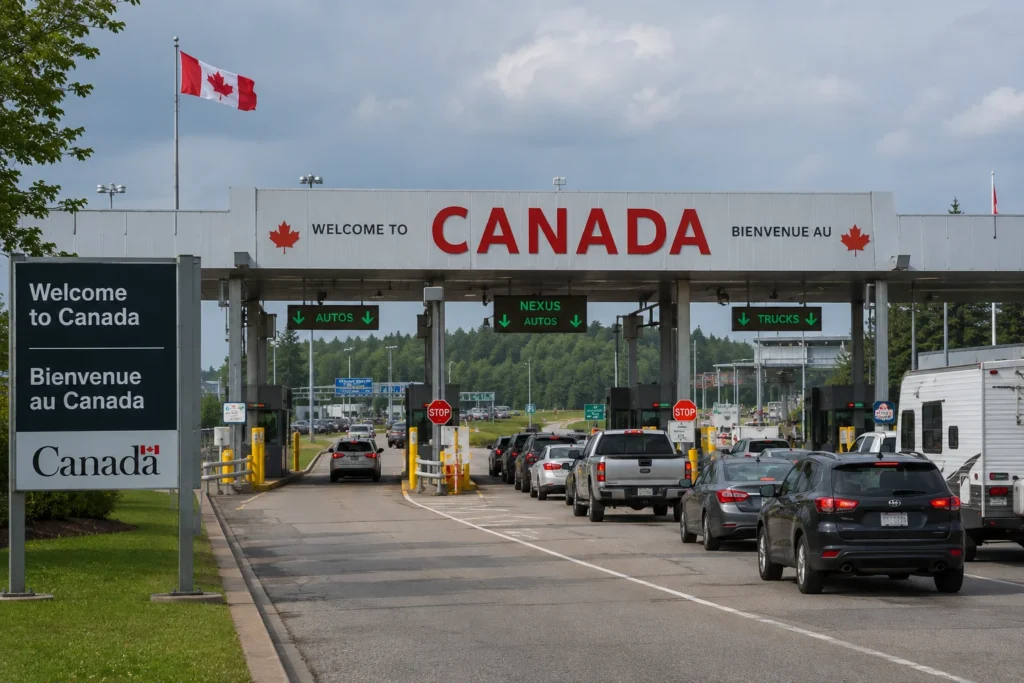
The federal government of Canada has structured an urgent public health defense framework to protect its entry portals from cross-border health hazards. Coordinated announcements from Immigration, Refugees and Citizenship Canada (IRCC) alongside the Public Health Agency of Canada (PHAC) have finalized temporary emergency border restrictions designed to limit transmission risks associated with the Ebola virus outbreak in Central and East Africa. Taking effect on May 30, 2026, the temporary policy institutes a sweeping 90-day freeze on immigration visa processing for residents of three specified countries, paired with mandatory 21-day quarantine requirements for inbound travelers holding recent travel history in those operational areas.
The implementation of these rigorous border protocols underscores a growing focus on global health security within international travel policy. By introducing targeted entry blocks, federal health administrators aim to reinforce domestic biosecurity defenses while maintaining core international aviation networks for non-affected transport corridors.
Deconstructing the 90-Day Immigration Processing Freeze
The primary administrative pillar of the emergency border restrictions focuses on the comprehensive suspension of temporary and permanent immigration document processing. For a minimum duration of 90 days following the launch date, IRCC will halt the issuance and processing of new visitor visas, electronic travel authorizations, work permits, and study permits for individuals residing within the Democratic Republic of the Congo, Uganda, and South Sudan.
The implementation guidelines explicitly define the scope of this administrative freeze:
Exclusion of Existing Status Holders: The emergency measures apply exclusively to new applications lodged after the May 30 threshold. Foreign nationals from the affected countries who currently possess valid Canadian permits or active permanent residency status are exempt from the suspension.
Protection of Sovereign Citizens: Canadian citizens, dual nationals, and registered permanent residents returning from these destinations retain their statutory right of entry into Canada, ensuring that passport rights remain uncompromised.
Case-by-Case Humanitarian Exemption Pathways: Federal immigration ministries have reserved administrative authority to grant expedited processing exemptions for critical humanitarian scenarios, urgent family reunification needs, or certified international medical personnel supporting containment efforts.
To maintain operational flexibility, the federal cabinet has mandated a recurring 14-day evaluation cycle. Public health epidemiologists will continuously review regional transmission counts and medical data to determine whether the processing freeze can safely sunset after the initial 90-day block or if an extension is warranted.
Enforcing Strict 21-Day Quarantine Overhaul
Complementing the visa processing freeze is an uncompromising medical quarantine protocol designed to eliminate transmission leaks inside Canadian communities. Effective immediately upon the policy activation date, any individual authorized to enter Canada who has traveled through, transited, or resided within the Democratic Republic of the Congo, Uganda, or South Sudan inside the preceding 24 days must complete a mandatory 21-day isolation period.
The isolation directive applies uniformly to all inbound passengers, completely irrespective of current physical health presentation, vaccination history, or previous negative laboratory screenings. Arriving passengers are legally obligated to present a verifiable quarantine plan upon arriving at primary international airports like Toronto Pearson or Vancouver International.
Isolation must occur either within specialized government-managed health facilities or at private residences that fulfill strict non-exposure criteria. Throughout the three-week isolation block, individuals must submit daily physiological logs and temperature recordings via integrated federal health applications, with public health officers authorized to conduct random compliance inspections. Non-compliance with these emergency isolation mandates triggers severe statutory penalties under the federal Quarantine Act, carrying financial fines reaching up to CAD $750,000 and potential criminal prosecution.
Operational Impact on Corporate Mobility and Remote Personnel
The immediate fallout of these emergency border restrictions extends directly into the corporate travel sector, particularly impacting global enterprises utilizing temporary cross-border consultants or digital nomad networks. Remote specialists holding passports from the designated countries can no longer leverage standard work permit exemptions to enter Canada for business development or technical installations.
Furthermore, corporate legal teams are advising affected temporary residents currently inside Canada to suspend non-essential international travel for the duration of the 90-day block. Attempting to re-enter Canada after departing could lead to significant administrative scrutiny or boarding denials at international flight gates due to the synchronized enforcement between IRCC databases and commercial airline check-in architectures. Companies are being urged to pivot toward decentralized, remote work arrangements or shift critical personnel to unaffected regional offices while these emergency health parameters remain active.
Safeguarding Global Travel Infrastructure and Public Trust
The structured activation of these entry protocols demonstrates how quickly modern border controls can adapt when international health security is challenged. Rather than enacting broad, untargeted restrictions that cause widespread travel panic, Canada’s method combines precision-targeted immigration control with strict clinical isolation.
For international tourists, destination agencies, and aviation alliances, these official announcements serve as a clear reminder of the importance of maintaining flexible travel insurance profiles and tracking health advisories. By utilizing data-driven tracking systems and transparent enforcement frameworks, health and border control agencies continue to ensure that international travel networks remain safe, predictable, and thoroughly protected against changing public health challenges.
For more travel news like this, keep reading Global Travel Wire