Japan’s transportation industry is entering a new era of premium travel as major airlines and high-speed rail operators introduce upgraded seating, private compartments and luxury-focused passenger experiences across key domestic and international routes.
The country’s aviation and rail sectors are rapidly expanding premium accommodations to meet growing demand from corporate travelers, international tourists and affluent leisure passengers seeking greater comfort, privacy and convenience while traveling across Japan.
The nationwide transformation reflects broader shifts in post-pandemic travel behavior, where passengers increasingly prioritize personal space, seamless connectivity and elevated onboard experiences.
Japan Airlines and leading rail operators are now redesigning cabins and carriages to capture higher-value travelers while strengthening Japan’s position as one of Asia’s most advanced premium transportation markets.
Japan Airlines Expands Premium Cabin Experiences Across Key Routes
Japan Airlines is actively upgrading both domestic and international flight operations by increasing the proportion of business class and premium economy seating across its fleet.
The airline’s retrofitting initiatives are designed to improve passenger comfort through expanded legroom, enhanced ergonomic seating, improved privacy features and upgraded inflight entertainment systems.
These premium upgrades are no longer limited to long-haul international services. Japan Airlines is increasingly introducing enhanced seating configurations on busy domestic routes connecting major cities and business centers throughout the country.
The airline is also refining dining services and onboard hospitality offerings to complement the structural cabin improvements, creating a more complete luxury travel experience for passengers.
The growing focus on premium aviation reflects changing traveler expectations as more passengers seek comfort-focused alternatives for regional and domestic travel within Japan.
Tokaido Shinkansen Introduces Private Luxury Compartments
At the same time, Japan’s world-famous high-speed rail network is undergoing its own premium transformation.
The Tokaido Shinkansen line, which connects Tokyo, Nagoya and Osaka, is preparing to introduce fully private travel compartments designed specifically for business executives and high-end travelers seeking greater privacy during transit.
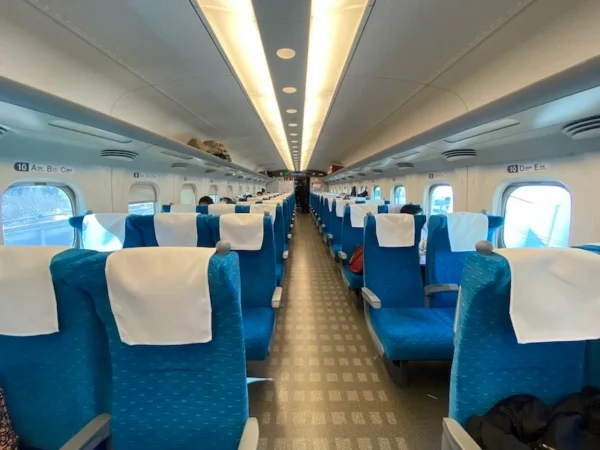
The move marks a significant evolution from the traditional open-plan design historically associated with Japanese bullet train travel.
Each private compartment is expected to include climate controls, adjustable lighting systems, high-speed Wi-Fi connectivity, power outlets and workspace-friendly seating arrangements that support productivity throughout the journey.
The upgrades aim to attract premium travelers who value convenience and uninterrupted work environments while traveling between Japan’s largest commercial hubs.
With the Tokaido Shinkansen serving as one of the busiest and most strategically important rail corridors in the world, the premium enhancements are expected to reshape passenger expectations across Japan’s broader railway industry.
Semi-Private Green Car Seating Expands Luxury Rail Options
In addition to fully private compartments, Japanese rail operators are also planning to introduce semi-private seating within selected Green Car carriages.
These upgraded sections are designed to provide an intermediate luxury option between standard first-class seating and completely enclosed private cabins.
The semi-private seating concept includes elevated partitions, wider seat spacing and enhanced privacy features that maximize passenger comfort without isolating travelers entirely.
Rail operators believe this multi-tiered strategy will help attract a broader premium customer base, including business travelers seeking comfort at more moderate price points and leisure tourists looking for elevated travel experiences.
The approach also aligns with global luxury transportation trends where passengers increasingly demand customizable comfort levels across various price categories.
Rising International Tourism Fuels Premium Transport Demand
Japan’s transportation upgrades are closely linked to the resurgence of international tourism and changing global travel preferences.
The return of inbound tourism has brought a growing number of high-spending international visitors who prioritize comfort and convenience when traveling between Japan’s cultural and commercial destinations.
Tourism analysts note that luxury transportation experiences are becoming increasingly important for international travelers exploring destinations such as Tokyo, Kyoto and Osaka.
By aligning premium services with global traveler expectations, Japan’s transportation industry is positioning itself to capture higher tourism spending while strengthening its international competitiveness.
The increased revenue generated from premium cabins and luxury rail seating is also expected to help offset rising operational and infrastructure costs faced by airlines and railway operators.
Engineering and Operational Challenges Shape the Rollout
The transition toward premium transportation requires extensive technical planning and engineering coordination across both aviation and rail networks.
Aircraft retrofits involve complex calculations related to weight distribution, fuel efficiency and aviation safety compliance. Similarly, rail operators must ensure that new compartment designs maintain aerodynamic efficiency and operational reliability on high-speed services.
Transport companies are implementing phased rollout strategies to minimize service disruptions while progressively introducing upgraded seating configurations across fleets and routes.
Maintenance operations are also being adapted to accommodate the advanced electronic systems and integrated technology increasingly associated with modern luxury seating products.
Rail and Aviation Competition Intensifies on Major Routes
As premium transportation expands across both sectors, competition between rail and air travel is expected to intensify along Japan’s busiest transit corridors.
The Tokyo-to-Osaka route remains one of the clearest examples where domestic airlines and the Shinkansen directly compete for premium travelers.
Traditionally, aviation held advantages through international connectivity and airline loyalty programs. However, the introduction of private rail compartments and enhanced onboard comfort is helping the Shinkansen strengthen its appeal among travelers seeking seamless city-center transportation and quieter onboard environments.
At the same time, airlines continue leveraging global route networks and integrated premium travel experiences to maintain strong demand among international and corporate passengers.
The parallel upgrades across both industries are ultimately elevating Japan’s transportation standards while giving travelers more choices for high-comfort mobility experiences.
Japan Positions Itself as a Global Leader in Premium Transportation
Japan’s investment in premium airline cabins and luxury rail seating highlights the country’s broader ambition to remain a global leader in transportation innovation and hospitality.
By combining advanced engineering, customer-focused design and operational efficiency, Japan’s aviation and railway industries are redefining what premium domestic and regional travel can look like in Asia.
As international tourism continues recovering and traveler expectations evolve, premium transportation experiences are expected to become an increasingly important part of Japan’s tourism and mobility strategy in the years ahead.
For more travel news like this, keep reading Global Travel Wire