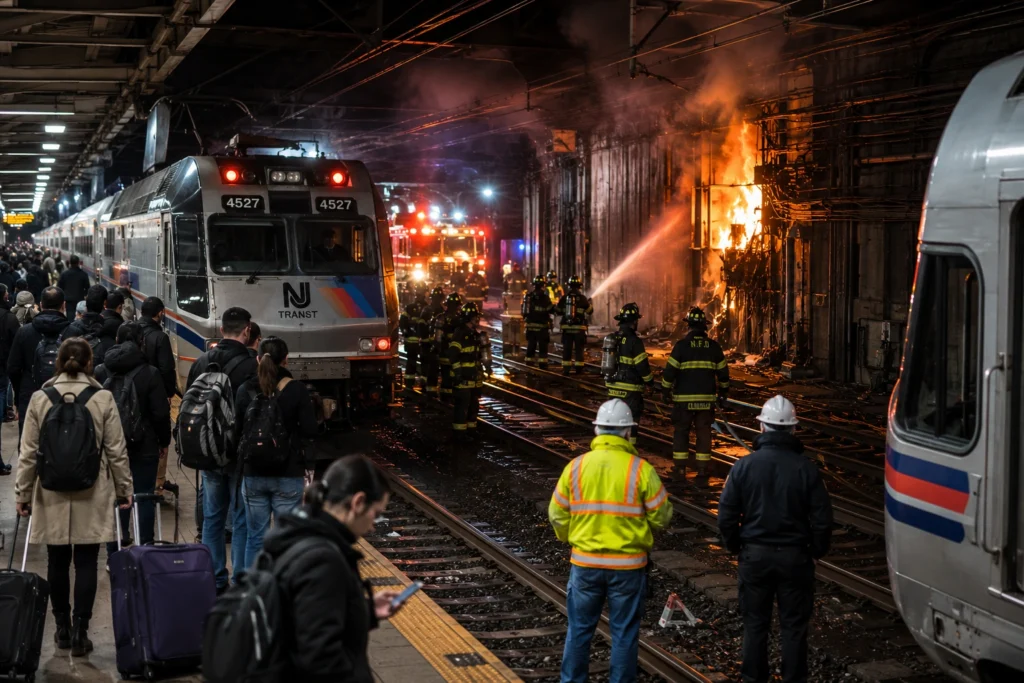
Rail passengers travelling between New Jersey and New York faced widespread disruption after a fire involving maintenance equipment near New York Penn Station temporarily halted NJ Transit and Amtrak services, creating delays, cancellations and difficult journeys across one of the busiest transportation corridors in the United States.
The incident occurred during overnight maintenance work near the Hudson River rail tunnels, which provide a critical connection between New Jersey and Manhattan. The resulting service suspension affected commuters, weekend visitors, business travellers and passengers using longer-distance rail routes along the Northeast Corridor.
Although rail operations later resumed, travellers were advised to remain prepared for delays and schedule adjustments as technical teams continued repairs and safety checks. The disruption also placed pressure on alternative transport services, including PATH trains, buses, ferries and road-based options.
Fire Damages Essential Rail Infrastructure
The fire affected infrastructure required for safe and reliable train operations. Damage was reported to overhead electrical wires, signalling equipment, track components and maintenance equipment.
These systems play a vital role in the regional rail network. Overhead wires provide power for train movements, while signalling technology helps operators control rail traffic safely through tunnels and busy station areas.
When several systems are damaged at the same time, repairs can become complex. Before normal operations resume, crews must inspect equipment, restore power systems, test signals and verify that trains can move safely through the affected corridor.
The incident demonstrates how a single infrastructure failure can create a wider transportation challenge across an interconnected metropolitan region.
New York Penn Station Services Face Knock-On Effects
New York Penn Station is a major rail hub for travellers moving across New York, New Jersey and the wider Northeast Corridor. It supports commuter services, regional trains and intercity journeys linking destinations including Boston, Philadelphia and Washington.
A temporary shutdown near the station can quickly affect passengers far beyond Manhattan. Trains may be cancelled, delayed or turned around at alternative stations. Aircraft passengers using rail connections to reach airports may also need to adjust their plans.
Travellers heading to Newark Liberty International Airport should allow additional time and carefully review their route before departure. Visitors with hotel check-ins, attraction bookings, meetings or onward rail journeys should also monitor updated schedules closely.
Alternative Routes Help Passengers Keep Moving
During the disruption, travellers sought alternative transport arrangements to complete their journeys. PATH services, buses, ferries, taxis and ride-sharing options offered possible alternatives depending on the passenger’s starting point and destination.
NJ Transit cross-honouring arrangements can play an important role during major disruptions by allowing eligible rail passengers to use alternative services at selected stations. Travellers should confirm whether any temporary arrangements remain active before beginning their journey, as these measures can change as operations recover.
Passengers travelling through Hoboken may find connections to PATH, ferries, buses and light rail services. Newark Penn Station also remains an important transfer point for passengers travelling between New Jersey and Manhattan.
Tourism and Business Travel Feel the Impact
Rail disruption across the New York–New Jersey region affects more than daily commuters. The corridor is essential for tourism, business events, airport transfers, hotel arrivals and weekend leisure trips.
Visitors unfamiliar with the regional transport network may face additional difficulty when routes change unexpectedly. Clear planning is especially important for international travellers carrying luggage, families with children and passengers travelling on fixed itineraries.
Hotels, tour operators and event organisers may also need to accommodate late arrivals or last-minute changes. During major transport disruptions, flexibility can help reduce stress and prevent missed connections.
Travellers Should Check Live Updates
Passengers planning to use NJ Transit or Amtrak should check live service information before leaving home or their hotel. Original booking confirmations may no longer reflect the latest departure times, platform information or route changes.
Travellers should keep booking details easily accessible, allow additional journey time and avoid tight connections where possible. Those using separate tickets for rail, flights or events should review cancellation and rebooking conditions carefully.
Amtrak advises passengers to use its train-status tools for the latest disruption information, while NJ Transit provides real-time alerts and schedule updates through its official channels.
Rail Recovery Continues Across the Region
The tunnel fire serves as a reminder of the importance of resilient rail infrastructure in the New York metropolitan area. Thousands of passengers depend on the Hudson River corridor for daily travel, tourism and regional connectivity.
As repairs and inspections continue, passengers should remain patient and flexible. Rail services may be running again, but the wider effects of a major infrastructure incident can continue after the initial shutdown ends.
For more travel news like this, keep reading Global Travel Wire