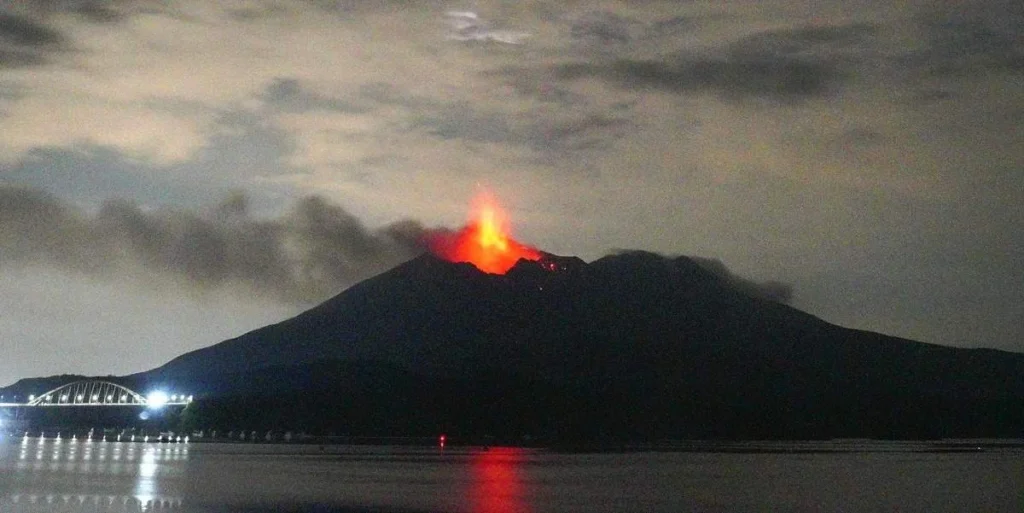
A Sakurajima Volcano eruption sent ash toward Kagoshima City on Sunday, June 7, 2026, creating immediate travel concerns for visitors exploring one of southern Japan’s most distinctive tourism destinations.
The ashfall has placed renewed attention on sightseeing plans, outdoor activities and local transport conditions around Kagoshima Prefecture. Travelers visiting the city or planning excursions to Sakurajima should review official updates before leaving their accommodation, allow additional time for journeys and remain prepared to adjust outdoor itineraries.
Japan’s official volcanic monitoring agency continues to maintain Alert Level 3 for Sakurajima, meaning entry restrictions remain in place around the crater area. Authorities advise caution within approximately two kilometers of the Minamidake summit crater and the Showa crater because eruptions can produce large volcanic rocks and pyroclastic flows.
Downwind areas may also experience ashfall and smaller volcanic rocks carried by the wind. This creates changing conditions for travelers, particularly when visibility declines or ash accumulates on roads and pedestrian areas.
Kagoshima Sightseeing Plans May Require Flexibility
Sakurajima is one of Japan’s best-known active volcanoes and a defining landmark of Kagoshima tourism. Located only a short distance from Kagoshima City, the 1,117-meter volcano forms part of Kirishima-Kinkowan National Park and frequently produces visible ash plumes.
Its dramatic landscape attracts travelers interested in geology, nature, photography and volcanic scenery. Visitors commonly explore observation points, hot spring experiences and coastal areas while using local transport connections to move between Kagoshima City and Sakurajima.
However, active volcanic tourism requires flexibility. During periods of ashfall, outdoor sightseeing can become uncomfortable and visibility may deteriorate. Observation decks, walking routes and photography stops may offer a different experience than expected, while ash-covered surfaces can require additional caution.
Travelers should prioritize indoor attractions or alternative activities when conditions are unfavorable. Kagoshima City also offers cultural sites, gardens, museums, restaurants and shopping areas that can provide useful options when outdoor volcanic sightseeing is not practical.
Visitors Should Check Ferry and Transport Conditions
Travelers planning to use ferry services or other local transport should confirm operating conditions before departure. Ashfall can affect visibility, road conditions and the time required to move around the region.
Visitors using rental cars should drive cautiously, keep windows closed during heavier ashfall and avoid unnecessary journeys when visibility is reduced. Volcanic ash can create slippery surfaces, particularly if combined with rain.
Tourists should also protect luggage, cameras and electronic equipment when walking outdoors. Keeping a mask, eye protection and a lightweight outer layer available can help reduce discomfort if wind conditions change unexpectedly.
Those traveling onward by air or rail should check official operator updates before heading to terminals or stations. Conditions may change quickly, making advance confirmation essential for visitors with fixed departure times or connecting journeys.
Official Alert Level Remains at Three
Recent official monitoring identified volcanic activity at Sakurajima before the latest ashfall event. Authorities had observed ground movement indicating inflation of the volcanic edifice, alongside elevated sulfur dioxide emissions.
The current Alert Level 3 status means travelers should not approach restricted crater zones. Official guidance also warns that downwind communities may receive ash and small volcanic rocks. If ashfall is followed by rain, the risk of debris flows may increase in affected areas.
Visitors should follow local instructions and avoid treating the volcano as an unrestricted adventure destination. Sakurajima remains accessible as a tourism landmark, but safe travel depends on respecting exclusion zones and responding quickly to official warnings.
Volcano Tourism Remains Important for Kagoshima
Sakurajima is central to Kagoshima’s tourism identity. Its presence shapes the city’s landscape and gives visitors a rare opportunity to experience an active volcanic environment near an urban destination.
The latest eruption may temporarily affect outdoor plans, local businesses and visitor confidence. Hotels, restaurants, tour providers and attractions depend on clear communication to help travelers navigate changing conditions safely.
In the longer term, Sakurajima’s appeal remains strong. Travelers interested in nature and geology can continue to experience the region responsibly by choosing suitable days, monitoring official forecasts and keeping alternative itineraries ready.
Travelers Should Prioritize Safety and Official Updates
Visitors in Kagoshima should remain cautious while ashfall conditions continue. Wearing masks outdoors, limiting unnecessary exposure and checking transport updates can help reduce disruption.
Sakurajima remains one of Japan’s most memorable natural attractions, but the June 7 eruption is a reminder that volcanic tourism requires planning, patience and respect for official safety guidance.
For more travel news like this, keep reading Global Travel Wire