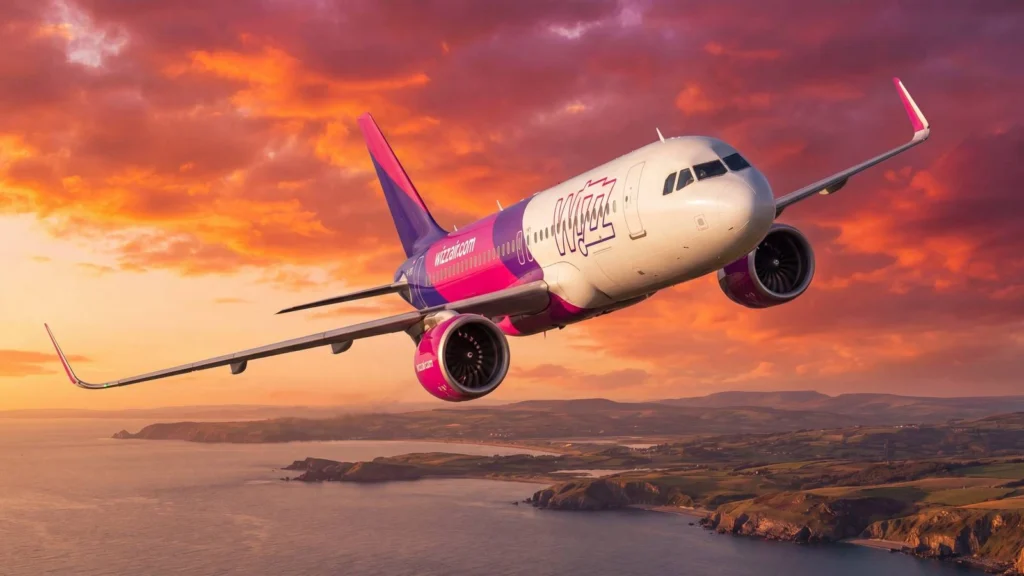
Wizz Air is preparing to roll out Starlink-powered inflight internet across its fleet from 2027, becoming the first European ultra-low-cost carrier to commit to the satellite-based service. The move places the Budapest-headquartered airline alongside United Airlines, Lufthansa Group and International Airlines Group as major carriers and airline groups accelerate investment in faster onboard connectivity.
For travelers, the announcement marks a notable shift in the low-cost market. Reliable inflight internet has often been associated with premium cabins, long-haul airlines or paid add-ons. Wizz Air’s decision suggests that digital connectivity is becoming an increasingly important part of the passenger experience, even in a sector built around affordable fares and streamlined service.
Wizz Air Brings Starlink to the Ultra-Low-Cost Market
Wizz Air said the rollout will begin in 2027 and extend across its fleet, giving passengers access to a more connected journey regardless of route or destination. The airline described the initiative as a step toward making reliable onboard internet more accessible to travelers who choose low-cost flights.
The upgrade could be especially relevant for passengers taking city breaks, visiting friends and relatives, traveling for work or connecting with tourism destinations across the carrier’s network. Messaging, browsing and entertainment access can make short- and medium-haul flights feel more convenient, while business travelers may gain more opportunities to remain productive in the air.
For tourism markets served by Wizz Air, the announcement adds another layer to the airline’s competitive appeal. Travelers increasingly compare more than ticket prices when selecting flights. Schedule flexibility, airport choice, digital convenience and the quality of the onboard experience can all influence booking decisions.
United Airlines Expands Free Starlink Connectivity
United Airlines has also been moving quickly with Starlink. The carrier has been installing the technology across its fleet and offering free access for MileagePlus members on equipped aircraft. United has positioned the service as a way to improve the passenger journey with streaming, browsing and connected work capabilities during flights.
The rollout is significant because United operates a broad domestic and international network. Faster onboard internet can support passengers on business trips, long-haul journeys and leisure travel itineraries that involve extended time in the air.
As more aircraft receive the technology, travelers may begin to expect a more consistent digital experience across different routes. That could raise the competitive bar for airlines serving major tourism and business markets.
Lufthansa Group and IAG Accelerate European Adoption
Europe’s largest airline groups are also investing heavily in Starlink. Lufthansa Group plans to equip around 850 aircraft with high-speed broadband internet, with the first flights expected to offer the service from the second half of 2026. The group aims to complete the rollout by 2029.
The service is intended to support streaming, cloud-based work and other high-bandwidth activities. Lufthansa Group has also said the new internet offering will be available free of charge for status customers and Travel ID users across travel classes.
IAG has announced a Starlink partnership covering more than 500 aircraft across Aer Lingus, British Airways, Iberia, LEVEL and Vueling. The group expects the first aircraft to go live from early 2026, covering short-haul European services as well as long-haul transatlantic and global routes.
Together, these investments show how quickly inflight Wi-Fi is moving from a secondary amenity to a central part of airline service strategy.
Faster Wi-Fi Could Reshape the Passenger Experience
Starlink uses satellites in low Earth orbit to deliver broadband internet with lower latency than many traditional satellite systems. For passengers, the practical benefit is the potential for smoother browsing, messaging, streaming and cloud-based work while flying.
The tourism impact extends beyond the cabin. Better connectivity can help travelers communicate with hotels, tour operators, family members and business contacts before arrival. It may also make flight time more useful for planning activities, checking transport details or staying informed during disruptions.
As airlines compete on digital convenience, inflight internet could become a more important factor in how travelers evaluate value. Wizz Air’s entry into the Starlink race is particularly notable because it brings the conversation firmly into the ultra-low-cost sector.
Connected Aviation Becomes a New Competitive Frontier
The latest announcements suggest that the future of air travel will be shaped not only by fares, destinations and schedules, but also by the quality of the digital journey. United Airlines, Lufthansa Group and IAG are already advancing large-scale Starlink plans. Wizz Air is now extending the trend into affordable European travel.
For passengers, the result could be a more connected experience across a wider range of airlines and routes. For the aviation industry, the race to improve inflight internet is becoming a visible part of how carriers compete for loyalty, strengthen passenger satisfaction and support the next phase of international tourism growth.
Verification note: The article was developed from the supplied brief and checked against official Wizz Air, United Airlines, Lufthansa Group, IAG and Starlink materials.
For more travel news like this, keep reading Global Travel Wire