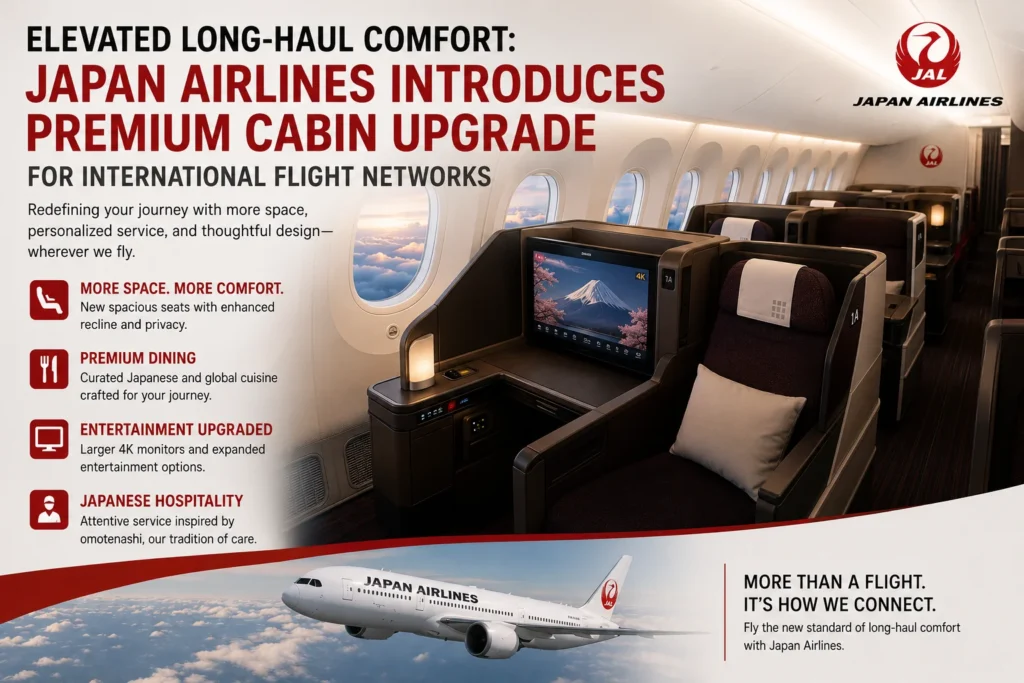
The international commercial aviation landscape is prioritizing premium traveler hospitality as global flight frequencies reach baseline numbers. In an official public announcement issued from its corporate headquarters in Tokyo, Japan Airlines has outlined a structured expansion of its newly designed Business Class in-flight service framework. Following a highly successful trial period on select flagship corridors, the elite carrier is initiating a sequential, phased deployment of its enhanced dining and cabin amenities across high-capacity routes linking Japan with North America, Europe, the Middle East, and Oceania.
The development comes at a time when global tourism networks are seeing heavy volume, particularly across extended transcontinental transit corridors where flight durations consistently exceed eight hours. By investing substantially in the onboard environment, the carrier aims to establish an optimized psychological buffer for international leisure travelers and corporate commuters, ensuring a highly structured, tranquil atmosphere from the moment the aircraft cabin doors close.
Strategic Phased Expansion Plan Across Global Gateways
Official ministry updates and airline schedule data confirm that the enhanced premium cabin upgrade is engineered to scale systematically to minimize any operational friction. Having initially debuted exclusively on the high-demand Tokyo Haneda to New York route, the updated service parameters are actively rolling out to additional long-haul segments.
According to the official Japan Airlines route schedule plan, the upgraded Business Class service model officially debuts on flights serving Los Angeles and Paris. Following this initial summer integration, the carrier will expand the premium service framework to all remaining destinations across the United States (excluding Hawaii and Guam), alongside primary European hubs, Middle Eastern corridors, and direct routes to Sydney. This controlled, sequential implementation allows catering logistics hubs and cabin crews to achieve absolute operational consistency across the long-haul fleet.
To further support its intercontinental long-haul network, the carrier is simultaneously introducing premium fleet upgrades. The airline’s modern flagship Airbus A350-1000 aircraft is expanding its scheduled presence, which includes double-daily premium operations on the high-yield London Heathrow route for select intervals, alongside a daily scheduled deployment to Paris Charles de Gaulle. These widebody aircraft feature advanced fully private rooms within the Business Class cabin, incorporating built-in headrest speakers, expansive monitors, and personalized storage facilities to elevate individual passenger privacy.
Re-Engineering In-Flight Dining and Cultural Integration
The core focus of the international service enhancement centers on a comprehensive redesign of the Business Class meal delivery format. To create a seamless and more intuitive experience for international passengers, the carrier is transitioning its second meal service on long-haul routes into a uniform, tray-style format served directly to each guest. This system replaces the previous ad-hoc à la carte format, ensuring a smoother pacing during the final hours of extended transoceanic flights.
Furthermore, the initial main meal service now includes an expanded luxury dessert presentation. Cabin crew members utilize a circulating dessert cart to present a diverse, premium lineup directly to seated passengers, adding a classic, personalized touch to the private cabin environment. This menu structure balances traditional Japanese culinary precision with global hospitality standards, utilizing seasonal ingredients and regional profiles overseen by acclaimed culinary partners.
The table below details the official operational specifications and timeline milestones established by the aviation group for this service rollout:
| Operational Service Metric | Previous Baseline Framework | Updated 2026 Flight Framework |
| Initial Market Deployment | Limited strictly to New York (JFK) route | Expanded to Los Angeles (LAX) and Paris (CDG) |
| Secondary Expansion Phase | Standard regional service profiles | Network-wide rollout to US, Europe, Middle East, and Sydney |
| Second Meal Service Format | Ad-hoc à la carte request system | Standardized tray-style service for all guests |
| Dessert Presentation Style | Standard tray-based dessert delivery | Interactive circulating dessert cart selection |
| Economy Beverage Options | Conventional regional sake options | Exclusively brewed premium sake selection available |
Upgraded Beverage Options Across All Cabin Segments
Official public information from the carrier reveals that hospitality enhancements are not restricted exclusively to the premium cabin upgrade. In a move designed to share traditional Japanese culinary culture with global travelers, the airline has extended a high-tier beverage partnership down into its Premium Economy and Economy Class cabins.
Passengers traveling on long-haul international routes can now experience an exclusive Japanese sake product. The carrier has partnered with the Niizawa Sake Brewery, located within the Miyagi prefecture, to serve a specially brewed iteration of their renowned beverage. This select beverage is crafted explicitly to serve as a complementary pairing that enhances the flavor profile of standard inflight catering menus. The product is actively available across the global network, with the exception of select short-haul regional routes within East Asia.
Recommended Preparation Guidelines for Long-Haul Travelers
To ensure a seamless experience when navigating the expanded international flight networks this season, transport boards and tourism agencies suggest the following procedural steps:
Verify Route Compatibility: Because the updated dining service and modern widebody fleet deployments are moving through a phased implementation schedule, travelers should check their specific flight numbers via the digital reservation management portal to review the exact cabin configurations active for their travel date.
Utilize Pre-Order Mechanisms: Passengers requiring specific dietary modifications or health-related meal options should submit their pre-order selections on the official airline platform at least 24 hours prior to departure.
Optimize Connection Windows: Given the heavy passenger volumes at primary long-haul entry hubs, travelers booking connecting itineraries should allow an absolute minimum buffer of three hours to navigate standard terminal security screenings comfortably.
By maintaining an unyielding focus on customer experience updates and structural cabin enhancements, the aviation sector continues to deliver predictable, high-quality transit options, reinforcing the long-term reliability of global tourism infrastructure.
For more travel news like this, keep reading Global Travel Wire