Qantas Project Sunrise is set to redefine long-haul aviation by preparing nonstop flights from Australia’s east coast to London and New York, creating one of the most ambitious passenger travel advances in modern airline history.
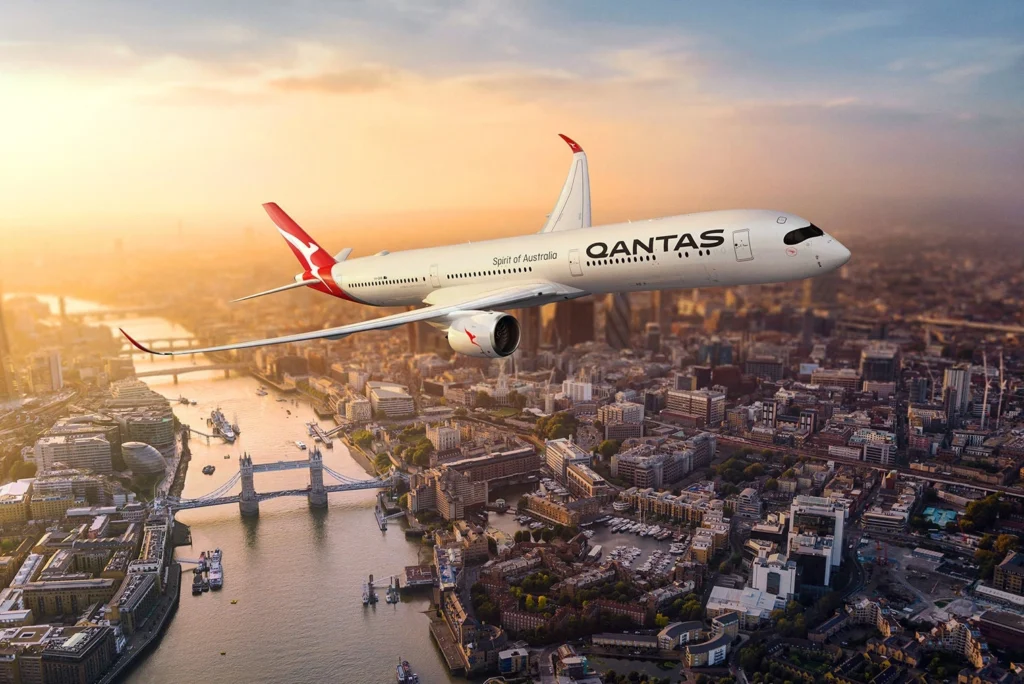
The programme is built around specially configured Airbus A350-1000ULR aircraft designed to fly for up to 22 hours nonstop. Once in service, the aircraft will allow passengers to travel directly between Australia and some of the world’s most important global cities without traditional stopovers in Asia, the Middle East, or other transit hubs.
For travellers, this represents a major shift in journey planning. Trips from Sydney to London or New York that currently require one or more stops could become single continuous flights, reducing total travel time, simplifying baggage movement, improving schedule reliability, and cutting the physical disruption caused by long layovers.
For Australia’s tourism and business sectors, the project carries major strategic value. Direct air links to London and New York will strengthen the country’s position in global travel, support premium tourism demand, improve corporate mobility, and reshape how visitors, investors, students, and high-value travellers move between Australia, Europe, and North America.
Nonstop Australia London Flights Revive The Kangaroo Route
The Australia-United Kingdom journey is one of the most symbolic routes in global aviation. Known historically as the Kangaroo Route, it once required multiple stops across Asia, the Middle East, and Europe. Over decades, aircraft range improved, stopovers reduced, and journey times fell dramatically.
Project Sunrise aims to complete the next stage of that evolution by removing the stopover altogether. A direct Sydney-London service would turn one of aviation’s most iconic long-haul journeys into a single uninterrupted flight.
This has strong tourism implications. London remains one of the most important international gateways for Australian travellers, while Australia continues to attract British visitors seeking major cities, coastal landscapes, wildlife, food, wine, and long-stay holidays.
By removing transit complexity, Qantas can make Australia more accessible to high-value visitors who want speed, comfort, and convenience. The same advantage applies to Australians travelling to the United Kingdom for leisure, business, family visits, education, and cultural trips.
New York Route Targets Premium Business And Leisure Demand
New York is another central focus of Project Sunrise. A nonstop connection between eastern Australia and New York would create a powerful direct bridge between the Pacific and North America’s leading financial, cultural, and media centre.
The route is expected to appeal strongly to business travellers, premium leisure passengers, corporate groups, entertainment industry travellers, and high-yield tourism segments. For companies with operations across Australia and the United States, a nonstop service would reduce travel friction and support faster executive movement.
For leisure travellers, New York’s global appeal remains unmatched. Direct flights would make the city easier to reach from Australia, while also giving American travellers a more streamlined path to Sydney and other eastern Australian destinations.
The route could also support conference travel, luxury tourism, education links, and specialist freight movement between two major economies.
Airbus A350-1000ULR Designed For Extreme Range
Project Sunrise depends on the Airbus A350-1000ULR, an ultra-long-range variant developed for Qantas. The airline ordered 12 aircraft for the programme, with the fleet designed to connect Australia with almost anywhere in the world.
The aircraft includes additional fuel capacity, enhanced operating systems, and a lower-density cabin layout focused on comfort during extremely long flights. Qantas has planned a four-class configuration with First, Business, Premium Economy, and Economy cabins.
The layout is expected to carry 238 passengers, significantly fewer than a standard A350-1000 configuration. This lower seat count gives passengers more space and supports the economics of premium long-haul travel, where comfort, privacy, sleep quality, and service standards are critical.
The aircraft will also include a wellbeing zone where passengers can stretch and move during the flight, reflecting a major change in how airlines design cabins for journeys approaching a full day in the air.
Passenger Wellness Becomes Central To Ultra-Long-Haul Travel
Project Sunrise is not only about aircraft range. It is also about passenger endurance. Flights of up to 22 hours require airlines to rethink comfort, health, sleep, hydration, lighting, meals, and cabin movement.
Qantas has studied traveller wellbeing as part of the programme, with attention on cabin pressure, humidity, lighting cycles, meal timing, and onboard space. These elements are designed to reduce fatigue and support better arrival readiness.
This approach signals a wider shift in airline design. Ultra-long-haul aircraft are no longer simply transport vehicles. They are becoming carefully managed travel environments where comfort and wellness influence commercial success.
For premium passengers, this could mean stronger demand for private suites, lie-flat seating, curated dining, and sleep-focused service. For Economy and Premium Economy travellers, more thoughtful cabin design and movement space could make nonstop ultra-long-haul journeys more appealing.
Direct Flights Could Reshape Global Transit Patterns
Project Sunrise also has implications for the global aviation network. For decades, many long-haul passengers travelling between Australia, Europe, and North America have relied on major transit hubs in Asia and the Middle East.
Nonstop services from Australia to London and New York will not replace hub travel entirely, but they will create a new premium layer of direct connectivity. Travellers who value speed and convenience may choose nonstop services, while others may continue to use one-stop routes for price, flexibility, or preferred connections.
This gives passengers greater choice and may influence how airlines compete on the world’s longest routes. Airports, tourism boards, hotels, and corporate travel managers will all watch closely as nonstop ultra-long-haul services become a more visible part of international travel planning.
Tourism And Hospitality Stand To Benefit
For Australia, the tourism benefits could be substantial. Direct services to London and New York can strengthen inbound demand by making the country easier to reach for time-sensitive travellers. This is especially important for high-spending visitors, luxury tourists, business event delegates, and travellers considering Australia for once-in-a-lifetime holidays.
Hotels, tour operators, restaurants, attractions, airports, conference venues, and regional tourism providers could all benefit from stronger long-haul access. Sydney and other eastern Australian gateways may also gain stronger appeal as global entry points for onward travel to beaches, wine regions, national parks, and Indigenous cultural experiences.
At the same time, Australian outbound travellers gain faster access to two of the world’s most visited cities, supporting stronger two-way tourism flows.
Project Sunrise Redefines Distance In Commercial Aviation
Qantas Project Sunrise is one of the clearest signs that global aviation is entering a new ultra-long-haul era. By targeting nonstop services from eastern Australia to London and New York, the airline is challenging old assumptions about distance, stopovers, and passenger endurance.
If successful, the programme will transform how travellers move between Australia, Europe, and North America. It will also set a new benchmark for aircraft design, onboard wellness, premium travel, and direct city-to-city connectivity.
For Qantas, Project Sunrise is more than a route launch. It is a statement of ambition that places Australia at the centre of the next chapter in global aviation.
For more travel news like this, keep reading Global Travel Wire