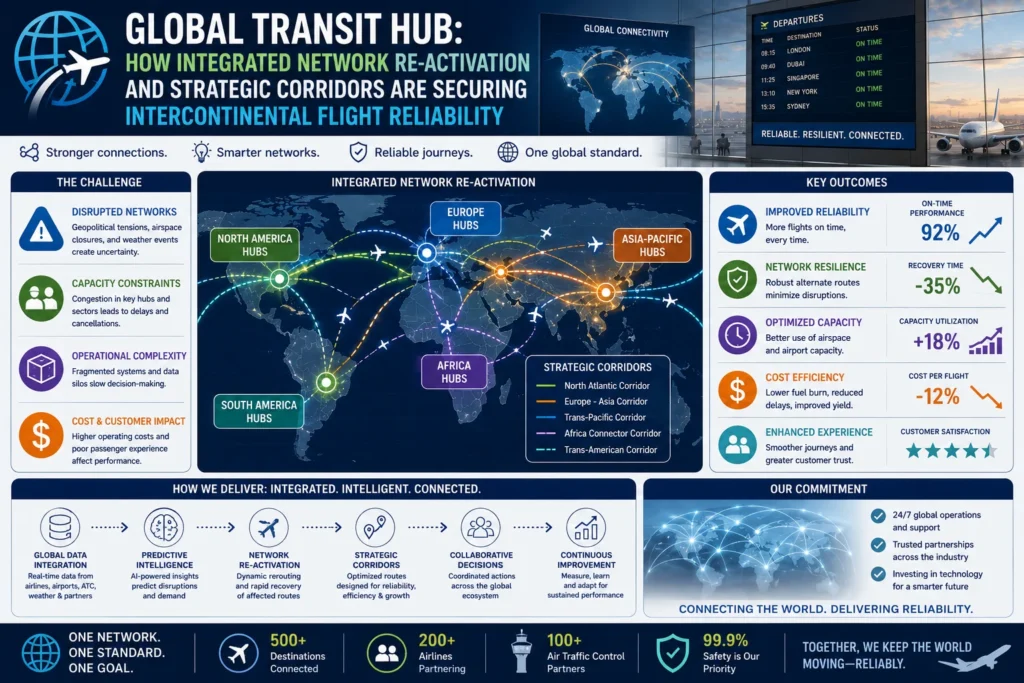
Coordinating complex global flight networks during peak travel windows requires resilient civil aviation systems and seamless infrastructure management. As international tourism prepares for high seasonal volumes, maintaining reliable connection corridors remains an absolute priority for aviation ministries and regional tourism planners. Official data from the Qatar Civil Aviation Authority and terminal management bureaus confirms that Hamad International Airport (DOH) in Doha has successfully executed a major phased restoration of its international aviation network.
By functioning as a centralized transit corridor, the Middle Eastern aviation gateway is managing high volumes of intercontinental passenger traffic. Over 35 active international passenger airlines have synchronized their flight allocations through the Doha hub, providing a highly structured alternative to traditional transit routes that frequently encounter peak-season airspace bottlenecks. For leisure tourists, corporate executives, and emerging market travelers, these official network updates signify a major milestone in global air corridor stability for the summer season.
Statistical Review of the Phased Airline Service Restorations
According to official administrative circulars and operational notices published by the Hamad International Airport authority in June 2026, the expansion and re-activation of flight schedules have been completed in careful coordination with regulatory bodies. The network now actively supports more than 35 foreign airline partners, managing daily departure arrays that bridge primary global markets across Europe, the Asia-Pacific, Africa, and the Americas.
The precise timelines and carrier distribution paths verified by airport operations show an organized return to standard capacity:
Expanded Carrier Footprint: The airport framework has successfully integrated over 35 global airline partners, including high-frequency operators and long-haul intercontinental carriers.
Targeted June Resumption Milestones: Recent official data logs indicate that critical global connectors completed their scheduled restarts during the June 2026 window, including RwandAir on June 2, Turkish Airlines on June 9, Etihad Airways on June 11, and Virgin Australia on June 15.
Infrastructure Growth Safeguards: To support this influx of daily movements, the airport utilizes the newly expanded Concourses D and E, which added 17 modern contact gates to increase boarding bridge capabilities and reduce reliance on remote bus transfers.
Strong Baseline Performance: Historical aviation board metrics show a solid foundation, with previous annual passenger traffic growing steadily, backed by an overall on-time performance rate maintained at 85 percent across hundreds of thousands of controlled aircraft movements.
This coordinated structure allows airline dispatch networks to maintain reliable scheduling parameters, ensuring that long-haul passenger groups bypass crowded regional congestion zones.
The Strategic Balance of Long-Haul Corridors and Feeder Infrastructure
The operational blueprint at Hamad International Airport functions as a highly synchronized multi-continent exchange point. Official statistics from the Ministry of Transport highlight that the hub’s geographic positioning allows legacy European carriers and Asia-Pacific operators to link their networks seamlessly, optimizing flight paths across major global economic zones.
Legacy operators connecting through Doha use structured schedules to protect international itineraries from local delays. For instance, high-value premium connectivity lines are maintained via long-haul bridges from major European capitals, while operators like Virgin Australia utilize the hub to support reliable routes to the Asia-Pacific region. This systematic approach ensures that passengers remain on schedule even during high-volume periods.
Simultaneously, regional operators provide an efficient short-haul feeder network across the Gulf Cooperation Council (GCC) territory. Carriers such as Saudia, Gulf Air, and Air Arabia operate high-frequency schedules that connect neighboring capitals directly into Doha’s primary international departures matrix. This internal alignment supports regional tourism and commercial traffic, moving high volumes of business and leisure travelers without overloading local terminal check-in zones.
Emerging Markets and Intercontinental Mobility Growth
A primary driver behind Doha’s 2026 operational expansion is its deep integration with rapidly expanding emerging markets. Official civil aviation records point to a significant increase in flight frequencies serving Central Asia, the Balkans, and East Africa.
Turkish Airlines provides a vital connection linking the crossroads of Europe and Asia directly to the Doha grid, while RwandAir maintains an expanding East African pipeline that supports growing transit demand between Africa, Europe, and Asia. Furthermore, high-volume travel sectors across the Indian subcontinent continue to represent a major segment of the hub’s passenger traffic, facilitating smooth transit for tourism, corporate assignments, and regional trade.
By channeling these diverse traffic streams through a single, infrastructure-ready mega-terminal, aviation authorities can balance gate capacities dynamically. This structured traffic flow ensures that ground handling departments, baggage routing systems, and passport control zones can operate efficiently during peak operational hours.
Practical Recommendations for Planning International Connections
While advanced terminal infrastructure and expanded airline partnerships offer a strong layer of schedule protection, passenger preparedness remains key to a smooth travel experience. Regional tourism boards and consular offices recommend that international travelers implement specific planning steps:
Utilize Official Electronic Portals: Passengers should verify active flight statuses and terminal allocations directly through the verified mobile applications of their specific airlines or the official Hamad International Airport digital interface before heading to their departure gates.
Check Single-Ticket Booking Protocols: When organizing multi-segment journeys involving different airline partners, secure your itinerary under a unified codeshare or alliance agreement. This alignment provides standard regulatory protections and handles baggage transfers automatically between connecting flights.
Acknowledge Fluid Scheduling Realities: Because international flight metrics are subject to localized operational, regulatory, and environmental variations, maintaining a flexible travel window ensures a stress-free journey.
Organize Documentation Before Arrival: Keep all valid visas, entry permits, and required health declarations clearly organized in your carry-on luggage to facilitate efficient processing at security and transfer checkpoints.
As global transport infrastructure continues to adapt to increasing travel demands throughout 2026, the consolidation of major airline networks at highly efficient hubs is setting a new standard for international transit. By tracking official updates and using advanced digital tools, travelers can confidently plan their international journeys and reach their destinations safely.
For more travel news like this, keep reading Global Travel Wire