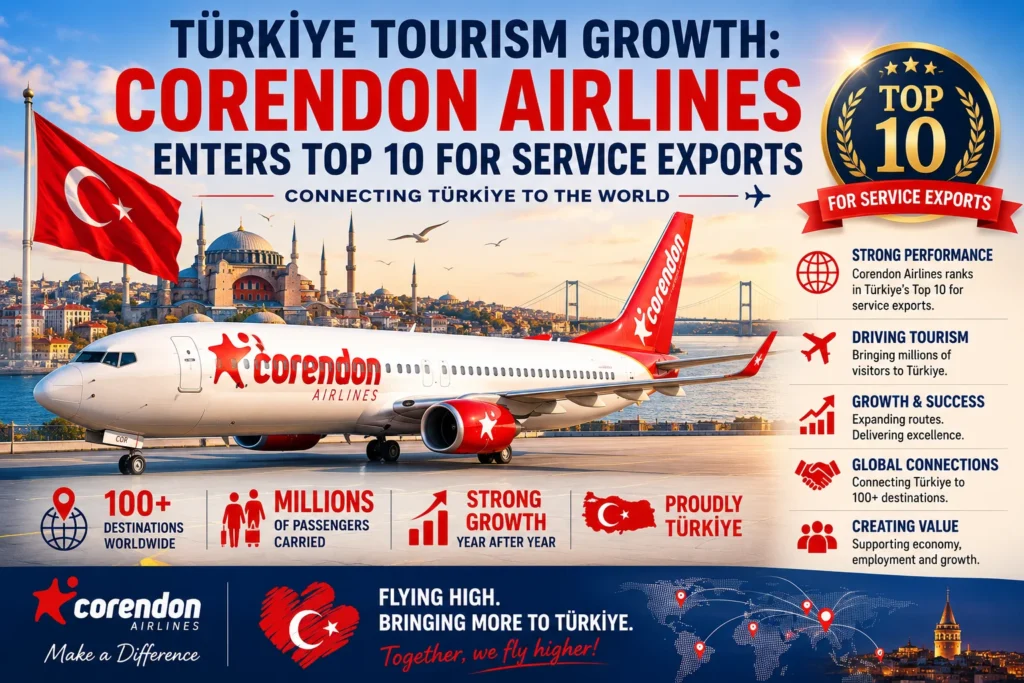
The landscape of Mediterranean travel is experiencing a substantial economic surge, driven by expanding aviation infrastructure and rising international passenger volumes. In a major development for the region’s leisure travel market, Corendon Airlines has officially entered the top 10 companies contributing most to the service exports ranking of the Republic of Türkiye. This major economic milestone was confirmed during the annual Champions of Export Awards ceremony, organized by the Turkish Exporters’ Assembly at the Haliç Congress Center in Istanbul.
According to official data released by the national trade assembly, the airline secured a premier position within the prestigious corporate ranking, highlighting its role in channeling international vacationers into the country’s primary coastal resorts. The recognition underscores how private aviation networks function as critical financial engines, directly generating foreign currency revenue through international flight operations and broad tourism logistics.
Two Decades of Expanding Mediterranean Holiday Corridors
This national corporate honor arrives as the international leisure carrier marks exactly 20 years of continuous commercial operations. From its initial launch as a regional holiday operator, the company has transformed into a massive multinational aviation platform. Today, official airline operations telemetry shows that the carrier transports approximately 10 million passengers annually, creating vital transit corridors that link international vacationers with key historical and coastal destinations.
Ministry data and corporate service registries outline an expansive operational footprint that currently connects 170 distinct cities across 45 countries. Over its two decades of service, the airline’s long-term flight logs reveal an extensive historical reach, having successfully operated flights into 542 airports distributed across 109 countries. This extensive network stability has proven instrumental in sustaining steady arrival numbers for regional tourism boards, particularly across the Aegean and Mediterranean coasts.
Driving Economic Impact Through Leisure Travel
The inclusion of an international airline in the top tier of the service exports ranking underscores the changing structure of the nation’s economic portfolio. Service exports, which encompass commercial aviation, hospitality management, and international tour operations, serve as a foundational pillar for national development plans. By consistently expanding seat capacity from high-demand European source markets, the carrier actively assists in spreading visitor distribution beyond traditional peak summer weeks.
A closer look at the carrier’s deployment matrix highlights a dual strategy focused on both direct point-to-point holiday charters and scheduled network routes. This operational agility allows local tourism ecosystems—ranging from large-scale beach resorts to independent cultural tour operators—to maintain predictable guest volumes throughout the year.
Performance Breakdown of Corendon Airlines Operations
The operational metrics illustrating this extensive transport network reveal the airline’s exact capacity, historical reach, and current market coverage within the international holiday sector.
| Operational Metric | Verified Performance Data |
| Annual Passenger Volume | Approximately 10 million travelers |
| Current Global Reach | 170 cities across 45 destination countries |
| Historical Flight Footprint | 542 airports utilized across 109 nations |
| Market Anniversary | 20 years of commercial operations |
| National Export Status | Top 10 in Service Exports |
| Event Venue | Haliç Congress Center, Istanbul |
Strategic Fleet Upgrades and Future Market Expansion
To support this high-volume passenger traffic, the carrier continues to invest heavily in fleet modernization and fuel-efficient aircraft. According to civil aviation registry updates, the integration of next-generation aircraft remains central to lowering per-passenger carbon emissions while simultaneously extending non-stop range capabilities from Northern and Central Europe.
For regional tourism boards, the availability of modern, cost-efficient flight options is critical to remaining competitive against alternative Mediterranean destinations. As international traveler preferences shift toward sustainable travel options and premium economy seating, the airline’s ongoing cabin refurbishments and route optimization strategies align directly with the broader objectives of national tourism ministries.
Strengthening Global Tourism Connections
The strategic integration between airline networks and municipal tourism infrastructure is a primary driver of long-term economic resilience. Public transport statements emphasize that the continuous flow of international arrivals supports thousands of auxiliary jobs in the hospitality, food service, and ground transportation sectors.
By maintaining direct operational links with major European transit hubs, the carrier ensures that primary holiday regions remain easily accessible to families, solo travelers, and corporate retreat groups alike. As the international travel market looks toward the remainder of the fiscal year, the carrier’s proven network expansion and its high position in national export rankings demonstrate that the aviation sector remains a cornerstore of sustainable tourism growth and broader economic success.
For more travel news like this, keep reading Global Travel Wire