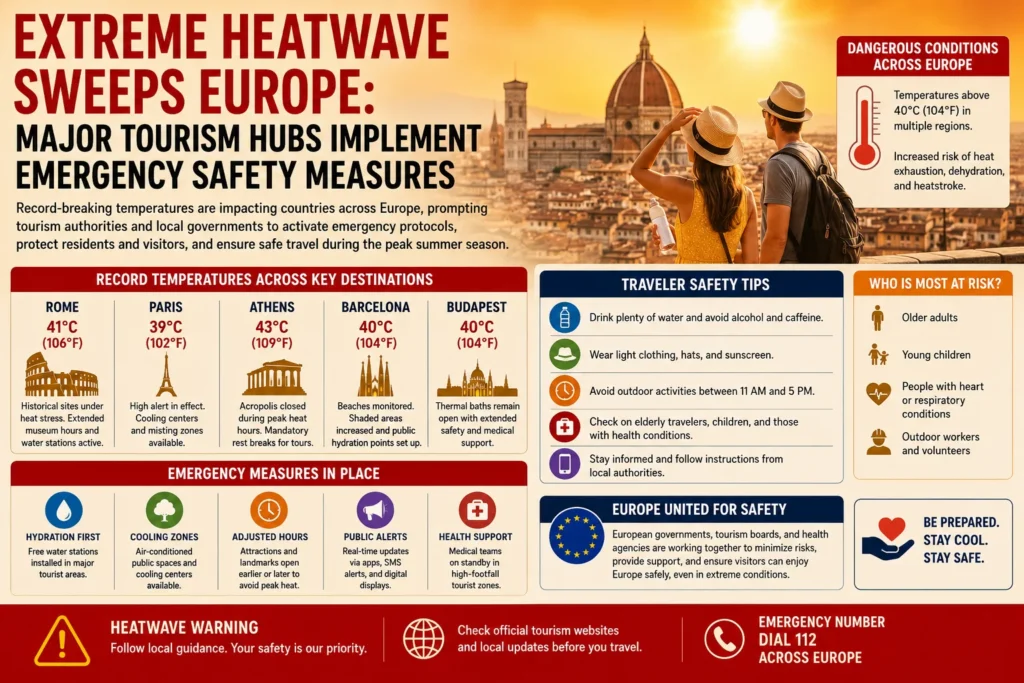
A historic meteorological event is sweeping across Europe, prompting national health ministries and municipal authorities to implement emergency protocols. Official data from state weather agencies and federal environmental ministries confirm that a severe heatwave, which initiated on June 20, 2026, has expanded into one of the most intense heat events recorded in the region’s climate history. As extreme weather alerts intensify, destination managers are adjusting infrastructure to safeguard millions of international summer tourists and local residents from hazardous thermal conditions.
Public data from European climate monitoring networks indicates that the continent is experiencing temperature anomalies that are rising at a rate faster than the global baseline. In response, regional governments are prioritizing immediate safety interventions, introducing targeted restrictions on public gatherings, modifying transport schedules, and expanding emergency medical support to mitigate the impact on the seasonal travel economy.
Public Gatherings and Local Restructuring in France
In France, municipal administrators and regional health boards have enacted rigorous public safety mandates to protect large crowds from heat-related illnesses. In Paris and surrounding metropolitan zones, local governments have introduced localized alcohol bans in designated public parks and outdoor tourist spaces to minimize the risk of dehydration among visitors.
Furthermore, municipal authorities have canceled multiple high-profile open-air concerts, community music festivals, and sports gatherings scheduled for the weekend. National health directives emphasize that dense outdoor gatherings during peak sunlight hours present an unmanageable strain on emergency medical personnel. Local hospital networks have expanded their triage capacities, reallocating staff to handle a measurable increase in heat exhaustion cases among vulnerable demographics, including senior travelers and young children.
Transport and Infrastructure Adaptations in Germany and Sweden
The prolonged thermal stress is directly affecting critical transportation infrastructure, creating logistical challenges for tourists utilizing rail and road networks across Central and Northern Europe.
In Germany, the Federal Ministry of Digital and Transport has issued specific driving advisories as sustained surface temperatures cause localized melting and blistering on major highway corridors. Maintenance crews are applying specialized top treatments to vulnerable sections of the Autobahn network to stabilize the asphalt and prevent structural cracking.
Simultaneously, the German Weather Service has expanded its highest-tier warnings, urging travelers to restrict driving to early morning or late evening hours when ambient conditions are cooler.
Further north, Sweden is experiencing unprecedented infrastructure strain. The Swedish Transport Administration reported that extreme thermal expansion has caused railway tracks to twist out of alignment along major passenger routes. To maintain passenger safety, rail operators have implemented mandatory speed restrictions across affected networks, leading to cascading delays for long-distance holiday travelers. Technical teams are monitoring rail temperatures around the clock, using cooling agents and physical adjustments to restore track integrity before peak commuting hours.
European Heatwave Operational Impact Matrix
The adjustments implemented by national transport and health ministries highlight the specific operational changes occurring across key travel destinations.
| Destination Country | Official Warning Tier | Primary Infrastructure Threat | Key Municipal Response Measure |
| France | Level 3: Severe Alert | Urban heat island effect, medical strain | Outdoor event cancellations, alcohol bans |
| Germany | Maximum Heat Warning | Highway asphalt degradation, surface melting | Emergency road maintenance, travel advisories |
| Sweden | Rail Safety Directive | Thermal track expansion, alignment shifts | Mandatory train speed limits, network delays |
| Regional Hubs | High Advisory Status | Power grid overload, transit delays | Distribution of public cooling stations |
Strategic Planning for International Summer Travelers
As regional climate adjustments continue throughout the summer tourism season, national tourism offices and civil protection departments are advising independent travelers to prioritize personal well-being and remain adaptable. To navigate these summer tourism disruptions safely, state health organizations recommend several core practices:
Monitor Government Weather Portals: Check real-time weather updates via official state meteorological websites before embarking on outdoor excursions or regional transit routes.
Adjust Sightseeing Schedules: Plan visits to prominent outdoor monuments, archaeological sites, and historic districts during cooler morning hours or late evenings, avoiding exposure between 11:00 AM and 4:00 PM.
Incorporate Indoor Cultural Spaces: Utilize air-conditioned public museums, historic libraries, and indoor visitor centers to break up extended outdoor walking tours.
Maintain Strict Hydration Protocols: Carry adequate water supplies at all times, making use of municipal public drinking fountains and cooling stations established by local emergency services.
Federal tourism ministries continue to collaborate with municipal emergency services to ensure that essential information remains accessible to international visitors in multiple languages. By prioritizing rapid data sharing and implementing proactive structural safeguards, European destinations are working to preserve the safety and stability of the international travel network during this period of exceptional seasonal weather.
For more travel news like this, keep reading Global Travel Wire