Greece is accelerating the transformation of its national railway system through infrastructure investment, digital monitoring, stronger security measures and expanded workforce training, placing passenger safety and operational reliability at the centre of national transport policy.
The latest priorities were reviewed during a visit by Alternate Transport Minister Giorgos Kotsiras to Hellenic Railways and the Athens Traffic Control Centre at the Acharnes Railway Centre.
Discussions focused on infrastructure projects, funding, digital transformation, staffing and the everyday performance of the network. The government’s approach signals that railway reform will extend beyond construction, covering how trains are supervised, employees are trained and passengers experience the system.
For residents and visitors, a more reliable network could improve journeys between Athens, Thessaloniki, central Greece and northern regions while supporting lower-impact alternatives to road transport.
Digital Platform Strengthens Train Monitoring
The Athens Traffic Control Centre demonstrated the increasing role of digital technology in railway operations.
Officials examined telecommand systems used to monitor train movements and reviewed railway.gov.gr, a digital platform that provides live information about passenger trains operating across the network.
The platform was introduced to give both railway personnel and the public greater visibility over train locations. Satellite positioning and automated alerts can help control teams identify operating irregularities and respond more quickly when intervention is required.
This increased visibility is intended to complement signalling and traffic-control systems rather than replace them.
For travellers, improved digital supervision could support clearer information, faster incident management and greater confidence when planning rail journeys. Accurate live data is especially valuable for passengers making hotel, ferry, airport or onward train connections.
Cameras and Drones Expand Network Supervision
Greece is also increasing the use of cameras and drones to supervise railway infrastructure.
Rail routes extend through urban areas, remote landscapes, stations, tunnels and level crossings, making continuous physical inspection difficult. Drone technology can help infrastructure teams examine hard-to-access locations, while cameras can support the detection of damage, trespassing and security incidents.
The country’s railway safety framework includes provisions for visual recording equipment at traffic-control centres and other operational locations. Cameras on trains can also provide additional information about conditions along the route.
These measures create another layer of oversight across the railway system. Faster identification of infrastructure problems may allow maintenance teams to intervene before faults cause extensive disruption.
Operation Ariadne Supports Passenger Security
The security programme also includes cooperation with the Hellenic Police through Operation Ariadne.
Police personnel assigned to the initiative work across public transport environments to prevent unlawful behaviour, address vandalism and improve passenger security.
Protecting railway equipment is particularly important because vandalism can damage signalling, telecommunications and other infrastructure needed for safe operations. It can also increase repair costs and interrupt passenger services.
A visible security presence at stations and transport hubs may help improve confidence among commuters, students and international visitors unfamiliar with the network.
However, Greece’s strategy recognises that railway safety depends on more than policing. Infrastructure, operating procedures, technology and skilled employees must function together.
Workforce Training Remains a Central Priority
During the ministerial visit, attention was also given to recruitment, employee training and professional responsibility.
New digital systems require staff capable of understanding real-time information and responding correctly. Traffic controllers, drivers, station teams, maintenance workers and security personnel all need clear procedures and specialised knowledge.
Recent railway reforms have increased the focus on staff assessment, modern training methods and stronger organisational accountability.
This workforce component is essential because advanced technology cannot independently deliver a safe railway. Its effectiveness depends on disciplined operation, regular maintenance and coordinated decision-making.
Major Funding Supports Central Greece Railway Upgrade
Infrastructure investment is advancing alongside the operational reforms.
The second phase of the Palaiofarsalos–Kalambaka railway project has been included in Greece’s Transport 2021–2027 programme, with public funding exceeding €85.6 million and support from the European Union’s Cohesion Fund.
The project covers approximately 80.4 kilometres of existing single-track railway and includes electrification, electronic signalling, telecommand and European Train Control System Level 1 technology.
It also incorporates a new passing line at Sofades and limited improvements to existing station buildings.
Once completed, the modernised route could improve connections serving Karditsa, Trikala and Kalambaka, the main rail gateway for visitors travelling toward Meteora.
Modern Rail Can Expand Mainland Tourism
Greece’s railway network offers an opportunity to distribute visitors beyond its famous islands and established coastal resorts.
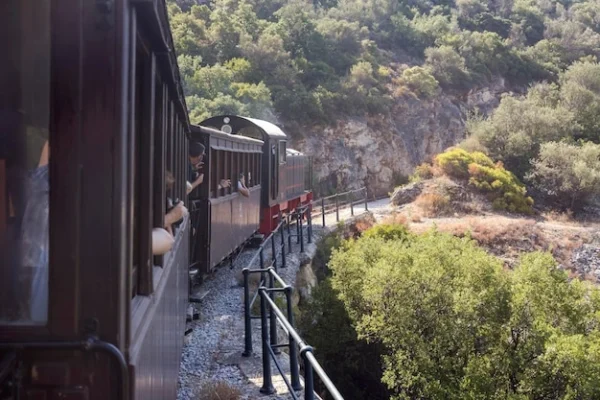
Improved services could provide easier access to inland cities, mountain landscapes, historic communities and scenic routes such as Diakopto–Kalavryta and the rail corridors of northern Greece.
Reliable trains can encourage longer itineraries, reduce dependence on rental vehicles and help regional hotels, restaurants, attractions and local transport businesses benefit from visitor spending.
The programme’s long-term success will depend on completing infrastructure work, maintaining digital systems and rebuilding passenger confidence.
By combining track investment, real-time monitoring, security and workforce development, Greece is establishing the foundations for a safer and more efficient railway capable of supporting national mobility, regional growth and sustainable tourism.
For more travel news like this, keep reading Global Travel Wire