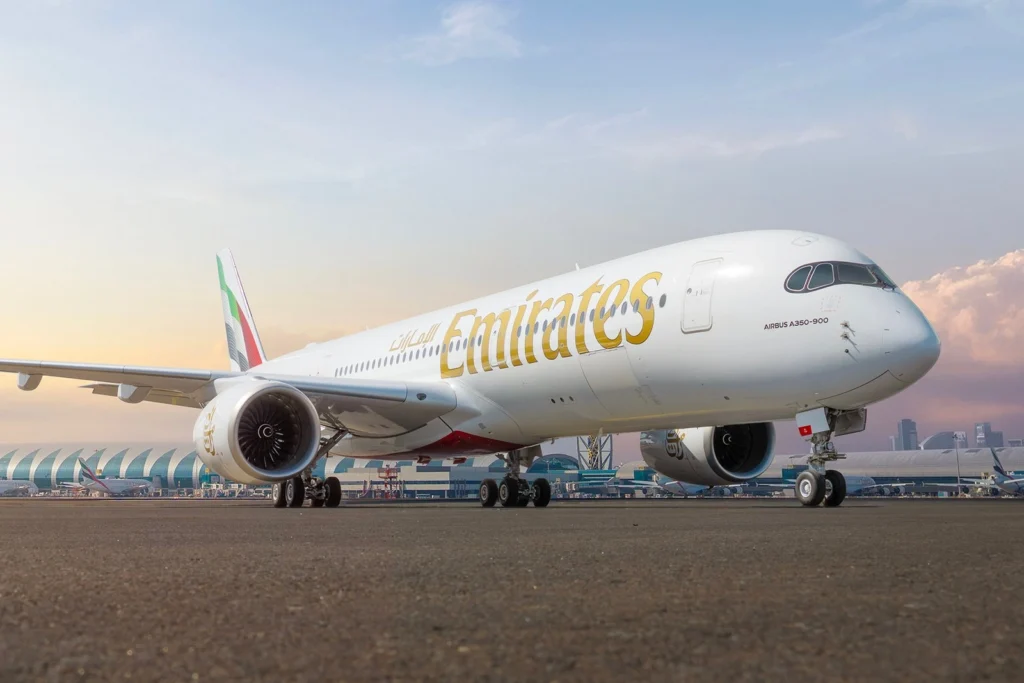
Kenya’s international aviation network entered a major new phase on July 1, 2026, as Emirates launched its third daily flight between Dubai and Nairobi, increasing the route to 21 weekly services.
The additional flight, EK717, arrived at Jomo Kenyatta International Airport shortly after 5 a.m., marking a significant capacity expansion on one of East Africa’s most important international air corridors. Emirates is operating the service with a three-class Boeing 777, adding more travel options for passengers connecting between Kenya, the United Arab Emirates and global destinations through Dubai.
The expansion strengthens Nairobi’s role as a regional aviation gateway while supporting Kenya’s tourism, trade and business travel ambitions. It also gives international visitors greater flexibility when planning safari holidays, coastal stays, business trips and onward journeys within East Africa.
New Schedule Improves Global Connections
The newly introduced EK717 departs Dubai at 1:20 a.m. and arrives in Nairobi at 5:25 a.m. The return service, EK718, leaves Jomo Kenyatta International Airport at 7:10 a.m. and reaches Dubai at 1:15 p.m.
This early-morning schedule complements Emirates’ existing Nairobi services and is designed to improve connections from major gateways in Europe and North America.
Travelers arriving in Nairobi early in the day can continue toward safari lodges, national parks, regional cities or Kenya’s Indian Ocean coast without losing an entire travel day. The timing is particularly useful for visitors heading beyond the capital to destinations such as the Maasai Mara, Amboseli, Tsavo, Mombasa, Diani Beach and other established tourism areas.
Passengers departing Nairobi also gain better access to onward Emirates flights serving the United Kingdom, France, Belgium, Spain, Italy, Portugal and other European markets.
Kenya Tourism Gains Greater International Access
Improved air connectivity is central to Kenya’s plan to welcome five million international tourists annually by 2030.
The third daily Emirates service increases access from important long-haul visitor markets while giving tour operators and hospitality businesses more opportunities to develop flexible itineraries.
Kenya’s tourism appeal extends from wildlife safaris and conservation areas to beaches, cultural experiences, meetings and business events. Frequent international flights help connect these attractions with travelers who may otherwise face long transfers or limited arrival choices.
The additional capacity could support hotels, safari camps, restaurants, transport companies and local tourism communities by distributing arrivals across more hours of the day and allowing visitors to reach their final destinations more efficiently.
Boeing 777 Adds Premium and Economy Capacity
The new frequency is operated by a three-class Boeing 777, offering First Class, Business Class and Economy Class accommodation.
Emirates is the only airline currently offering First Class regularly on flights into and out of Nairobi, strengthening the city’s premium aviation offering for high-value leisure travelers, corporate passengers and government delegations.
Using a wide-body aircraft across the service also provides substantial passenger and baggage capacity. This is important on a route carrying a mixture of tourists, business travelers, families and passengers connecting to destinations beyond Dubai.
The Boeing 777 operation allows Emirates to scale capacity without reducing its established onboard product across the Nairobi market.
Partnership Supports Regional African Travel
The expanded schedule also works alongside Emirates’ interline partnership with Kenya Airways, introduced in 2023.
More than 31,000 passengers have already used the partnership to travel between the two airlines’ networks. Connections include destinations such as Rwanda, Kilimanjaro in Tanzania, Mozambique and other regional markets.
The third daily flight provides additional departure choices and makes Nairobi more effective as a connecting point for passengers traveling between Dubai’s global network and destinations across East and Central Africa.
This can help reduce waiting times, improve itinerary flexibility and increase the attractiveness of Nairobi as both a destination and a transfer gateway.
Cargo Capacity Benefits Kenyan Exporters
The expansion also delivers a substantial cargo advantage.
The additional Boeing 777 service creates approximately 280 tonnes of extra weekly freight capacity. This is particularly valuable for Kenya’s exporters of flowers, fresh produce, fruits and vegetables, which depend on rapid and temperature-sensitive air transport.
Combined with Emirates SkyCargo’s three weekly freighter services to Nairobi, the airline now provides more than 1,100 tonnes of weekly cargo capacity into and out of Kenya.
The early departure from Nairobi can help agricultural products reach European and Gulf markets quickly, supporting farmers, exporters and supply chains connected to Kenya’s horticultural industry.
Thirty Years of Emirates Operations in Kenya
Emirates began flying to Nairobi in 1995 and has carried more than six million passengers to and from Kenya during three decades of operations.
The airline now connects Kenya with more than 138 destinations through Dubai, creating links with Asia, Australia, Europe, the Middle East and North America.
The third daily Dubai–Nairobi flight represents more than an increase in frequency. It strengthens Kenya’s tourism access, expands trade capacity and gives passengers greater control over their international journeys.
With 21 weekly Boeing 777 services now operating, Nairobi has secured a stronger position within Emirates’ African network and the wider global aviation system.
For more travel news like this, keep reading Global Travel Wire