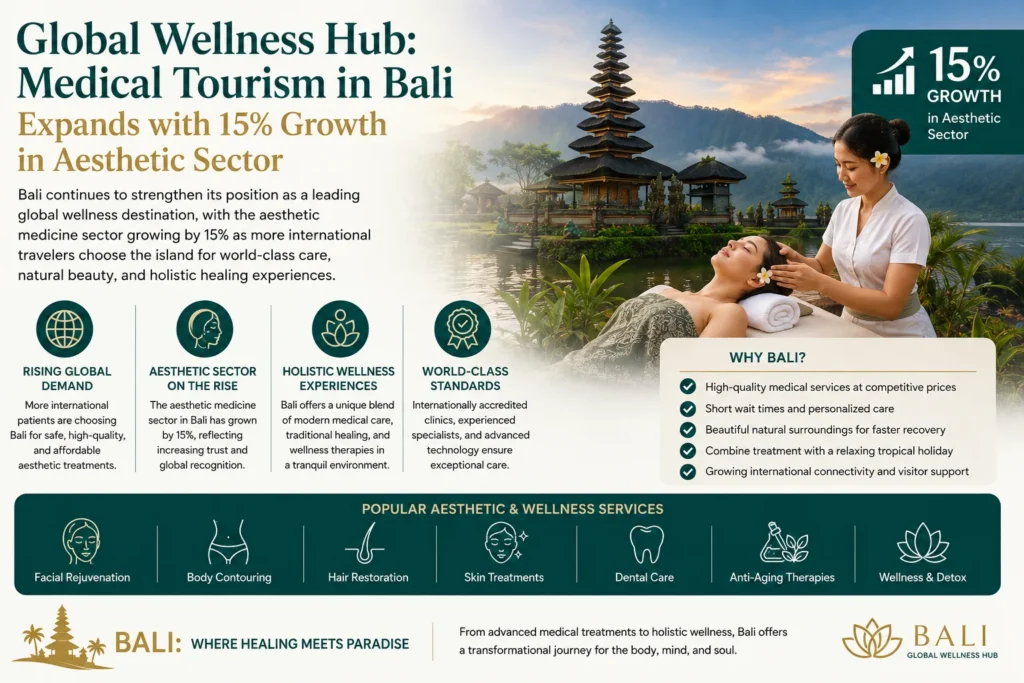
The global healthcare landscape is witnessing a structural transformation as medical tourism in Bali establishes a major presence in the multibillion-dollar wellness economy. Long celebrated for its vibrant cultural heritage and iconic landscapes, the island is successfully executing a state-backed diversification strategy to position itself as a primary regional hub for high-end medical travel. Driven by recent infrastructure milestones and an influx of advanced therapeutic technologies, Bali’s aesthetic and cosmetic treatment sectors are experiencing an annual growth rate of 15 percent, marking a significant transition toward premium elective medical care.
This development follows massive structural investments by the Indonesian government, most notably the establishment of the Sanur Special Economic Zone (SEZ), dedicated entirely to health and wellness. The centerpiece of this initiative, the state-of-the-art Bali International Hospital (BIH), was officially inaugurated by the state administration to centralize world-class healthcare, curb outbound medical spending by domestic citizens, and attract premium international patients. The presence of this world-class medical anchor has simultaneously spurred rapid modernization within the island’s private medical footprint, encouraging local specialized clinics to adopt top-tier clinical innovations.
Technological Advancements Fuel Surging Demand for Aesthetic Care
The steady 15 percent year-on-year increase in Bali’s aesthetic market volume is heavily concentrated within non-invasive, high-technology segments. Comprehensive research conducted by medical solution developers highlights that the skin-tightening and anti-aging sectors are generating the highest volume of consumer interest. This trend is closely aligned with shifting global consumer patterns, where travelers increasingly prioritize preventative wellness, subtle cosmetic enhancements, and treatments backed by rigorous clinical data.
To capitalize on this expanding demographic, healthcare innovators are deploying advanced, clinically proven equipment directly to medical centers across the island. A primary example is the introduction of premium radio-frequency skin-tightening technologies, such as the Korean-developed Xerf systems, which require substantial initial capital investments of nearly IDR 2 billion per unit. Industry operators note that Bali’s strong internal purchasing power, paired with a steady influx of high-spending international tourists, provides an ideal commercial environment for such premium clinical technology.
The focus on cutting-edge systems is a calculated response to the highly discerning nature of modern medical travelers. International patients arriving in Bali frequently possess extensive experience with aesthetic procedures in their home countries. Consequently, they maintain incredibly strict benchmarks for care, demanding optimal aesthetic results alongside minimal post-procedure recovery times, advanced sterile clinic environments, and absolute physical comfort during their sessions.
Bridging the Gap: Retaining Domestic Capital and Attracting Global Travelers
A primary objective of Indonesia’s modernized healthcare push is balancing the nation’s medical trade deficit. Historically, millions of Indonesian citizens traveled to regional neighbors like Singapore, Malaysia, or Thailand for advanced medical checkups and cosmetic elective surgeries, representing an annual economic outflow of billions of dollars. By introducing equivalent, premium-tier technologies and internationally trained specialists to the domestic market, Bali is successfully retaining these patients closer to home.
Simultaneously, the island is capturing a lucrative cross-border market by offering a compelling value proposition: the leisure-medical combination vacation. Travelers can seamlessly integrate high-tier dermatological or anti-aging treatments into a standard luxury holiday itinerary. A patient can undergo a non-invasive skin-tightening or rejuvenating procedure in a serene, resort-style clinic environment and immediately transition to a tranquil wellness retreat for recovery, avoiding the clinical, high-stress atmosphere typically associated with traditional medical centers.
The market viability of these high-end treatments is already well-supported by performance metrics from neighboring metropolitan areas. Initial rollouts of advanced radio-frequency systems in major Indonesian cities, such as Surabaya, recorded upwards of 500 individual treatments within their opening three months of operation. Clinicians in Bali are projecting even higher engagement rates, given the island’s unique position as a global tourism crossroads.
Seamless Wellness Experiences and Elevated Clinical Standards
The ongoing anti-aging and holistic wellness trend shows no signs of slowing down as global populations place a higher premium on physical appearance, vitality, and longevity. Medical professionals operating within Bali’s leading dermatology and venereology practices note that the modern patient’s mindset has evolved significantly. In 2026, the clinical outcome is no longer the sole metric of success; the entire procedural journey—encompassing patient comfort, localized pain management, and the overall peacefulness of the treatment environment—plays an equal role in patient satisfaction.
By marrying top-tier medical innovations with the island’s legendary hospitality and natural healing environments, Bali is effectively redefining the aesthetic travel experience. The ongoing convergence of state-backed healthcare infrastructure, progressive special economic zone regulations, and advanced cosmetic technologies ensures that the island is well-equipped to challenge established regional giants, securing its role as a premier destination for holistic and medical rejuvenation.
For more travel news like this, keep reading Global Travel Wire