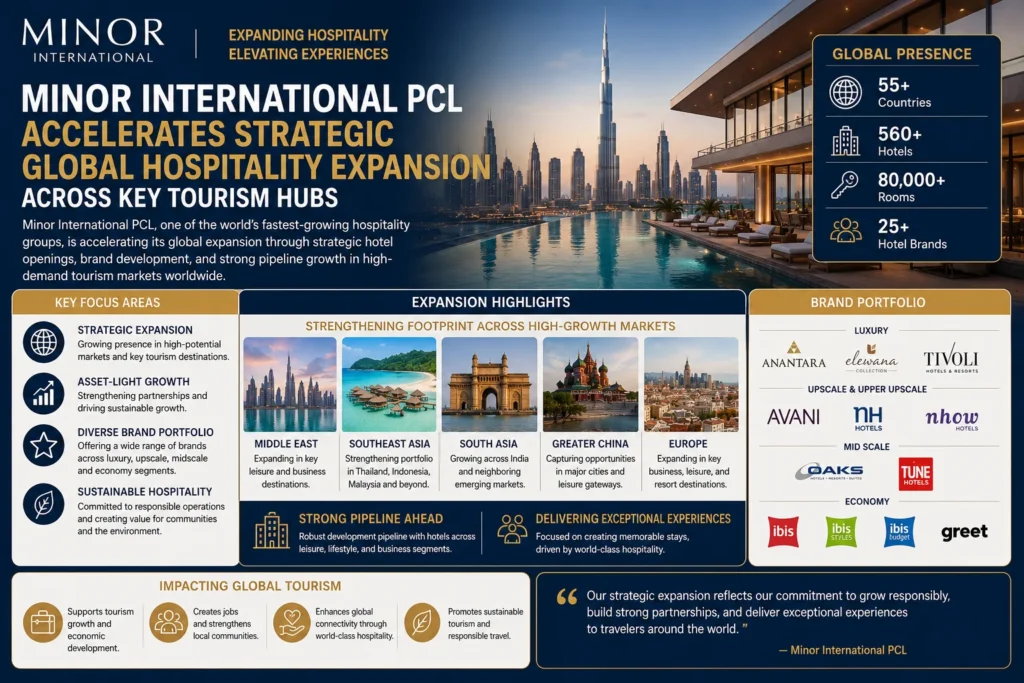
A major structural diversification is sweeping through the international leisure sector as multinational operators scale up their cross-border footprints. Minor International PCL (MINT), a leading diversified hospitality and consumer-services group, has finalized an aggressive long-term development framework designed to accelerate its global hospitality expansion. The multi-regional strategy focuses on expanding its branded hospitality portfolios, commercial food services, and high-foot-traffic lifestyle retail ecosystems across established and emerging tourism markets.
From its primary operational roots in Southeast Asia, the corporation has successfully constructed an international service platform. Official corporate listings and public governance disclosures indicate that the group’s balanced business model combines direct asset ownership and long-term lease agreements with capital-light management contracts and international franchising. This operational versatility allows the organization to secure highly resilient, recurring revenue streams while minimizing localized macroeconomic vulnerabilities across the global travel ecosystem.
Scaling Branded Hotel Portfolios and Flexible Management Systems
At the center of the group’s real estate trajectory is a highly diversified accommodation platform. The hospitality division operates a comprehensive mix of urban business hotels, luxury wellness resorts, and extended-stay mixed-use developments located in primary gateway cities and high-demand vacation destinations. By balancing its operational structure, the company maximizes direct real estate yields from owned assets while rapidly expanding its geographic footprint via third-party management fees.
According to global tourism board data and national hospitality pipeline updates, international visitor trends increasingly favor brands that offer localized cultural experiences backed by predictable international service standards. The group addresses this demand by deploying distinct hospitality concepts tailored to specific traveler demographics. Urban properties are strategically engineered around high connectivity, seamless transit access, and premium corporate meeting infrastructure. Conversely, the resort portfolio focuses heavily on experiential vacationing, comprehensive family services, and dedicated environmental conservation programs.
Integrating Food Services and High-Traffic Restaurant Footprints
Beyond core lodging assets, the corporation operates a massive standalone and co-located restaurant network. The food-service division spans casual dining networks, quick-service concepts, and specialized artisanal culinary outlets. These establishments are deliberately positioned within major international travel hubs, high-street shopping corridors, and integrated resort properties to capture spending from both international vacationers and domestic urban consumers.
Official commercial registries highlight that this integrated food-service footprint serves as a critical revenue multiplier for the broader hospitality network. By embedding recognized proprietary dining brands directly inside hotel structures, the group drives substantial cross-selling opportunities and maximizes non-room revenue per available guest. Furthermore, centralized procurement frameworks and standardized supply chains ensure that regional fluctuations in ingredient costs or logistics are minimized, protecting core operational margins during shifting economic cycles.
Elevating Premium Lifestyle Retail and Experiential Tourism
To complement its core lodging and dining divisions, the group maintains a dedicated presence in travel-linked lifestyle retail and premium wellness sectors. The lifestyle division manages an array of branded fashion, accessory, and consumer-goods outlets situated within premier resort complexes and high-density urban shopping zones. This spatial integration ensures continuous brand exposure to high-spending international retail tourists throughout their travel itineraries.
Simultaneously, the firm continues to invest heavily in its dedicated wellness infrastructure, including international spa networks and premium health clubs. According to global wellness tourism statistics published by regional ministries, health-oriented travel continues to expand at a rapid pace. By positioning advanced spa therapies and holistic recreation centers as integral components of its premium resort products, the company successfully justifies premium room pricing and fosters long-term consumer loyalty.
Geographic Diversification and Advanced Digital Yield Management
Operating across diverse regulatory jurisdictions provides the organization with a highly effective buffer against localized economic downturns or unilateral shifts in regional travel policies. Weakened tourism demand in one continent is frequently counterbalanced by rapid operational recoveries or seasonal surges across alternative geographical zones.
To maintain peak efficiency across these varied markets, the group relies heavily on advanced digital infrastructure and centralized yield management platforms. The corporation utilizes direct-to-consumer online booking applications alongside international global distribution systems (GDS) to optimize room rates dynamically based on real-time occupancy metrics, local seasonality, and macroeconomic data. On the food-service side, integrated digital ordering applications, localized delivery partnerships, and robust data analytics tools allow property managers to anticipate consumer trends, streamline staffing levels, and drastically reduce food waste.
Sustainable Tourism Frameworks and Future Investor Outlook
As international sustainability standards tighten, the firm is systematically embedding rigorous environmental, social, and governance (ESG) compliance measures into its daily operations. Verified tourism board updates confirm that properties are actively implementing advanced water conservation systems, comprehensive waste-diversion programs, and localized agricultural sourcing agreements. These initiatives not only lower baseline utility expenditures but also align the brand with the environmental expectations of modern eco-conscious travelers and institutional global investors.
Public financial disclosures from its primary stock exchange listing show that the market monitors key operational indicators—such as average daily rates (ADR), revenue per available room (RevPAR), and same-store sales growth—as primary barometers of the company’s fiscal health. By maintaining a well-capitalized balance sheet, pursuing organic market penetration, and forging strategic international joint ventures, the organization remains exceptionally well-positioned to lead the next phase of global hospitality expansion across the international travel and leisure marketplace.
For more travel news like this, keep reading Global Travel Wire