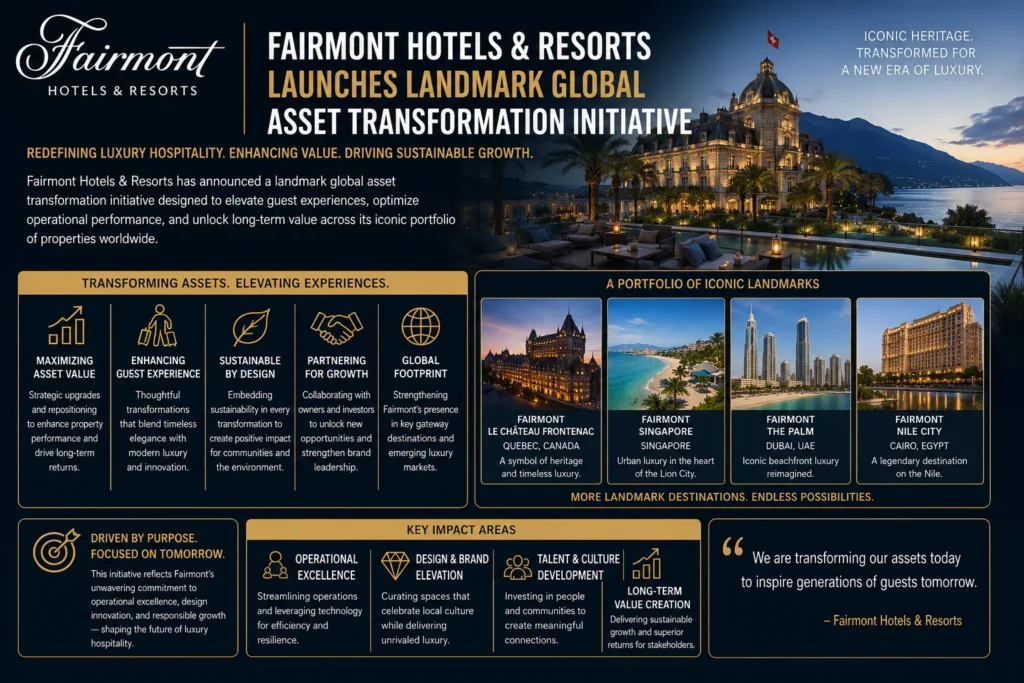
A dramatic physical and cultural evolution is sweeping through the international luxury hospitality landscape as property standards undergo significant structural upgrades. Fairmont Hotels & Resorts has officially deployed a comprehensive, multi-regional capital investment program encompassing approximately 20 percent of its entire global hospitality portfolio. The expansive redevelopment initiative involves major structural updates, completely reimagined guest service architectures, and advanced structural modifications across operational assets in the Americas, Europe, Africa, and the Asia-Pacific region.
According to institutional project blueprints and official tourism board releases, the primary objective of this coordinated rollout is to elevate core brand standards while preserving the unique architectural heritage that defines these landmark destinations. By integrating cutting-edge environmental infrastructure with updated high-end hospitality designs, the brand aims to strengthen its market share in prime global tourism corridors, appealing directly to the changing expectations of high-net-worth international leisure travelers and premium corporate delegates.
Mega Projects Redefining the Atlantic and European Tourism Corridors
Among the capital allocation frameworks announced within the revitalization plan, two flagship properties represent the largest single-asset financial investments. The iconic Fairmont Southampton in Bermuda is currently undergoing a massive $550 million redevelopment program. Officially managed in coordination with real estate investment firm Gencom, this extensive coastal transformation includes a comprehensive strip-out and rebuild of all guestrooms, the introduction of entirely new culinary venues, the expansion of state-of-the-art corporate convention halls, and completely modernized open-air leisure complexes. The destination is structurally scheduled to welcome international arrivals back to its premium shoreline footprint in late 2026.
Simultaneously, across the Atlantic, the Fairmont Grand Hotel Geneva in Switzerland has initiated a similarly ambitious architectural overhaul. Positioned as a premier urban gateway along the Lake Geneva shoreline, the property is being completely optimized to meet modern European thermal efficiency standards and ultra-luxury consumer expectations. This major Swiss development project is structured to complete its phased rollout and officially reopen to the public in 2027.
Balancing Urban Architectural Innovation with Historic Preservation
The long-term development strategy demonstrates a calculated balance between constructing highly advanced, ultra-modern urban skyscrapers and maintaining historic architectural treasures. Official statements from Fairmont’s executive leadership emphasize that while the brand continues to expand into rapidly growing economies through newly constructed landmarks—such as Fairmont Doha, Fairmont Hanoi, and the upcoming Fairmont Tokyo—the continuous investment in heritage infrastructure remains a central priority for long-term brand equity.
To maintain operational continuity and exceptional service delivery across its classic portfolio, specialized interior design and construction pipelines have been deployed at a long list of legendary properties. Intensive architectural updates are actively progressing at:
The Savoy in London: Refurbishing premium suites to blend classic British heritage with advanced in-room technologies.
Fairmont Pacific Rim and Fairmont Waterfront: Upgrading West Coast Canadian urban spaces to maximize green building compliance.
Fairmont Château Laurier, Fairmont Tremblant, and Fairmont Le Château Frontenac: Modernizing historic French-Canadian landmarks with advanced climate controls and structural preservation techniques.
Furthermore, several major properties have already completed their scheduled overhauls. Travelers visiting Fairmont Jasper Park Lodge, Fairmont Pittsburgh, Fairmont Orchid, and the all-suite Fairmont Kea Lani in Hawaii are already experiencing fully updated guest spaces, enhanced recreational facilities, and modernized dining layouts.
Temporary Operational Closures Clear Way for Future Holiday Experiences
Executing comprehensive luxury hotel renovations within historic operating structures frequently requires temporary pauses in guest room inventory to ensure construction safety and accelerate project timelines. As part of this planned scheduling strategy, the Fairmont Winnipeg is scheduled to temporarily close its doors starting in July 2026. The property will undergo a complete, top-to-bottom transformation of its public spaces, guest rooms, and mechanical infrastructure before officially welcoming travelers back in the summer of 2027.
Similarly, in the East Asian tourism corridor, the Fairmont Beijing will temporarily halt guest operations starting in September 2026. The capital city property will utilize the complete building closure to execute a rapid, highly integrated modernization program designed to elevate its interior finishes to match the ultra-luxury competitive landscape of the region.
Broad International Investment Horizon Stabilizes Regional Networks
Beyond the full building closures, localized, non-disruptive refurbishment works are progressing steadily across additional core assets worldwide. Substantial capital continues to flow into the historic Fairmont Banff Springs, the waterfront Fairmont Empress, the massive Fairmont Royal York in Toronto, and the prominent Fairmont Nile City in Egypt.
Tourism ministry data indicates that these continuous property reinvestments act as a powerful anchor for local tourism economies. By consistently updating premium hospitality assets, the brand ensures that major travel hubs maintain their competitive appeal, drawing high-spending international visitors, securing local service jobs, and establishing a sophisticated global standard for the luxury travel sector.
For more travel news like this, keep reading Global Travel Wire