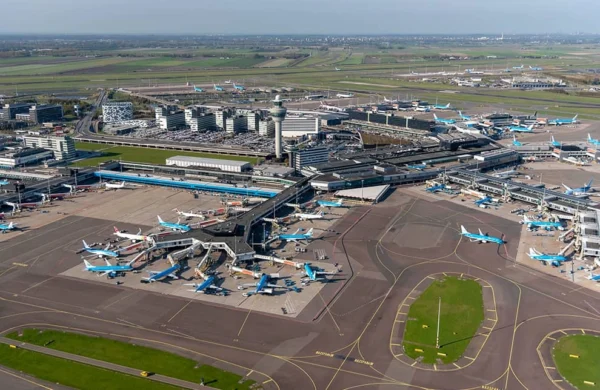
Thousands of passengers faced difficult journeys at Amsterdam Schiphol Airport after 280 flights were delayed and 15 were cancelled, disrupting domestic and international services operated by KLM, Delta Air Lines, British Airways, Lufthansa, easyJet and other major carriers.
The operational pressure affected travellers flying between Amsterdam and prominent destinations including London, New York, Paris, Dubai, Frankfurt, Barcelona and Rome. Although most scheduled services continued operating, accumulated delays created long waits, reduced connection times and uncertainty for passengers moving through one of Europe’s most important aviation hubs.
The relatively limited number of cancellations meant airlines largely attempted to maintain their schedules. However, passengers still faced significant inconvenience as departure and arrival times shifted throughout the day.
Travellers with onward connections were particularly vulnerable because even moderate delays could make short transfer windows impossible. Those missing connecting services potentially required rebooking, overnight accommodation or revised transport arrangements.
Delays Dominate Schiphol’s Operational Disruption
The disruption was characterised by delayed aircraft movements rather than widespread removal of services from the schedule. With 280 delays compared with 15 cancellations, airport and airline teams continued processing flights despite mounting operational pressure.
Keeping flights active can allow more passengers to reach their destinations, but it may also lead to repeated schedule changes and extended waits inside the terminal. Delayed incoming aircraft often arrive too late to begin their next scheduled journey on time.
Aircraft rotations, crew assignments, baggage handling and airport slots are closely connected. As a result, an initial delay on one route can affect several later flights, even when those services are travelling to entirely different destinations.
No single official cause was identified for the entire day’s disruption. Airport-wide delays can develop through a combination of air traffic management measures, ground-handling limitations, aircraft turnaround problems, crew scheduling adjustments and congestion during busy operating periods.
Schiphol’s Hub Role Amplifies Passenger Impact
Amsterdam Schiphol is a major European transfer gateway linking passengers with destinations across Europe, North America, Asia, Africa and the Middle East.
The airport serves as the principal hub for KLM and supports an extensive network of connecting services operated by international airlines. This means disruption in Amsterdam can quickly influence travel far beyond the Netherlands.
Passengers arriving from cities such as New York or Dubai may be connecting to short-haul European flights, while travellers from regional airports frequently use Schiphol to access long-distance services. When an inbound flight is delayed, passengers may miss an onward departure even when the connecting aircraft itself operates on time.
The consequences can extend to hotels, tour bookings, cruises, business meetings and ground transport reservations. Travellers arriving several hours later than expected may also lose prepaid services at their destination.
Summer Passenger Demand Adds Operational Pressure
The disruption occurred during the busy European summer travel period, when airports handle increased numbers of leisure travellers, families and international visitors.
Higher passenger volumes place additional pressure on check-in desks, security screening, baggage systems, boarding operations and aircraft servicing. Maintaining precise turnaround times becomes more difficult when terminals, gates and airspace are operating close to capacity.
Schiphol has advised passengers travelling during the summer period to check their schedules through official airport and airline systems and prepare for possible crowds. The airport has also indicated that additional assistance and passenger information are available inside the terminal during periods of high demand.
Travellers should avoid arriving excessively early unless instructed by their airline, as overcrowding can place further strain on terminal facilities. However, sufficient time should still be allowed for check-in, baggage drop, security procedures and reaching the assigned departure gate.
Airlines Work to Rebook Affected Travellers
Airlines operating from Schiphol generally communicate schedule changes through mobile applications, email, text messages and online booking systems.
Passengers whose flights are cancelled may be offered rerouting on the earliest available service, travel on a later date or reimbursement, depending on their circumstances and applicable passenger protection rules.
Those affected by long delays should contact the operating airline because the airline, rather than the airport, is responsible for the flight and passenger rebooking arrangements.
KLM advises affected passengers to review available options through its digital booking tools. Depending on the disruption, eligible travellers may be able to change their flight, request a refund or claim reimbursement for reasonable additional expenses.
European Passenger Rights May Apply
Passengers departing from Amsterdam are protected by European air passenger regulations. Depending on the flight distance and length of the delay, airlines may be required to provide meals, refreshments, communication assistance or accommodation.
Travellers arriving at their final destination three hours or more behind schedule may qualify for financial compensation unless the airline demonstrates that extraordinary circumstances caused the disruption and could not reasonably have been avoided.
For cancelled flights, passengers generally have a choice between reimbursement, rerouting at the earliest opportunity or alternative travel on a later date, subject to seat availability.
Affected travellers should retain boarding passes, booking confirmations and receipts for meals, hotels or transportation. Compensation and reimbursement eligibility depend on the individual flight and the reason for the disruption.
Passengers Urged to Monitor Official Updates
Travellers should check live flight information before leaving for Schiphol and keep airline notifications enabled throughout the journey. Those with tight connections should review alternative flights and speak with airline staff as soon as a missed connection becomes likely.
Despite most services continuing to operate, the combination of 280 delays and 15 cancellations demonstrates how quickly pressure at a major European hub can affect international tourism and passenger confidence.
Until schedules fully stabilise, flexibility, close monitoring of official updates and additional planning time will remain essential for passengers travelling through Amsterdam Schiphol.
For more travel news like this, keep reading Global Travel Wire