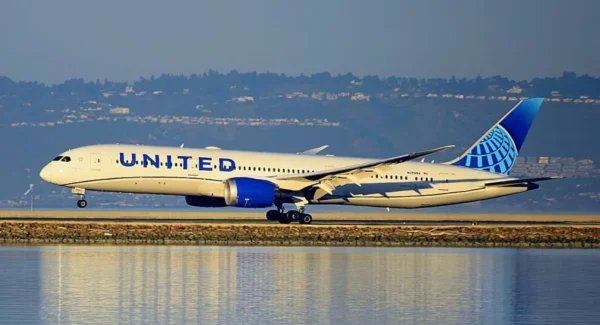
A potential United Airlines ultra-long-haul flight could transform international travel by connecting distant high-value markets without traditional stopovers, offering passengers shorter journeys and creating new revenue opportunities for one of the world’s largest global carriers.
However, United Airlines has not officially announced a specific route matching current speculation. Any proposed destination or launch date should therefore remain unconfirmed until the airline publishes a formal schedule or opens reservations.
Nevertheless, the commercial foundations for future expansion are already visible. United operates an extensive international network, maintains a substantial fleet of Boeing 787 and Boeing 777 aircraft and continues investing in premium cabins designed for lengthy journeys.
Its major hubs at Newark, San Francisco, Chicago, Houston, Los Angeles and Washington Dulles also provide connecting passengers who can support long-distance routes that might not depend entirely on local demand.
Nonstop Flights Can Save Travellers Several Hours
Ultra-long-haul services generally involve journeys lasting more than 14 hours and connect cities previously reached through one or more intermediate airports.
For passengers, their main benefit is convenience. A direct journey eliminates the time spent changing aircraft, passing through additional security controls or waiting inside another international terminal.
It also reduces the possibility of missed connections, delayed baggage transfers and unexpected overnight stops. These advantages can be particularly valuable to business passengers, families, elderly travellers and tourists managing fixed hotel or cruise arrangements.
A nonstop flight may cost more than a connecting itinerary, but many travellers are prepared to pay a premium for a simpler journey and an earlier arrival.
Therefore, the success of any future United route would depend on identifying two cities with enough business, tourism, family and connecting demand to support year-round operations.
Premium Demand Strengthens Route Economics
Distance alone does not determine whether an ultra-long-haul flight becomes profitable. Airlines must generate sufficient revenue from each seat while covering fuel, crew, maintenance and airport expenses.
Premium passengers can play a decisive role in that calculation. Business-class tickets, corporate travel contracts, loyalty programme redemptions and premium-economy demand can generate considerably more revenue than the lowest economy fares.
United has continued investing in its Polaris business-class product and upgraded long-haul aircraft interiors. Its newest premium Boeing 787-9 configuration includes expanded business-class capacity, private suites and more premium-economy seating.
These investments demonstrate how the airline is designing its international operation around travellers who value privacy, comfort and productivity during extended flights.
United carried more than 181 million revenue passengers in 2025 while continuing to add international destinations. Its financial reporting also shows that passenger revenue remains the foundation of its business, supporting further analysis of strategically valuable long-distance markets.
Boeing 787 Makes Longer Routes Possible
Aircraft technology has significantly changed the economics of global aviation.
Older long-haul networks often relied on large four-engine aircraft that required substantial passenger volume. Modern twin-engine jets can fly comparable distances while offering airlines greater flexibility over capacity and operating costs.
Boeing lists the 787-9 Dreamliner with a range of up to 8,300 nautical miles, making it capable of operating many intercontinental routes without refuelling. Its composite structure, advanced aerodynamics and efficient engines help reduce fuel consumption and maintenance requirements.
The aircraft also offers passenger-focused features such as larger windows, lower cabin altitude and improved cabin humidity, which can make extremely long journeys more comfortable.
United already operates all three principal Dreamliner variants. This allows the airline to select aircraft capacity according to the expected demand and operational requirements of individual routes.
Further performance improvements certified for the 787-9 could also provide airlines with additional payload or range flexibility.
International Demand Supports Network Growth
United States Department of Transportation statistics continue to show substantial passenger movement between the country and international markets.
This demand creates opportunities for nonstop services linking American hubs with destinations across Asia, Australia, Africa, the Middle East and other distant regions.
United’s network structure offers an additional advantage. A passenger travelling from a smaller US city can connect through one of the airline’s hubs and continue on a single ticket to an overseas destination.
Likewise, international visitors can use the same hubs to access United’s wider domestic network. This combination of local and connecting traffic can support routes that would otherwise be difficult to operate.
Direct services can also stimulate tourism by making destinations easier to reach. New flights may generate hotel stays, visitor spending and demand for attractions, restaurants and ground transportation.
Operational Challenges Remain Significant
Ultra-long-haul expansion still involves substantial risk.
Fuel prices can change rapidly, while longer flights require additional pilots, cabin crew and specialised scheduling. Aircraft must also carry large quantities of fuel at departure, increasing weight and affecting operating efficiency.
Seasonal demand, geopolitical tensions and airspace restrictions can change route economics. Airports must provide suitable gates, maintenance support and customs facilities, while passenger comfort becomes increasingly important as flight times rise.
United would therefore need to balance range with sustainable demand, premium revenue and reliable year-round performance.
Although no specific rumoured route has been confirmed, United’s global hubs, Dreamliner fleet and premium strategy create a credible platform for future ultra-long-haul growth. For travellers, that could mean fewer connections, faster journeys and easier access to some of the world’s most distant destinations.
For more travel news like this, keep reading Global Travel Wire