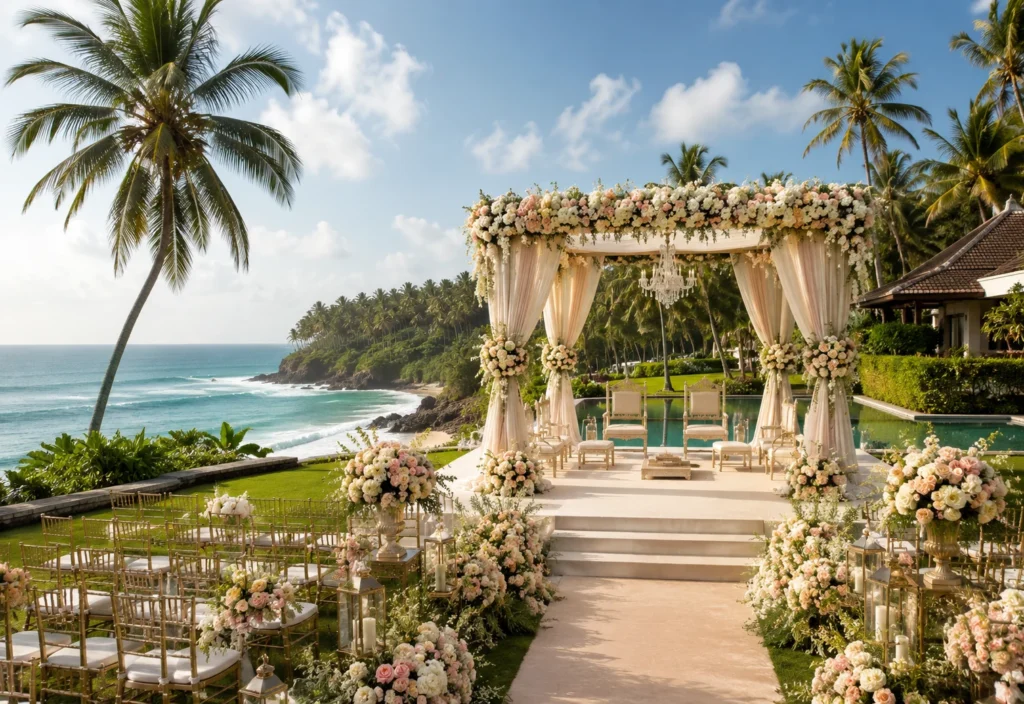
The landscape of the Indian matrimonial sector is experiencing a monumental shift as couples pivot toward personalized, experience-driven celebrations located outside their hometowns. According to comprehensive market data released in the Destination Wedding Report, destination weddings now account for one in four Indian weddings. This cross-regional travel trend is projected to expand significantly, with market analysts forecasting that destination-based celebrations will capture 30% to 32% of the total Indian wedding market by 2028.
Among the various international locales vying for this lucrative segment, Sri Lanka has officially emerged as one of the fastest-growing international destinations for Indian couples. This surge in popularity aligns directly with the Sri Lanka Tourism Development Authority’s statistical tracking, which consistently places India as the island nation’s primary source market for inbound travel. The island’s rapid rise is being driven by a combination of geographic proximity, heavily modernized luxury hospitality infrastructure, and an increasing consumer appetite for highly immersive guest journeys.
Budget Allocations and Flight Logistics Reshape Choice of Venue
Reflecting the premium nature of modern celebrations, the collective expenditure on destination weddings has experienced an 8% year-on-year increase. Data shows that the financial commitment varies drastically based on the chosen geography. The average budget for a domestic destination wedding within India has climbed to INR 58 lakh. Meanwhile, couples opting to take their celebrations across international borders are investing significantly more, with the average budget for an overseas destination wedding now surpassing INR 1.5 crore.
Logistical convenience remains a primary factor dictating venue selection for modern couples. The report indicates that 44% of surveyed couples favor international wedding locations situated within a tight two-to-four-hour flight radius from major Indian transit hubs. This operational preference heavily favors neighboring South Asian destinations. Thanks to these brief travel times and straightforward accessibility, Indian destination wedding bookings to Sri Lanka are explicitly projected to maintain an annual growth rate of 20% to 25% over the coming years.
The Micro-Wedding Pivot and Extended Multi-Day Itineraries
Modern nuptial preferences are moving away from traditional, massive guest lists in favor of tight-knit, high-quality interactions. The findings reveal that 42% of contemporary couples explicitly prefer smaller, highly personalized celebrations over large-scale, generalized weddings. This reduction in overall guest count has allowed hosts to reallocate budgets toward elevated guest experiences and longer celebration timelines.
As a result, the average duration of a destination wedding has expanded to 3.2 days in 2026, marking a substantial increase from the pre-2020 baseline average of just 1.8 days. Rather than focusing the entire budget and schedule on a single, massive reception ceremony, families are now designing comprehensive multi-day itineraries. These extended travel windows are heavily curated to include regional culinary showcases, communal wellness activities, localized cultural tours, and specialized beachfront or hillside entertainment options.
Strategic Infrastructure and Accessibility Bolster Sri Lankan Appeal
Tourism board updates and regional arrival data point to several structural advantages that have allowed Sri Lanka to outpace competing coastal hubs in Southeast Asia. Chief among these is the highly favorable regulatory framework, which includes streamlined visa processing for Indian nationals alongside competitive flight options from major metropolitan airports like Chennai, Mumbai, Bengaluru, and New Delhi.
Furthermore, the island offers diverse geographical backdrops within a relatively compact territorial footprint. Couples can seamlessly host a beachfront sangeet along the southwestern coast, a high-scale reception in the capital city, or an intimate heritage gathering in the central hills. Elite resort properties across these varied micro-regions—including premium beachfront locations in Hambantota, urban luxury settings in Colombo, and historic retreats in Kandy—have reported a major influx of multi-day bookings. Hospital executives in these regions confirm they are seeing consistent demand for buyouts that successfully combine grand physical scale with hyper-customized guest services.
Long-Term Outlook for South Asian Luxury Tourism
The ongoing transformation of the wedding industry highlights a broader macroeconomic trend within South Asian tourism. Wedding planners and hospitality developers are increasingly viewing destination weddings not merely as singular banqueting events, but as complete, end-to-end travel journeys. These events integrate hospitality, aviation, local craftsmanship, and experiential tourism into a unified luxury package.
Looking forward, the inbound growth from India’s luxury consumer base is expected to remain highly resilient. Market projections indicate that short-haul international destination weddings within the Asian circuit will continue their upward trajectory through the end of the decade. With its established resort network, strong cultural connectivity, and proven capacity for handling complex, multi-day luxury operations, Sri Lanka is uniquely positioned to remain a primary beneficiary of this lucrative corporate and leisure travel crossover.
For more travel news like this, keep reading Global Travel Wire