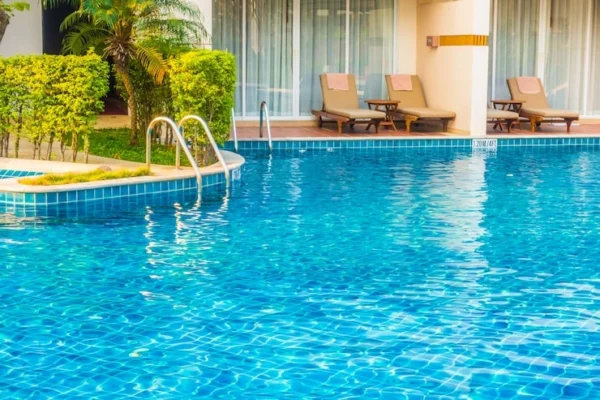
Travel safety concerns have emerged in southern Spain after more than 60 holidaymakers required medical attention following a suspected chemical gas release linked to a hotel swimming pool in Benahavís, Málaga province.
Children, adults and older travellers were among those affected after guests developed symptoms around the pool area. Some received initial assistance at the hotel, while others were taken to medical facilities for further assessment.
Around 60 patients received treatment at a nearby hospital. However, the latest medical position provides significant reassurance: all affected patients were subsequently cleared to leave, and nobody remained hospitalised.
The swimming pool remains closed while its chemical treatment, circulation and electrical systems undergo investigation.
Pool treatment system comes under scrutiny
Preliminary information has focused attention on a possible malfunction involving the swimming pool’s automated treatment equipment.
Pool systems typically rely on coordinated circulation, chemical monitoring and dosing mechanisms to maintain safe chlorine and pH levels.
The investigation is expected to determine whether a technical or electrical failure disrupted that process and whether treatment chemicals continued entering part of the system after normal circulation was interrupted.
Authorities have not yet established a final chemical mechanism.
Therefore, the incident should continue to be described as a suspected chemical gas exposure until testing confirms precisely what substance was released and how the event developed.
Technical specialists are likely to examine pumps, sensors, electrical controls, chemical dosing equipment and safety shutdown mechanisms before the pool can return to service.
Tourists reported respiratory and eye symptoms
Guests reportedly experienced symptoms including coughing, eye irritation, throat discomfort and breathing difficulties.
Such symptoms can occur following exposure to irritating chemical gases around swimming pool environments.
The incident demonstrates why travellers should leave a pool area immediately when several people suddenly develop similar respiratory or eye symptoms.
Moving into fresh air and following emergency instructions can reduce further exposure.
Children, older travellers and people with existing respiratory conditions may require particularly careful medical assessment following any suspected inhalation incident.
Although all patients involved in the Benahavís emergency have now left medical care, affected travellers should continue following any medical advice they received.
Hotel pool remains closed
The closure of the swimming pool is expected to continue while investigators establish the cause and confirm that the facility can operate safely.
Before reopening, the property may need to complete technical repairs, inspect chemical controls and demonstrate that treatment and circulation systems are functioning correctly.
Water and environmental testing may also form part of the safety assessment.
The incident highlights the importance of automatic shutdown protections within hotel swimming pool systems.
Chemical dosing equipment, circulation mechanisms and monitoring technology must work together because failures involving one component can potentially create unsafe conditions.
Regular testing, maintenance records and trained supervision therefore remain critical elements of hotel pool safety.
Costa del Sol tourism remains unaffected overall
The incident occurred at one accommodation property in Benahavís and does not represent a general safety threat across the Costa del Sol.
Benahavís is an inland destination in Málaga province known for its hospitality, gastronomy, natural landscapes and access to the wider Costa del Sol tourism region.
Nearby coastal destinations attract large numbers of international visitors, particularly during warmer months when hotel and resort swimming pools become central to the holiday experience.
For travellers, these facilities are largely dependent on systems they cannot personally inspect.
Guests therefore rely on accommodation operators to maintain appropriate water treatment, chemical storage, equipment monitoring and emergency procedures.
An isolated incident can consequently attract significant attention because hotel safety remains closely connected with destination confidence.
Investigation could shape future hotel safety measures
Investigators are expected to review technical records surrounding the pool operation.
Maintenance histories, chemical readings, filtration schedules and any previous electrical or mechanical faults could help establish how the incident occurred.
Attention may also turn to whether automatic alarms or safety interlocks responded correctly when the system experienced problems.
Staff procedures may form another part of the review.
Hotel teams responsible for swimming pools need appropriate training to recognise abnormal chemical conditions, stop unsafe equipment and evacuate guests quickly when necessary.
However, no responsibility should be attributed to individual workers or the operator until investigators establish the facts.
What affected travellers should do
Guests who received medical treatment should retain hospital documents, prescriptions, receipts and communications connected with the incident.
These records could become important for travel insurance claims or further enquiries.
Travellers who booked through a tour operator may also need to keep their organiser informed, while independent guests can contact their insurer or booking provider where appropriate.
Anyone experiencing renewed or worsening respiratory symptoms after suspected chemical exposure should seek professional medical advice.
Travel safety lessons for Spain’s hospitality sector
The Benahavís incident provides an important reminder that sophisticated automated pool systems still require regular inspection, testing and human supervision.
More than 60 people required medical attention, making the event significant despite the reassuring confirmation that all patients were later discharged.
The immediate priority now is determining exactly what failed and ensuring the swimming pool cannot reopen until safe operation is fully confirmed.
A transparent technical investigation, corrective maintenance and strong safety controls will be essential for restoring confidence.
For Spain’s wider hospitality industry, the incident reinforces a simple but important principle: safe swimming facilities depend on reliable equipment, accurate chemical management, trained staff and rapid action whenever unusual symptoms appear among guests.
For more travel news like this, keep reading Global Travel Wire