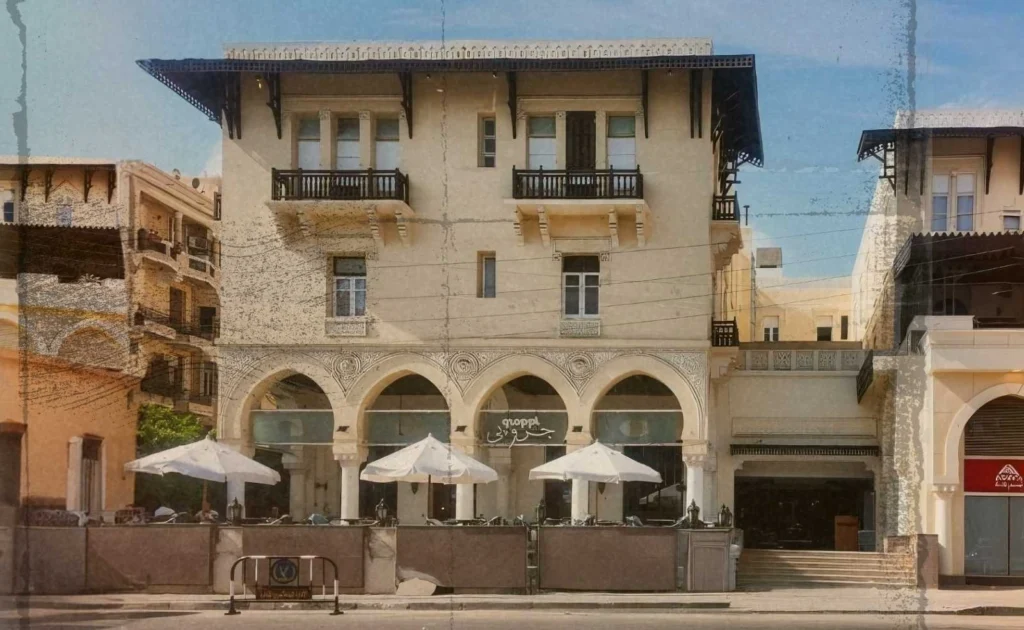
Egypt’s hospitality landscape has gained a striking heritage-led addition as Heliopolis Terrace, a landmark building dating to 1908, begins a new chapter as a boutique hotel in Cairo’s historic Korba district.
Standing at 21 Al Ahram Street in Heliopolis, the property combines more than a century of architectural identity with contemporary accommodation, dining and personalised hospitality.
Rather than replacing the historic building with a modern development, the project has focused on preserving its established character while adapting the property for today’s travellers.
The reopening gives visitors another opportunity to experience Cairo through a neighbourhood deeply connected to the city’s architectural, cultural and social history.
For Egypt’s tourism sector, the project also highlights the growing potential of heritage buildings to become distinctive hospitality destinations while maintaining their connection with surrounding communities.
A 1908 landmark begins again
Heliopolis Terrace has stood in Korba since 1908, witnessing the transformation of Heliopolis from an ambitious early urban development into one of Cairo’s most recognisable neighbourhoods.
The surrounding district remains known for historic façades, broad avenues, balconies, cafés and architectural details that give Heliopolis a character distinct from many newer parts of the capital.
The decision to preserve the name Heliopolis Terrace reinforces this continuity.
Instead of introducing an entirely new identity, the property retains a name associated with the building and its location, helping connect the restored hotel with generations familiar with the address.
This approach gives the redevelopment a stronger sense of place and allows guests to experience the property as part of the wider story of Korba rather than as an isolated modern hotel.
Prime Hospitality enters boutique hotels
The reopening also marks an important step for Prime Hospitality.
Founded in 2016, the company developed experience in serviced apartments and residential hospitality across Cairo before moving into the boutique hotel segment.
Heliopolis Terrace represents its first boutique hospitality venture, creating an opportunity to combine established guest-service expertise with the operational requirements of a historically significant property.
The move reflects a broader hospitality trend in which smaller character-driven hotels are increasingly being developed around architecture, neighbourhood identity and personalised experiences.
For travellers, this model can offer a more intimate alternative to conventional large-scale city hotels.
Historic character meets modern comfort
The restored property has been designed to preserve visual connections with Heliopolis while introducing the comfort expected from contemporary accommodation.
Warm white tones, dusty blue upholstery, walnut finishes and restrained gold accents shape the interiors.
The overall atmosphere draws inspiration from both Mediterranean residential design and classic Cairo elegance.
Inside guest rooms, curved horseshoe-style headboards reference traditional architectural forms, while decorative details echo the heritage associated with the surrounding district.
Natural light and surviving architectural elements further strengthen the building’s connection with its original character.
Importantly, the hotel does not attempt to operate as a museum.
Instead, historical references have been integrated into functional spaces where guests can stay, dine and relax comfortably.
This balance between authenticity and usability could appeal strongly to visitors seeking meaningful cultural experiences without sacrificing modern convenience.
Korba gains a new dining destination
Heliopolis Terrace is also expanding its role beyond accommodation.
Dining forms an important part of the hotel’s guest experience and its connection with the surrounding neighbourhood.
Mosaïque has been introduced within the property, adding a new culinary venue to Korba’s evolving dining scene.
Another significant element is the presence of Groppi, a name long associated with Cairo’s historic café culture.
Its inclusion within the property creates a natural link between the hotel’s architectural heritage and the city’s wider social and culinary traditions.
Together, these venues help position Heliopolis Terrace as a destination for local residents as well as international and domestic hotel guests.
This mixed-use hospitality approach can strengthen the property’s connection with community life rather than limiting it solely to overnight visitors.
Heritage tourism strengthens Cairo appeal
The revival of Heliopolis Terrace arrives as experience-led travel continues to shape accommodation choices.
Many travellers increasingly look for hotels that reflect the identity of a destination through architecture, food, history and neighbourhood culture.
Korba is well suited to this style of tourism.
Its streets encourage visitors to explore on foot, discover historic architecture, visit long-established cafés and experience a different side of Cairo beyond the capital’s most famous archaeological attractions.
A heritage boutique hotel within the district can therefore become part of the travel experience itself.
For Cairo, such projects can also broaden tourism geographically by encouraging visitors to explore historic urban neighbourhoods alongside traditional attractions.
A new future for an old Cairo address
More than a century after its construction, Heliopolis Terrace has returned with a renewed purpose.
Its transformation demonstrates how historic buildings can support modern tourism without erasing the identity that made them significant in the first place.
Through restored architecture, contemporary interiors, distinctive dining and a strong connection to Korba, the hotel adds a new dimension to Cairo’s boutique hospitality landscape.
As travellers increasingly seek authentic stays rooted in local culture, Heliopolis Terrace is positioned to offer something difficult to recreate in a newly built property: the opportunity to stay inside a living piece of Cairo history.
For more travel news like this, keep reading Global Travel Wire