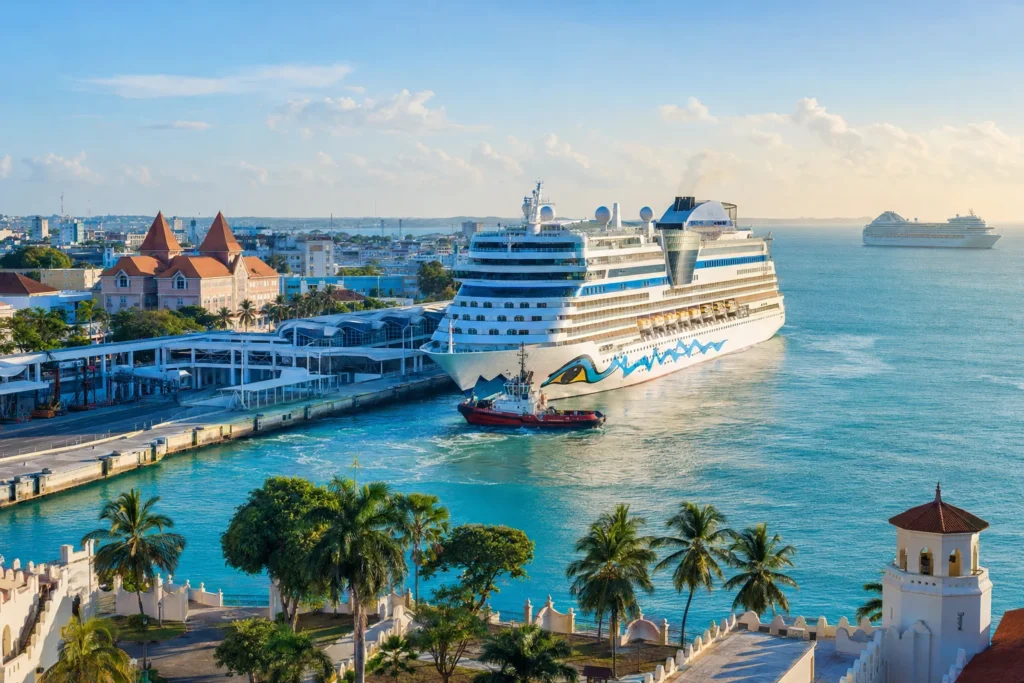
The global cruise sector has achieved another milestone with the arrival of Legend of the Seas, Royal Caribbean’s flagship Icon Class vessel and the largest cruise ship in service worldwide. Beyond its status as an engineering feat, the ship reflects a fundamental shift in international travel trends, where modern passenger liners serve as standalone vacation destinations rather than simple transit vessels.
For the East African tourism ecosystem, the rollout of such ultra-large vessels highlights expanding commercial prospects within the global travel market. As Kenyan holidaymakers increasingly adopt ocean cruising and the Port of Mombasa solidifies its reputation as a key regional maritime hub, the sector presents promising growth avenues for local travel agencies and tourism operators.
A Floating City Redefining the High Seas Vacation Experience
Designed on an unprecedented physical scale, Legend of the Seas features 18 guest decks, 2,805 staterooms, and a maximum passenger capacity of 7,600 guests, supported by an international crew of approximately 2,350. The floating resort provides a comprehensive range of amenities, including seven swimming pools, 28 dining venues, 20 bars, world-class performance spaces, and interactive recreation facilities tailored for diverse age groups.
From expansive waterparks and surf simulators to live theatrical productions, wellness spas, and quiet green corridors, the vessel embodies an all-inclusive resort environment at sea. Rather than offering mere point-to-point transportation, contemporary cruise liners deliver leisure and entertainment options that rival major land-based tourist resorts.
The vessel is debuting in European waters with seasonal itineraries originating from Barcelona, Spain, and Rome, Italy, offering access to prominent Mediterranean coastal destinations. The deployment demonstrates sustained commercial investment in high-capacity, technologically advanced passenger vessels designed to meet rising global demand for premium leisure travel.
How Global Cruise Trends Drive Kenya’s Outbound Travel Sector
Although primary sailings for world-class mega-ships currently operate in established European and Caribbean maritime corridors, their introduction directly influences Kenya’s outbound leisure market. Cruise holidays are gaining traction among Kenyan travelers seeking seamless, all-inclusive vacations that combine multiple international destinations into a single booking package.
Families, honeymooners, retirees, and luxury travelers across East Africa are increasingly turning to ocean voyages as a compelling alternative to traditional land-based holidays. For local travel management companies, this shifting consumer preference opens lucrative revenue streams spanning cruise reservations, long-haul flight arrangements, hotel stays, comprehensive travel insurance, visa processing, and customized pre- and post-cruise excursions.
Organized industry bodies like the Kenya Association of Travel Agents continue to foster cruise travel adoption across the region. By unifying accredited travel advisors, the association helps ensure that Kenyan consumers access verified cruise itineraries, professional consultation, and official travel products through reputable agency channels.
Strategic collaborations between national industry associations and international cruise lines reinforce East Africa’s integration into global travel distribution networks, broadening the diversity of leisure products available to domestic holidaymakers.
The Port of Mombasa Enhances Kenya’s Standing as a Regional Cruise Destination
The momentum surrounding international cruise expansion aligns with concrete progress along the Kenyan coastline. Official maritime records confirm that the Port of Mombasa is attracting an increasing number of international passenger liners, demonstrating growing confidence among major global cruise lines.
Recent port arrivals include the inaugural visit of Azamara Journey, which brought roughly 690 international passengers to coastal Kenya, along with a turnaround call by Crystal Symphony, which facilitated passenger embarkation and disembarkation in Mombasa. These calls underline Kenya’s strategic position as a primary maritime entry point along the East African coast.
Government statistics indicate a significant increase in passenger arrivals during recent cruise seasons, supported by targeted public investments in port infrastructure and streamlined entry procedures. The commissioning of the dedicated cruise terminal at Berth 1 in Mombasa has enhanced handling capacity, allowing the port to accommodate multi-deck passenger ships and provide smooth customs, immigration, and security services.
Visiting cruise ships generate widespread economic benefits across the regional supply chain. International passengers departing on shore excursions contribute directly to local transport operators, wildlife safari parks, historical sites, cultural centers, and artisanal markets in Mombasa and surrounding inland destinations.
The Future Outlook for East African Maritime Tourism
The launch of mega-vessels like Legend of the Seas underscores the long-term vitality and rapid evolution of global cruise travel. For Kenya’s travel trade, this industry expansion offers a dual opportunity: satisfying growing outbound demand among domestic holidaymakers while capitalizing on inbound maritime traffic at the Port of Mombasa.
With continued public-sector investment in port facilities, strategic destination marketing by national tourism authorities, and active engagement from travel industry stakeholders, Kenya is well-positioned to expand its footprint in global cruise travel, driving economic growth across the broader tourism economy.
For more travel news like this, keep reading Global Travel Wire