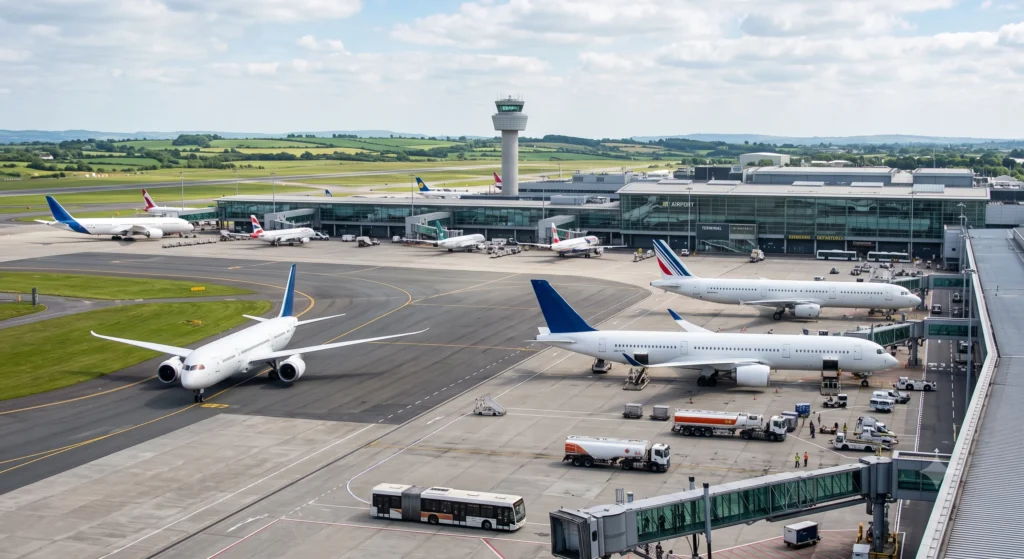
Official aviation statements and airport operational logs confirm that international air carriers operating long-haul routes across the North Atlantic adhere to strict safety protocols when unscheduled medical events or technical disruptions occur in flight. Following an unscheduled diversion involving a widebody long-haul flight operating from Rome Fiumicino Airport to Philadelphia International Airport that safely landed at Dublin Airport, civil aviation bodies and regional tourism frameworks are highlighting the established safety measures that protect international travelers.
Transatlantic flight paths follow coordinated Great Circle routes governed by international air traffic management standards. These regulated flight corridors ensure that commercial aircraft maintaining long-range international service remain within reach of certified diversion airports equipped with specialized emergency response infrastructure.
Operational Standards for Long-Haul Flight Diversions and Transoceanic Safety
Civil aviation regulations mandate that long-haul commercial flights maintain designated alternate landing sites along their flight paths. When flight crews encounter unscheduled operational disruptions or health emergencies mid-flight, cockpit officers coordinate directly with international air traffic control units to execute controlled diversions to certified aviation hubs.
Official flight safety parameters require airlines to evaluate key operational metrics before confirming an alternate airport, including:
Runway Length and Infrastructure: Ability to safely accommodate fully loaded, widebody twin-engine aircraft.
Emergency Medical and Ground Services: Availability of priority medical responders and specialized regional healthcare facilities.
Airport Capacity: Capability of ground stations to process passenger transit, refueling requirements, and safety inspections.
Meteorological Conditions: Favorable wind vectors and visibility at the selected alternate airfield.
Ireland’s major international airports, particularly Dublin Airport, serve as critical primary diversion hubs for transatlantic passenger traffic due to their strategic geographic position, advanced runway capabilities, and rapid emergency response coordination.
Comprehensive Passenger Protections Under International Air Travel Frameworks
When long-distance international flights depart from airports located within European Union member states, comprehensive passenger protection standards apply under official civil aviation rules, specifically EU Regulation 261/2004. These regulatory frameworks apply to all operating air carriers regardless of their home country registration.
Official consumer protection mandates establish clear passenger rights during unscheduled flight diversions and extended ground delays:
Duty of Care Obligations: When unscheduled diversions result in extended delays at alternate airports, operating airlines are legally required to provide travelers with complimentary meal and refreshment vouchers.
Overnight Accommodation Provisions: If flight disruptions require an overnight stopover, airlines must arrange hotel accommodations and dedicated ground transportation between the airport and the lodging facility.
Rebooking and Rerouting Entitlements: Passengers affected by canceled or significantly delayed onward segments maintain the right to select alternative flight arrangements on partner carriers or request full ticket refunds.
Exemption Rules for Extraordinary Circumstances: Official regulations specify that unexpected medical emergencies or safety diversions beyond an air carrier’s operational control qualify as extraordinary circumstances, exempting airlines from direct cash compensation while preserving all duty of care entitlements.
Tourism boards and aviation consumer advocacy offices emphasize that travelers should keep valid travel documentation, including passports and boarding passes, readily accessible during unexpected transit processing at alternate airports.
Enhancing Passenger Health and Safety Monitoring on Long-Haul Routes
Tourism authorities and civil aviation agencies continue to work alongside commercial airlines to refine health monitoring systems and emergency protocols across long-distance transit corridors. The implementation of real-time ground communication networks allows flight deck crews to consult directly with medical specialists while airborne, enabling precise evaluations before initiating an unscheduled diversion.
Official aviation data confirms that transatlantic air corridors maintain high safety standards, supported by robust airport infrastructure and transparent regulatory frameworks. Clear communication from official airport authorities, civil aviation departments, and airline ground personnel remains essential in preserving passenger trust and operational security during unexpected travel disruptions.
For more travel news like this, keep reading Global Travel Wire