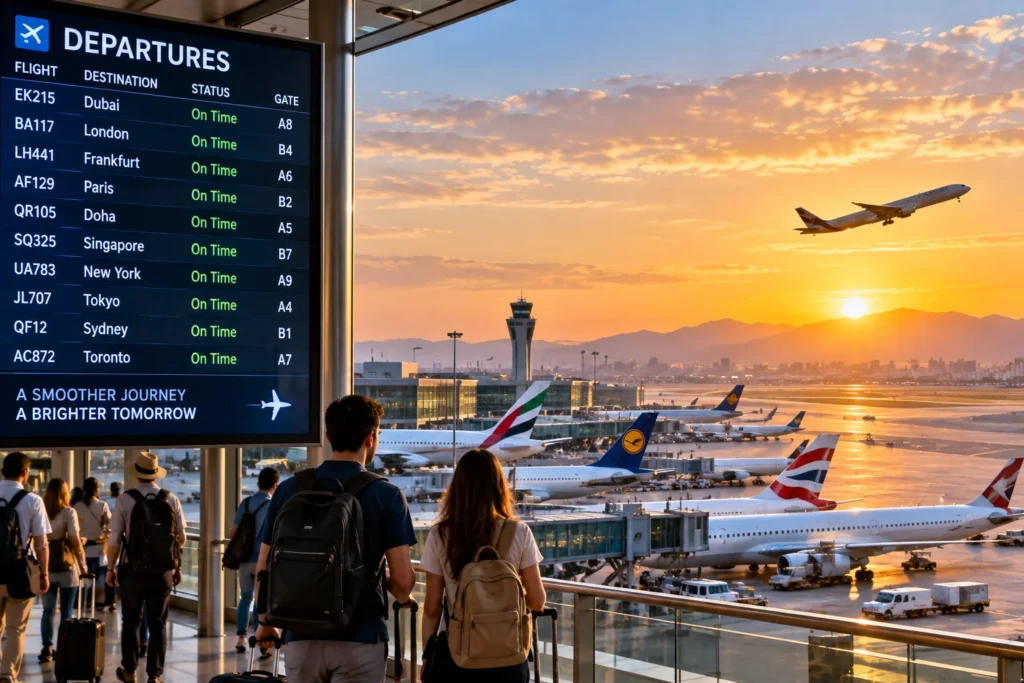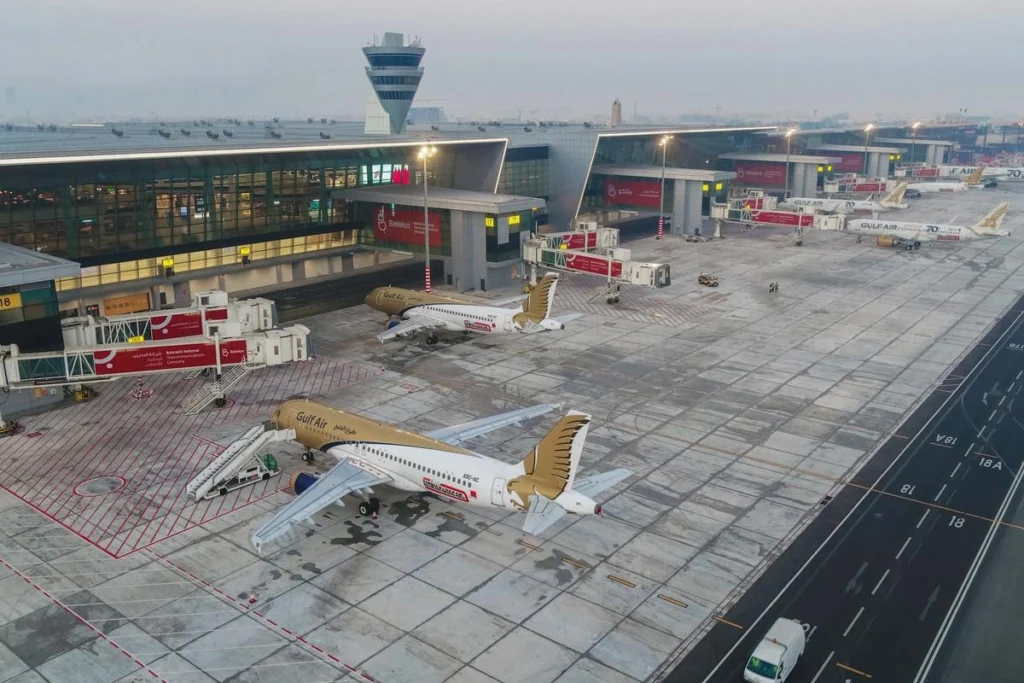
Kuwait and Bahrain have become central pressure points in a widening Middle East aviation disruption as international and regional airlines suspend services, change schedules and reassess flight operations.
Air Canada, Cathay Pacific, British Airways and Qatar Airways have announced significant changes affecting travel across the Gulf and surrounding markets. The measures reflect continued uncertainty, airspace restrictions and airline security assessments.
The disruption extends beyond Kuwait and Bahrain. Services involving the United Arab Emirates, Qatar, Saudi Arabia, Iraq, Jordan and other regional destinations have also faced cancellations, postponements or additional booking flexibility.
Major Gulf airports continue supporting substantial international operations. However, individual routes can change rapidly, increasing uncertainty for passengers using the region’s interconnected aviation hubs.
Qatar Airways temporarily suspends three destinations
Qatar Airways temporarily suspended passenger services from Doha to Bahrain, Kuwait and Erbil until July 31, 2026.
The suspension directly affects short-haul Gulf connectivity and passengers using Hamad International Airport for onward journeys. Travellers booked between Doha and the affected cities may need alternative flights, revised travel dates or different transfer arrangements.
The impact is particularly important for Kuwait and Bahrain because both markets depend heavily on regional air services. These routes support corporate travel, tourism, family visits and connections to long-haul destinations.
Doha remains a major international transfer hub serving more than 160 destinations. Therefore, even limited regional suspensions can affect passengers beginning journeys in Europe, Asia, Africa or the Americas.
The carrier has advised passengers to monitor its official channels and keep their booking contact information updated.
British Airways expands passenger flexibility
British Airways has cancelled or temporarily suspended selected services involving Abu Dhabi, Amman, Bahrain, Doha, Dubai, Tel Aviv and Riyadh because of continued uncertainty and airspace restrictions.
The airline has also expanded flexibility for eligible passengers travelling to or from several Middle East destinations through October 31, 2026.
Eligible customers can request refunds under the airline’s announced arrangements, including in some cases where flights remain scheduled. Travellers may also move journeys to later dates or select another British Airways route, although fare differences may apply.
These measures provide passengers with more control when confidence in future schedules remains limited. They also demonstrate how regional security conditions are influencing travel planning several months ahead.
British Airways has said it continues contacting affected customers and will only operate services when conditions meet its safety requirements.
Air Canada extends Dubai suspension
Air Canada has suspended flights to and from Dubai through October 24, 2026, as part of its response to the continuing situation in the Middle East.
The measure affects direct connectivity between Canada and the UAE. It also creates challenges for travellers who planned to use Dubai as a gateway to destinations across the Gulf, South Asia, Africa and Southeast Asia.
Dubai is one of the world’s most important international aviation centres. Consequently, the loss of a long-haul service can influence connecting journeys, tourism arrivals and business travel between multiple regions.
Affected Air Canada passengers are being offered options that may include changing their journeys or requesting refunds, depending on booking conditions and flight status.
The extended suspension underlines how international airlines are adopting longer planning horizons instead of making only short-term schedule changes.
Cathay Pacific delays Dubai and Riyadh returns
Cathay Pacific has postponed the resumption of its Middle East passenger services following further regional developments.
Daily Hong Kong–Dubai flights are now scheduled to resume on October 25, 2026. Four-times-weekly services between Hong Kong and Riyadh are planned to return on October 26.
Both routes were previously expected to resume in September.
Affected passengers can rebook, reroute or request refunds. The postponement reduces direct travel options between East Asia, the UAE and Saudi Arabia during an important period for business and leisure demand.
It may also redirect some passengers through alternative Asian or Gulf hubs, placing additional pressure on available connecting services.
Kuwait connectivity faces growing pressure
Kuwait International Airport is an essential gateway for residents, business travellers and visitors. Regional services connecting Kuwait with Doha, Dubai, Abu Dhabi and other Gulf cities form an important part of its aviation network.
Temporary suspensions and airline adjustments can reduce available seats, increase journey times and complicate onward connections.
The disruption may also affect Kuwait’s hospitality and business sectors. International meetings, family travel and short regional breaks often depend on frequent flights between Gulf capitals.
Passengers should avoid assuming that an operating airport guarantees that every scheduled service will depart. Airline decisions can differ according to route, aircraft availability, airspace access and individual security assessments.
Bahrain tourism depends on reliable regional flights
Bahrain faces similar challenges because regional aviation provides a large share of its short-haul international access.
Services between Bahrain and nearby Gulf hubs support weekend tourism, corporate movement, events and connecting journeys. Temporary route suspensions can therefore influence hotels, attractions, restaurants and travel businesses.
Bahrain International Airport remains strategically positioned near major markets, including Saudi Arabia, Kuwait, Qatar and the UAE. However, its tourism economy benefits most when travellers have frequent and predictable airline options.
Reduced availability may encourage visitors to delay trips or select alternative destinations until schedules become clearer.
Gulf tourism confronts passenger uncertainty
The wider disruption arrives as Gulf countries continue investing heavily in international tourism, aviation infrastructure, major events and hospitality development.
Airline uncertainty can weaken short-term booking confidence even when airports and most services remain operational. Travellers may worry about missed connections, unexpected accommodation costs or difficulty returning home.
Longer routings can also increase journey times and place pressure on remaining flights. Business travellers may reconsider meetings, while leisure visitors may seek flexible hotel and airline bookings.
Passengers travelling through the Middle East should check flight status directly with their airline before leaving for the airport. They should also review connection times, booking conditions and official travel guidance.
Kuwait and Bahrain remain at the centre of the latest regional aviation domino effect. However, the impact reaches far beyond both countries as global carriers balance passenger safety, operational reliability and the need to preserve vital Middle East connectivity.
For more travel news like this, keep reading Global Travel Wire