Official updates released by the Iraqi Security Media Cell and the Higher Committee for Million-Visitor Pilgrimages confirm that international visitor arrivals have reached extraordinary levels ahead of the annual Arbaeen commemoration. Official transit figures demonstrate that over two million foreign travelers from 172 countries have entered Iraq through land borders, international airports, and maritime ports since the start of the Islamic calendar month.
As one of the world’s largest annual religious gatherings, the Arbaeen pilgrimage represents a central pillar of Iraq’s cultural and spiritual tourism framework. State ministries and municipal authorities across Najaf, Karbala, Basra, and Baghdad have deployed integrated logistical, medical, and security operational plans to accommodate the continuous flow of spiritual travelers moving toward the holy shrines of Karbala.
Official Visitor Statistics and Cross-Border Transit Logistics
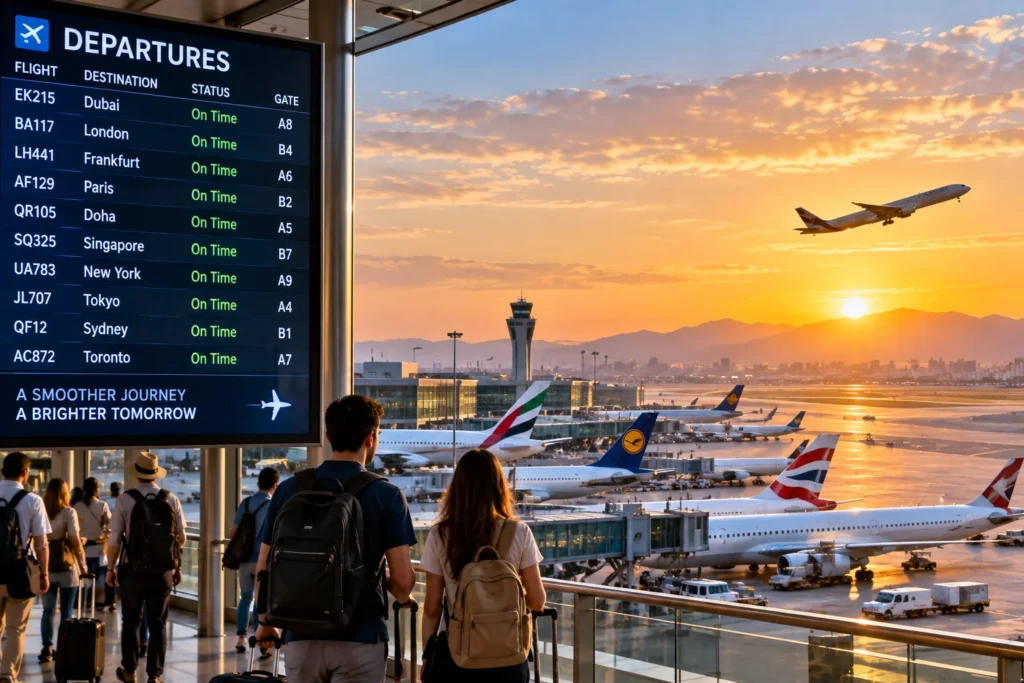
According to performance reports published by the Security Information Group and transport authorities, international entry points have operated around the clock to ensure efficient border processing. Ground border crossings along the eastern frontier have handled the largest volume of overland arrivals, while Najaf International Airport and regional aviation expansion routes have added dedicated flight capacity served by international carriers.
Official statements from civil aviation and port authorities indicate that international contingents include substantial traveler groups from Iran, India, Pakistan, Kuwait, Bahrain, Lebanon, Afghanistan, and various Gulf and European nations. The multi-national influx highlights the expanding international reach of Iraq Arbaeen religious tourism, which draws millions of domestic and overseas visitors annually to mark the end of the traditional forty-day mourning period.
To support the massive movement of foot traffic, the Iraqi Ministry of Transport and regional governors have coordinated thousands of public buses, passenger trains, and specialized shuttle services connecting major arrival hubs directly to the primary walk routes leading into Karbala.
Cultural Guidelines and Symbolic Regulations Along Pilgrimage Routes
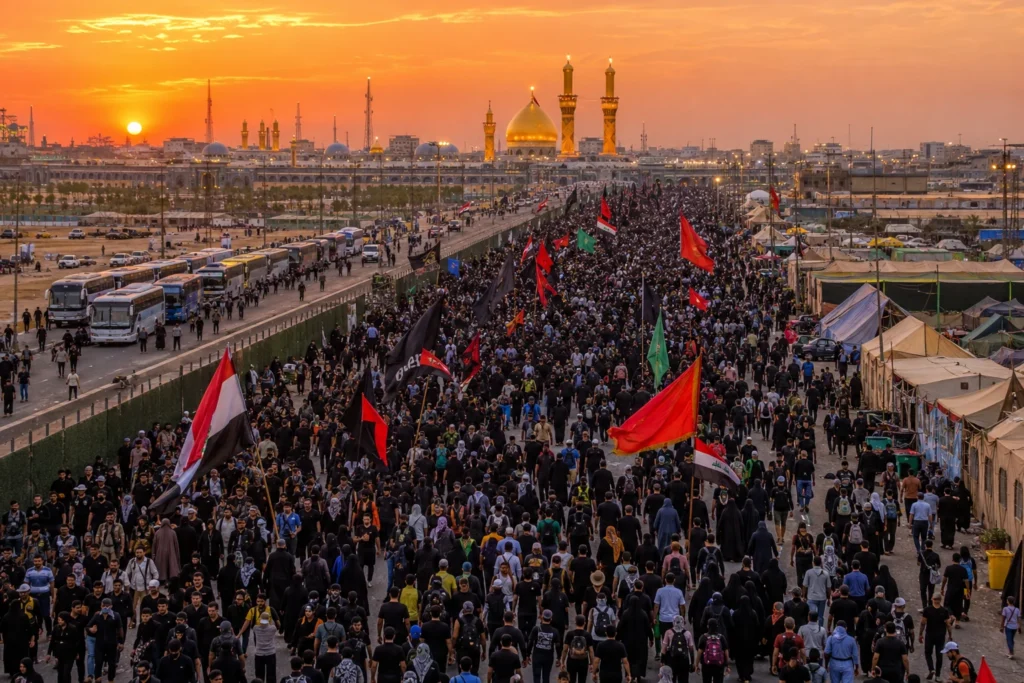
The central pilgrimage corridor spans approximately 80 kilometers between the holy city of Najaf and Karbala, marked by more than 1,400 numbered guiding poles that assist walking participants. Along this primary artery and surrounding highways, thousands of volunteer-run hospitality centers, known as mawakib, provide free meals, shelter, medical assistance, and resting facilities to travelers without charge.
Official recommendations previously issued by Najaf’s supreme religious leadership and echoed by pilgrimage oversight committees have stressed the importance of preserving the sacred, non-partisan, and spiritual character of the event. Official guidelines encourage organizers and international participants to focus on shared humanitarian values, spiritual unity, and religious devotion while refraining from political promotion or partisan displays during the procession.
Despite these official advisories, field updates along the Najaf-Karbala highway noted a widespread presence of national flags carried by foreign delegations, alongside images honoring regional historical figures. Iranian flags and national banners appeared in high concentration among international marching groups and at several service stations, sparking discussion among local hosts and visiting delegations regarding flag protocols along the route.
Public feedback from Iraqi participants and community organizers highlighted calls for standardized regulations to ensure the prominent display of the Iraqi host nation’s flag and traditional religious banners along all numbered route markers. Local volunteers emphasized that prioritizing neutral spiritual symbols and host national flags helps safeguard the universal hospitality and non-political atmosphere that defines the annual journey.
Enhanced Security Coordination and Public Infrastructure Measures
Managing multi-million visitor flows requires close field coordination between security forces, emergency services, municipal departments, and shrine administration bodies. The Supreme Committee for the Million-Strong Arbaeen Ceremony confirmed that comprehensive field management strategies have been activated across all southern and central provinces.
Key infrastructure and service measures implemented across the primary travel corridors include:
Integrated Border Clearance Operations
Streamlining passport controls, electronic visa verification, and health screening protocols at major land entry ports and international airports to minimize waiting times for foreign tour groups.
Comprehensive Medical and Emergency Response Units
Deploying mobile field hospitals, primary healthcare clinics, and specialized fleet ambulances along every five kilometers of the main walking routes to provide immediate medical attention.
Sanitation and Environmental Logistics
Coordinating municipal sanitation crews and volunteer cleanup campaigns to manage waste disposal, water distribution, and environmental upkeep throughout the high-density shrine districts.
Specialized Transport and Traffic Corridors
Establishing dedicated vehicle-free pedestrian zones surrounding Karbala’s central sanctuary to guarantee safe movement for the massive crowds converging on the city.
Furthermore, local heritage authorities and tourism administration bodies are leveraging the annual influx to highlight the historical depth of Mesopotamia’s holy sanctuaries, ancient urban architecture, and traditional Islamic hospitality practices. Government efforts to modernize regional airports and expand inter-city transport links reflect a broader long-term strategy to establish religious tourism as a stable driver of economic diversification, regional cultural exchange, and sustainable infrastructure development throughout Iraq. Official statements from government representatives emphasize that the joint operational plan ensures a secure, organized, and welcoming environment for all international pilgrims.
For more travel news like this, keep reading Global Travel Wire