Spain, the Dominican Republic, China and the United States are emerging as key testing grounds for a new generation of hotels designed around wellness, flexible work and longer stays.
Meliá Hotels International’s Zel, Hilton Garden Inn’s Gen A concept and Marriott’s StudioRes brand illustrate how major hotel groups are moving beyond traditional accommodation categories. Their properties combine guestrooms with social areas, work facilities, healthy dining, wellness experiences and apartment-style amenities.
The transformation reflects changing traveller behaviour. Leisure visitors increasingly seek immersive experiences, while business passengers are extending work trips into holidays. Remote workers and relocating families also need accommodation that functions as temporary living space rather than a simple overnight room.
These specialised formats could influence destination competitiveness by attracting guests who stay longer, spend across more local businesses and travel outside conventional holiday periods.
Spain exports the Zel lifestyle concept
Zel was created by Meliá Hotels International and Spanish tennis star Rafael Nadal around an informal Mediterranean lifestyle.
The brand emphasises outdoor living, social connection, active wellbeing and gastronomy rather than conventional resort luxury. Its spaces are designed to resemble welcoming Mediterranean homes where guests can move between relaxation, fitness, dining and community activities.
Zel Mallorca in Palmanova combines beachfront access with wellness facilities, fitness services and Mediterranean dining. Zel Costa Brava near Tossa de Mar adds suites, a thermal spa circuit, pools, sports facilities and coastal experiences.
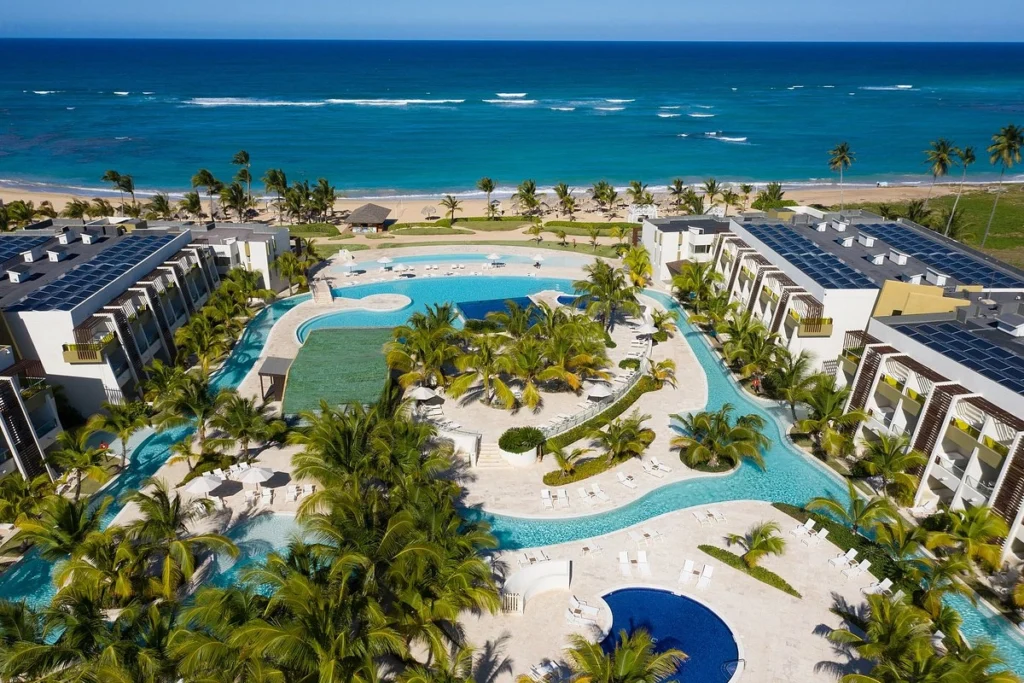
The brand has also crossed the Atlantic with Zel Punta Cana in the Dominican Republic. The all-suite resort near Bávaro Beach combines Mediterranean inspiration with Caribbean surroundings, including swim-up accommodation, pools, a beach club and seven restaurants.
This expansion allows the Dominican Republic to attract visitors interested in wellness, food and active holidays alongside its established all-inclusive beach market.
Future Zel locations announced by Meliá include Madrid, Vlore in Albania, Fuerteventura and Sisi in Crete. These destinations reflect the brand’s focus on coastal environments, outdoor activity and lifestyle-led tourism.
China becomes a hospitality innovation centre
Hilton is using China to develop Hilton Garden Inn Gen A, a regional hotel prototype created specifically for the needs of Chinese travellers.
The first Gen A properties opened in Chongqing, Sanya and Harbin. Their design combines nature-inspired interiors with multifunctional spaces that support dining, refreshments, retail, relaxation, socialising and work.
At the centre of the concept is a four-in-one area that allows guests to move easily between different activities during the day. Co-working areas and quieter zones also help properties serve business passengers and leisure visitors within the same environment.
Hilton announced agreements covering more than 2,000 additional Hilton Garden Inn rooms across China in June 2026. The expansion includes major commercial centres and emerging leisure destinations, reflecting demand from travellers who want reliable services without sacrificing design or flexibility.
The Gen A strategy demonstrates how global brands are adapting products to regional expectations rather than applying one standard hotel format in every market.
Marriott responds to longer stays
In the United States, Marriott is expanding its extended-stay portfolio through StudioRes, a midscale concept designed for guests remaining for at least two weeks.
The brand targets people completing work assignments, relocating to a new area or requiring practical accommodation for an extended period. It can also serve healthcare travellers, project teams, remote workers and families between permanent homes.
StudioRes Fort Myers in Florida provides apartment-style studios with stovetops, full-size refrigerators, microwaves, work areas and seating space. Guests also receive access to laundry facilities, a fitness centre, Wi-Fi and self-service coffee.
The concept removes some traditional full-service hotel features while concentrating on the facilities that long-stay travellers use most frequently. This approach can help control accommodation costs while allowing guests to cook, work and maintain daily routines.
Bleisure changes hotel design
The growth of bleisure travel is also influencing how hotels organise rooms and public spaces.
Business passengers increasingly add leisure time before or after meetings. As a result, hotels are introducing workspaces, reliable connectivity, social areas, wellness facilities and dining options that remain useful throughout the day.
Digital nomads require many of the same services but often stay considerably longer. Kitchens, laundry facilities, flexible reservations and communal areas become especially important when a property functions as both a workplace and a temporary home.
Wellness has become another important booking influence. Travellers now compare hotels based on fitness facilities, outdoor activities, spa programmes, healthy food and opportunities to recover from demanding schedules.
Purpose replaces traditional hotel categories
The emerging hotel landscape is increasingly organised around the purpose of travel rather than conventional luxury and budget classifications.
Zel serves guests seeking wellness, outdoor living and Mediterranean-inspired experiences. Hilton Garden Inn Gen A responds to urban travellers needing adaptable social and work environments. StudioRes focuses on practical living for longer stays.
For destinations, these concepts can attract more diverse visitor segments and support demand throughout the year. For travellers, they create clearer choices based on how they plan to live, work and relax during a journey.
The hotel industry’s next phase will therefore be defined by flexibility. Properties that successfully combine comfort, productivity, wellbeing and local experiences will be best positioned to earn loyalty from modern travellers.
For more travel news like this, keep reading Global Travel Wire