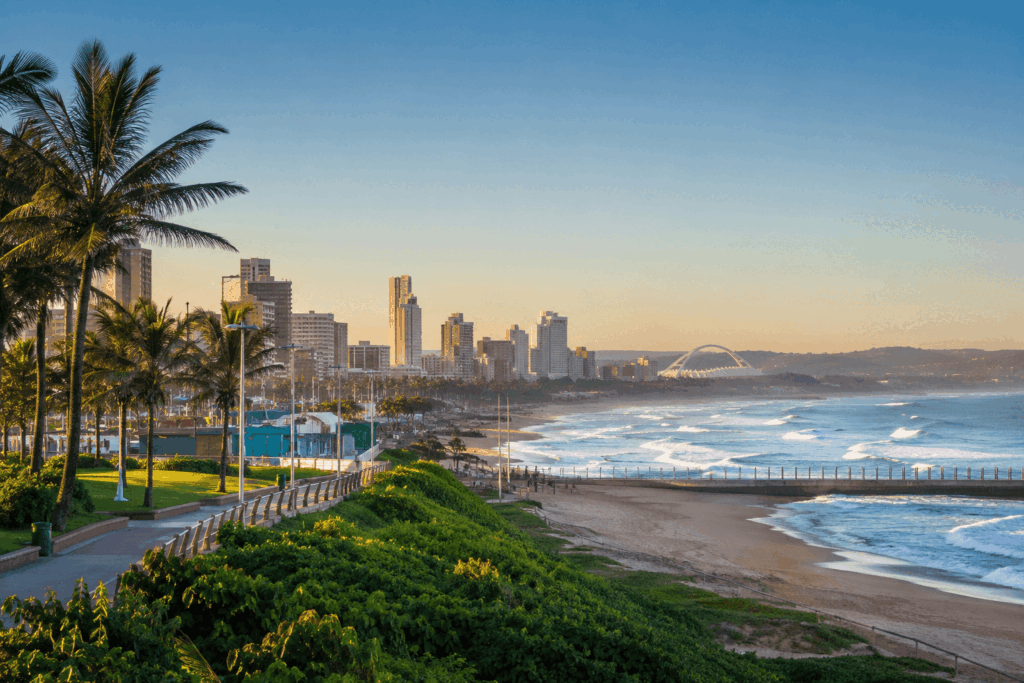
KwaZulu-Natal is taking decisive steps toward long-term economic stability and sustainable regional growth through a carefully structured provincial financial plan. With a total budget topping R109 billion, the province is placing human development, healthcare, and infrastructure efficiency at the forefront of its economic agenda. For travelers, global partners, and local hospitality operators, this disciplined financial outlook highlights a commitment to creating a stable, secure, and well-managed destination capable of supporting world-class visitor experiences across South Africa.
By focusing public investment into essential social pillars while simultaneously trimming non-essential administrative overhead, provincial leaders aim to protect the foundational services that keep the region attractive, safe, and open for international commerce and leisure travel.
Prioritizing Essential Infrastructure and Regional Health
A vibrant, world-class destination relies heavily on the strength of its public services and local infrastructure. In the latest provincial economic breakdown, the sectors receiving the vast majority of resources are public education and healthcare. The province has allocated R45.4 billion to education and R36.5 billion to health, representing an increase of more than R2 billion for each sector compared to previous financial cycles.
These investments play a vital role in maintaining regional stability and visitor confidence. A robust healthcare system ensures that both residents and incoming travelers have access to dependable medical facilities across urban hubs like Durban and rural resort destinations along the Elephant Coast. Meanwhile, sustained support for education feeds directly into workforce development, equipping the local service, transport, and hospitality sectors with skilled professionals ready to elevate destination standards.
By prioritizing healthcare and education, provincial authorities are ensuring that the fundamental human capital supporting the region remains strong and resilient against global market shifts.
Strategic Cost-Cutting to Safeguard Economic Growth
To maintain fiscal balance amid challenging global economic conditions and localized climate pressures, such as recent drought conditions in northern districts, the province has outlined clear expenditure controls. Official announcements confirm that administrative departments will enforce strict financial discipline to eliminate wasteful spending, streamline government operations, and optimize every rand spent.
A major element of this strategy includes freezing non-essential provincial posts to save an estimated R811 million. Crucially, core frontline sectors—specifically healthcare and education—are completely exempt from these recruitment freezes. This targeted approach ensures that public-facing services remain fully staffed while government departments reduce excess operational costs.
Through careful administrative management, the provincial leadership aims to make public administration leaner, faster, and more efficient without compromising the delivery of public services or slowing down regional infrastructure projects.
Streamlining Public Events and Promoting Sustainable Tourism
Events, trade expos, and cultural gatherings remain central to the identity of KwaZulu-Natal as a major travel hub along the Indian Ocean coastline. Under the updated provincial spending guidelines, official public events will continue to play an active role in community engagement and destination promotion, but under streamlined operational frameworks.
New guidelines dictate that public events will be subjected to prudent cost-management protocols. Measures include reducing administrative overhead, limiting temporary structural setups, and curtailing lavish expenditure during official functions.
Far from dampening regional tourism appeal, this disciplined approach ensures that public funds dedicated to showcase events are used transparently and effectively. By eliminating unnecessary administrative costs, the province can better direct resources toward preserving natural heritage sites, maintaining coastal infrastructure, and driving targeted destination marketing campaigns that attract long-term foreign direct investment and eco-conscious travelers.
Strengthening the KwaZulu-Natal Brand for Future Growth
The economic adjustments reflected in the provincial financial framework demonstrate proactive management designed to navigate global economic headwinds. By taking firm control of internal budgets, addressing climate challenges directly, and maintaining substantial funding for core public services, KwaZulu-Natal reinforces its position as an adaptable and dependable economic engine for South Africa.
For the travel industry, a financially prudent provincial government provides a stable environment for private sector investment, hospitality expansion, and air connectivity partnerships. Key tourist regions—stretching from the majestic Drakensberg mountain range to the pristine beaches of the North and South Coasts—stand to benefit from an environment where public funds are protected, services are preserved, and long-term sustainability takes precedence over short-term spending.
As the province balances its financial sheets, the ultimate objective remains clear: building a cleaner, safer, and economically resilient KwaZulu-Natal that welcomes the world with world-class hospitality and uncompromised destination integrity.
For more travel news like this, keep reading Global Travel Wire