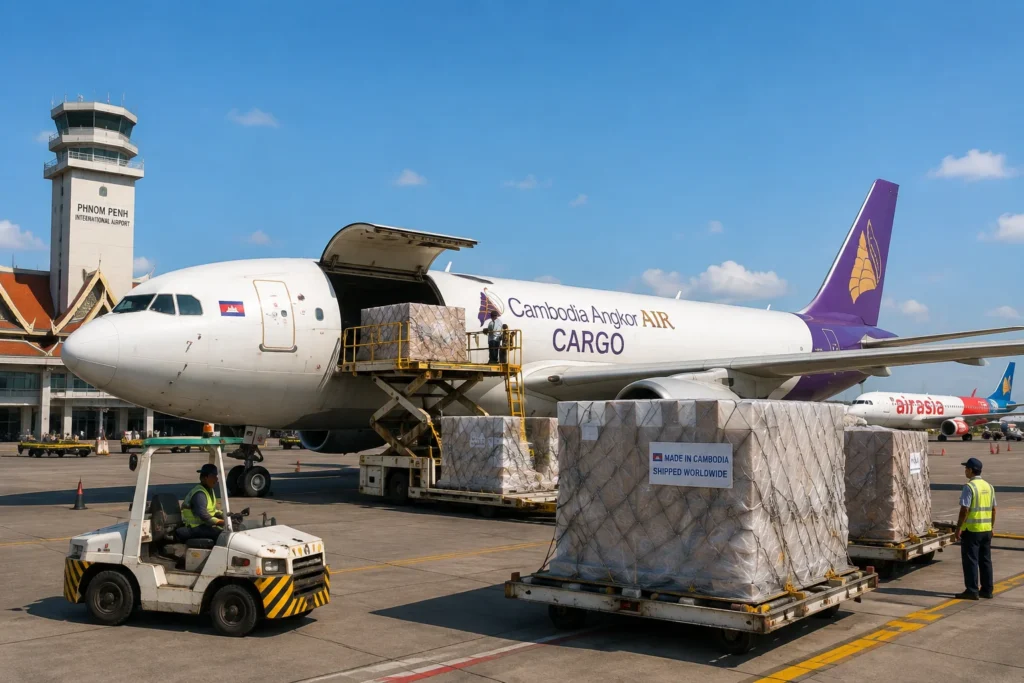
Cambodia’s aviation and travel landscape experienced a distinct shift during the first seven months of the year, characterized by rapid expansion in air freight throughput alongside a moderate cooling in passenger arrivals. According to official performance metrics released by the State Secretariat of Civil Aviation (SSCA), international airports across the Kingdom processed 3.7 million air travelers between January and July, marking a 9 percent decrease compared to the corresponding period in the previous year.
Despite the reduction in passenger traffic, the country’s air cargo sector demonstrated exceptional resilience. The SSCA confirmed that Cambodian air terminals handled 57,102 tonnes of air freight during the seven-month period, representing a robust 21 percent increase year-on-year. Meanwhile, overall aircraft movements remained remarkably steady. The nation’s primary international airport infrastructure recorded a combined total of 37,248 inbound and outbound flights, maintaining parity with flight frequencies logged during the same timeframe in the preceding year.
Economic Factors and Regional Source Market Realities
Commenting on the aviation performance trends, State Secretariat of Civil Aviation Secretary of State and spokesman Sinn Chanserey Vutha explained that broader economic conditions across key international origin markets have influenced leisure travel behavior. Global inflationary pressures and uneven macroeconomic recovery across primary tourism feeder markets have led travelers to adjust discretionary spending, impacting regional leisure journeys and long-haul travel itineraries.
As cost-of-living adjustments affect household budgets in primary source markets across Asia and Europe, optional travel and non-essential regional vacations have experienced temporary softening. Tourism officials note that while long-haul arrivals have adjusted to broader financial considerations, core interest in South East Asian heritage and eco-tourism destinations remains intact. The steady volume of commercial flight operations underscores that air carriers continue to maintain scheduled capacity in anticipation of seasonal demand recoveries.
Airport Hub Operations and Network Distribution
Cambodia’s primary air gateways continue to serve distinct roles within the national transport and tourism ecosystem. Operating as the primary commercial and economic entryway, Techo International Airport (KTI) serving Phnom Penh commands the largest share of weekly flight operations, processing an average of 792 arrivals and departures each week. The modern 4F-class facility has rapidly solidified its position as the central hub for national air transport, business travel, and air cargo logistics.
Siem Reap Angkor International Airport (SAI) represents the secondary major aviation pillar, hosting approximately 260 scheduled flights weekly. As the principal entry point for visitors traveling to the UNESCO World Heritage sites of the Angkor Archaeological Park, the airport remains vital to Cambodia’s cultural tourism economy. Government strategy continues to emphasize strengthening direct international flight connections to Siem Reap to mitigate low-season fluctuations and support local hospitality ecosystems.
Along the southern coastline, Sihanouk International Airport (KOS) records 68 weekly flight movements, facilitating access to coastal resorts, island eco-tourism destinations, and regional commerce zones. Additionally, Dara Sakor International Airport maintains specialized operations with four weekly flights, supporting coastal development projects and targeted leisure circuits.
Network Resilience and International Air Connectivity
Despite external economic factors influencing passenger volume, Cambodia’s air transport network retains robust regional and intercontinental connectivity. A total of 33 commercial airlines—comprising four home-based domestic air carriers and 29 international airlines—currently operate scheduled flights connecting Cambodia with key destinations across ASEAN, East Asia, South Asia, and the Middle East.
This comprehensive route network ensures that Cambodia remains accessible to both transit passengers and point-to-point travelers. Continuous flight operations provide direct access to major Asian aviation hubs such as Bangkok, Singapore, Kuala Lumpur, Hong Kong, Taipei, and Seoul, alongside long-haul connections to the Middle East. The stability of these air corridors provides a strong operational base for upcoming travel seasons, ensuring that infrastructure remains ready as leisure travel demand rebounds.
Furthermore, the significant growth in air cargo highlights Cambodia’s increasing integration into global supply chains and regional logistics networks. The surge in freight processing reflects expanding manufacturing output, agricultural exports, and cross-border trade, helping offset revenue shifts within the broader aviation sector.
Strategic Vision and 2027 Infrastructure Targets
The latest official traffic figures align with the State Secretariat of Civil Aviation’s comprehensive long-term infrastructure roadmap. As part of a national strategy presented to legislative commissions, the aviation authority has established ambitious operational targets to handle 8 million air passengers and 112,000 tonnes of air cargo annually by 2027.
The government’s overarching strategy focuses on transforming the Kingdom into a key regional aviation hub by upgrading airport technology, expanding passenger processing capacity, and enhancing multi-modal transport links. By modernizing regional airport infrastructure and pursuing strategic bilateral air service agreements, civil aviation authorities aim to attract new international carriers and establish direct connections with unserved markets.
These infrastructure investments are designed to support the Ministry of Tourism’s broader goal of diversifying national travel offerings. Beyond established cultural icons like Angkor Wat, national promotional strategies are increasingly highlighting coastal resorts in Preah Sihanouk, eco-tourism circuits in the Cardamom Mountains, and culinary and heritage experiences in Phnom Penh. With modern airport gateways operational and cargo activity expanding rapidly, Cambodia’s aviation framework is well-positioned to drive future economic development and regional tourism growth.
For more travel news like this, keep reading Global Travel Wire