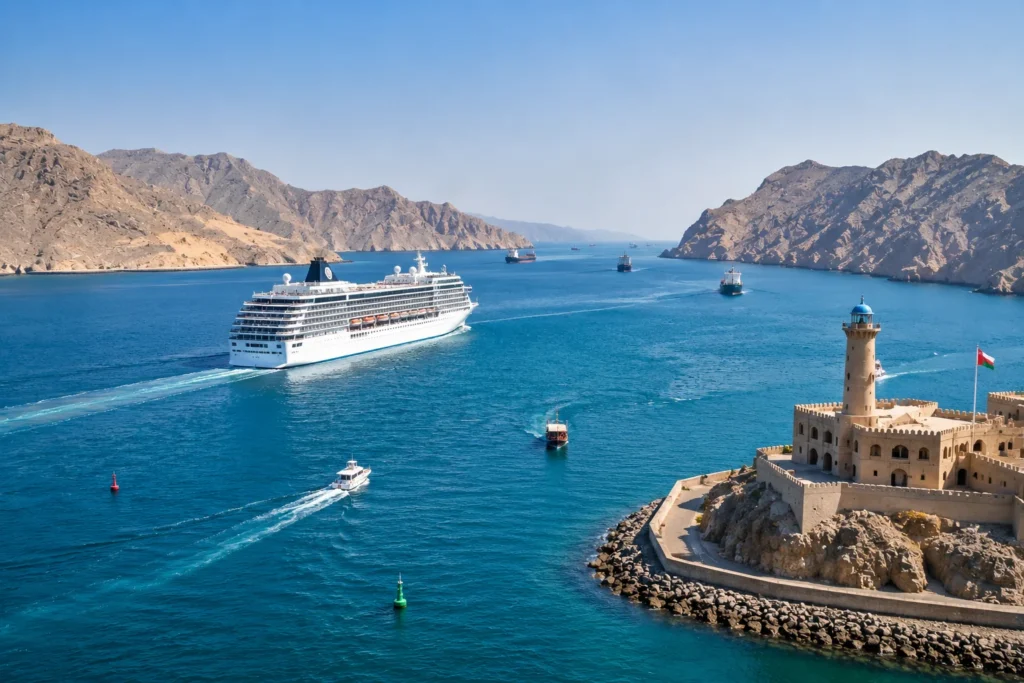
Regional tourism and maritime travel authorities across the Gulf are closely monitoring official announcements regarding new maritime transit arrangements through the Strait of Hormuz. As one of the world’s most critical waterways connecting the Persian Gulf with international sea routes, the stability of the Strait of Hormuz plays a foundational role in passenger cruise operations, luxury yachting, maritime tourism, and regional leisure travel across the Middle East. Recent public statements from official diplomatic channels indicate that technical discussions regarding vessel passage parameters are nearing completion, offering potential relief for the broader Gulf travel and hospitality sectors.
Bilateral Diplomatic Framework Aimed at Restoring Maritime Security and Travel Confidence
In official briefings provided by Iran’s Ministry of Foreign Affairs, government representatives confirmed that Iran and Oman have reached an in-principle agreement on specific geographical transit coordinates for vessels navigating the strategic waterway. Under the proposed maritime framework, coordinated routes are designated to streamline maritime movement, assigning inbound maritime transit through northern lanes managed in Iranian territorial waters and outbound shipping through southern lanes coordinated with Omani maritime authorities.
Ministry officials emphasized that establishing clear navigational channels is an essential step toward restoring operational order across regional waters. For the regional travel industry, structured shipping protocols are vital for reducing maritime risk perceptions that have constrained cruise itineraries and coastal tourism activities across Gulf destinations over recent months.
Official Perspectives on Regional Safety and Tourism Sector Resilience
While diplomatic negotiations on maritime transit protocols continue, senior defense and government spokespersons maintain that the complete normalization of waterway operations remains tied to broader regional conditions and international commitments. Official statements from Iran’s Islamic Revolutionary Guard Corps noted that maritime mechanisms in the strait serve as a key pillar of regional territorial integrity and national sovereignty. Defense officials underscored that long-term maritime predictability requires the full honoring of prior bilateral understandings and the cessation of external economic and military blockades.
At the same time, regional executive leadership has reaffirmed a commitment to diplomatic frameworks. In televised public remarks, President Masoud Pezeshkian reiterated strong support for existing diplomatic memorandums of understanding aimed at lowering regional tensions and safeguarding national economic interests. For destination management organizations and international travel operators, continued diplomatic engagement represents an encouraging signal that regional leadership recognizes the economic necessity of secure, navigable waterways for international commerce and leisure travel.
UAE Ministry Addresses Maritime Safety and Commercial Transit Protections
Maritime safety remains the primary focus for coastal tourism boards, port authorities, and commercial vessel operators operating throughout the Persian Gulf and the Gulf of Oman. Highlighting the ongoing need for rigorous security guarantees, the United Arab Emirates Ministry of Foreign Affairs issued an official statement following a recent missile incident targeting a commercial oil tanker affiliated with the Abu Dhabi National Oil Company within the Strait of Hormuz.
The UAE Foreign Ministry strongly condemned any targeting of commercial shipping or disruption of vital maritime passages, warning that actions threatening commercial transit undermine regional stability and international trade. The ministry reiterated that ensuring safe, unhindered navigation through international waterways is essential for protecting regional livelihoods, maritime infrastructure, and the global reputation of the Gulf as a world-class center for trade and international leisure tourism.
Implications for Regional Cruise Operations and Coastal Destinations
The Gulf region has invested heavily in developing its luxury tourism infrastructure, state-of-the-art cruise terminals, and coastal resort destinations in recent years. International cruise lines operating seasonal itineraries in the Middle East rely heavily on secure transit through the Strait of Hormuz to connect key port cities in Oman, the United Arab Emirates, Qatar, and neighboring destinations. Disruptions to maritime transit previously forced travel providers to alter itineraries, pause regional voyages, or reroute passenger vessels, impacting hospitality revenues across coastal communities.
A formalized transit arrangement between regional states is viewed by travel industry analysts as a vital precursor to restoring full confidence among international cruise operators and maritime travel agencies. Clear routing protocols and enhanced coordination among coastal states help establish predictable maritime environments necessary for long-term travel bookings, tour operator commitments, and destination marketing campaigns.
Outlook for Middle East Tourism and Leisure Travel Security
As joint official statements from involved governments await final administrative review, tourism authorities across the Middle East remain focused on maintaining high safety standards and welcoming international visitors. While broader diplomatic discussions involving international partners continue, the technical alignment between regional neighbors demonstrates a shared recognition that stable waterways are imperative for economic growth, supply chain security, and vibrant tourism ecosystems.
Travel organizations and municipal tourism boards advise international visitors and cruise travelers to consult official government travel advisories, maritime transport bulletins, and official port authority updates when planning itineraries in the region. By prioritizing verified official announcements and official government guidance, the Middle East tourism sector continues to demonstrate resilience as it navigates evolving regional dynamics while working toward a secure and prosperous future for maritime travel.
For more travel news like this, keep reading Global Travel Wire