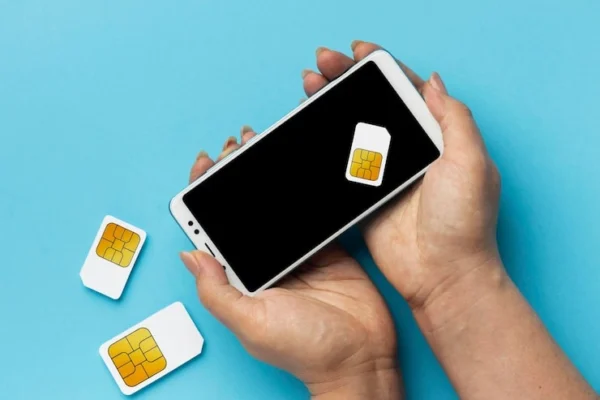
International travellers moving between France, wider Europe and Canada are increasingly turning to eSIM technology to simplify one of the most important parts of modern travel: staying connected.
Instead of searching airport arrival halls for physical SIM cards, exchanging tiny cards between devices or navigating unfamiliar mobile plans, travellers with compatible smartphones can activate digital cellular profiles before departure or during their journey.
The change is particularly useful for multi-country itineraries. A visitor might begin a holiday in Paris, continue through several European destinations and later fly to Canada. With eSIM capability, different mobile data profiles can be stored digitally and activated when required.
That can provide faster access to navigation, digital boarding passes, hotel reservations, translation services, communication platforms and other tools that increasingly shape the international travel experience.
Physical SIM cards create extra travel friction
Traditional SIM cards remain useful, but they can become inconvenient during complex international journeys.
Travellers arriving in France may need to find a telecommunications shop, compare plans, complete registration requirements and physically install a new SIM before accessing affordable local data.
Arrival times can make that process more difficult. Travellers landing late at night or outside retail opening hours may have to depend on airport Wi-Fi before reaching their accommodation.
There is also the practical challenge of protecting the traveller’s original SIM.
Removing a home SIM creates the possibility of losing or damaging it. That can become particularly inconvenient when the original number is needed for banking authentication, account verification or important personal messages.
eSIM makes connectivity more flexible
An eSIM is embedded within a compatible mobile device and allows cellular network profiles to be downloaded digitally.
For travellers, preparation is one of its strongest advantages.
A suitable data plan can often be arranged before departure, allowing the traveller to configure the eSIM while still connected to reliable home internet. Once the destination is reached, the appropriate mobile data profile can be activated without replacing a physical card.
Many compatible devices can also store several eSIM profiles.
That makes the technology particularly relevant for travellers crossing multiple regions. Someone travelling through France and other European countries can retain one regional profile before switching to another suitable plan after reaching Canada.
European journeys benefit from regional connectivity
Europe is especially suited to multi-country tourism.
Travellers regularly combine France with destinations such as Germany, Italy, Spain, Switzerland and neighbouring markets within one holiday.
This creates demand for mobile connectivity that can continue across borders without requiring repeated SIM purchases.
Regional eSIM packages can provide one digital connectivity solution across multiple supported destinations, depending on the individual plan and network arrangements.
For tourists, uninterrupted data access can support maps, train information, accommodation bookings, attraction reservations, translation tools and communication with family members.
Business travellers can also benefit when moving between European cities for meetings, exhibitions or corporate assignments.
Canada creates a new connectivity stage
A journey from Europe to Canada introduces different network requirements.
Travellers should therefore check whether their existing eSIM package includes Canadian coverage or whether a separate Canada or North America profile is required.
The ability to store multiple profiles digitally makes that transition easier.
A traveller leaving France can deactivate a European data profile and activate a Canadian one through the smartphone settings without opening the device or replacing a physical card.
This flexibility is valuable for passengers combining several countries or continents in one itinerary.
Remote workers need reliable mobile access
Digital nomads and business travellers are also accelerating demand for flexible international connectivity.
For these travellers, mobile internet supports much more than tourism planning.
Video meetings, cloud-based work platforms, messaging, document transfers and online collaboration all require dependable connections.
An eSIM can provide a backup or alternative to hotel and public Wi-Fi, giving remote professionals more control over their connectivity during international trips.
However, travellers undertaking data-intensive work should carefully review their allowance, speed conditions and network coverage before selecting a plan.
Travellers should check devices before departure
Not every smartphone supports eSIM technology, and compatibility should be confirmed before purchasing a plan.
Travellers should also ensure that their device is unlocked for use with alternative networks.
Coverage is equally important. A plan advertised for Europe may not automatically include every European destination, while Canadian coverage may require a different package.
Users keeping their primary physical SIM active should also review roaming settings to reduce the risk of unexpected charges.
Data requirements vary significantly. Travellers mainly using maps and messaging may need relatively modest allowances, while video streaming or remote working can consume considerably more data.
Connectivity becomes part of tourism infrastructure
Reliable mobile access is increasingly becoming part of the wider visitor experience.
International travellers depend on smartphones from the moment they reach an airport. Boarding documents, accommodation directions, ride services, rail tickets, restaurant bookings and attraction information are now frequently accessed digitally.
For journeys connecting France, Europe and Canada, eSIM technology can make that digital travel experience more continuous.
The technology does not remove the need to compare coverage, device compatibility and individual data plans. However, it can reduce the practical inconvenience associated with purchasing and replacing physical SIM cards.
As international tourism becomes increasingly mobile-first, eSIM technology is emerging as an important part of modern travel preparation, helping travellers cross borders while keeping essential digital services within immediate reach.
For more travel news like this, keep reading Global Travel Wire