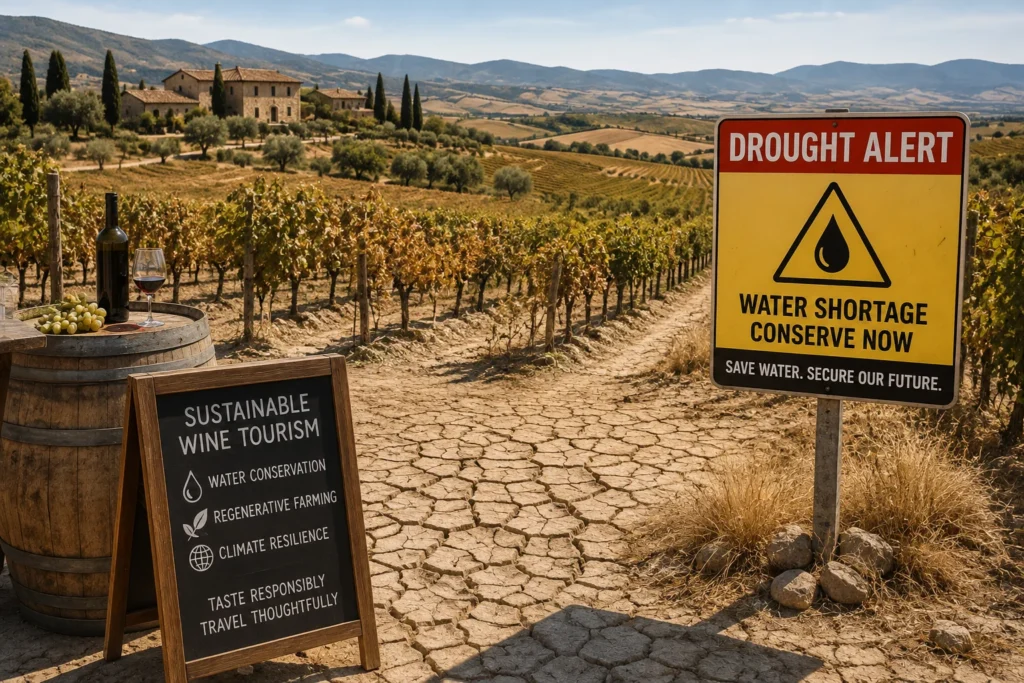
Extended drought cycles and persistent water scarcity are transforming rural travel itineraries throughout Southern and Western Europe. As agricultural drought impacts vineyards, olive groves, and farm stay programs across Italy, France, Spain, Germany, and Croatia, national ministries and tourism boards are initiating targeted conservation measures. These environmental shifts require agritourism operators and culinary travelers to adapt to changing harvest timelines and strict municipal water management rules.
European Environment Agency Highlights Regional Agricultural Water Pressures
Official environmental assessments published by the European Environment Agency (EEA) indicate that prolonged heatwaves and diminished rainfall reserves have intensified water stress across prime agricultural zones. Key culinary destinations—including Italy’s Tuscany and Veneto, France’s Bordeaux and Provence, Spain’s Andalusia and Catalonia, and Germany’s Rhine Valley—are experiencing significant soil moisture deficits.
To safeguard regional agricultural heritage and support sustainable travel economies, national ministries of agriculture and regional environmental protection agencies are establishing mandatory water management protocols. In response, agritourism estates, rural lodges, and historic wineries are adjusting their seasonal operating calendars, tasting schedules, and menu offerings to align with conservation guidelines.
Destination Vulnerability and Agricultural Risk Profiles
Agricultural drought affects specific culinary regions with varying degrees of severity. Environmental monitoring framework data highlights how distinct destinations face localized resource pressures and operational changes:
Italy (Tuscany, Emilia-Romagna, Veneto, Sicily): Widespread water stress impacts traditional vineyard yields, olive production, and farm stay amenities, prompting agritourism properties to introduce smart water restrictors and greywater recycling systems.
France (Bordeaux, Burgundy, Provence): Irrigation restrictions across historic wine regions have accelerated harvest schedules, requiring wineries to alter summer tasting events and vineyard access hours.
Spain (Andalusia, Catalonia, Valencia): Severe soil moisture deficits across olive groves and rural estates have led local authorities to enforce strict municipal water usage caps during peak summer travel periods.
Germany (Rhine Valley): Unusually low river levels disrupt river cruise transit corridors and seasonal grape harvest cycles along steep riverbank vineyards.
Croatia (Istria, Dalmatia): Fluctuations in localized freshwater supplies affect coastal culinary operators and olive oil producers, encouraging farm-to-table sourcing cooperatives.
Operational Adaptation Across the Culinary Tourism Chain
Adapting rural hospitality to environmental constraints involves coordinated strategies across every sector of the agricultural tourism industry. Regional tourism boards and agricultural ministries recommend clear operational pivots to ensure long-term resilience:
| Tourism Chain Segment | Drought Pressure & Risk | Strategic Adaptation Measures | Traveler Guidelines |
| Agritourism Lodges | Local municipal water supply constraints | Smart shower restrictors, greywater recycling, and reduced pool operating hours | Observe property water limits and practice active conservation |
| Wineries & Vineyards | Accelerated harvest cycles and heat stress | Micro-irrigation technology, dry farming practices, and shade netting | Confirm harvest festival schedules and tasting tours prior to arrival |
| Regional Restaurants | Seasonal crop supply fluctuations | Dynamic farm-to-table menus based on resilient organic produce | Choose seasonal dishes sourced from local agricultural cooperatives |
| River Cruise Lines | Shallow river navigation depths | Multi-modal transit integration, including luxury motorcoach transfers | Monitor river depth advisories and carrier itinerary updates |
Practical Traveler Logistics for Navigating Rural Drought Advisories
For international visitors and tour coordinators planning culinary excursions across Europe, managing travel during active drought alerts requires pre-departure planning and environmental awareness. Official travel and agricultural guidelines recommend several practical steps:
Confirming Seasonal Schedules and Tour Operations
Extreme heat accelerates grape and olive maturation, often shifting harvest dates earlier by several weeks. Travelers planning visits to Piedmont, Bordeaux, or Andalusia should verify operational hours directly with estate managers to ensure tasting rooms and farm activities remain fully accessible.
Adhering to Municipal Water Guidelines
Local governments across Southern Europe frequently issue water conservation decrees during summer months. Guests staying at agritourism properties should respect property guidelines, take shorter showers, reuse linens, and refrain from unnecessary water usage.
Supporting Climate-Resilient Culinary Networks
Dining at establishments that partner with certified local organic cooperatives helps relieve economic pressure on small-scale farmers facing elevated irrigation costs. Embracing seasonal, drought-resilient menu options supports regional food systems under environmental stress.
Monitoring Waterway Navigation Bulletins
Travelers booking river-based wine tours along major European waterways, such as the Rhine or Danube, should monitor navigational updates provided by official transport authorities. When low water levels restrict vessel movement, operators deploy alternative overland transfers to preserve planned itineraries.
Institutional Infrastructure Programs and Long-Term Resilience
The growing frequency of dry spells highlights the connection between sustainable agriculture and rural tourism stability. Under guidelines set by the European Commission’s Common Agricultural Policy (CAP), member state governments are increasing public funding for climate-resilient crop research, modernized drip irrigation infrastructure, and eco-certified tourism developments.
These institutional investments help rural communities diversify their economies beyond water-intensive seasonal events, protecting smallholder farmers, local food producers, and hospitality providers. By aligning travel itineraries with verified environmental management policies, the European food and wine tourism sector continues to welcome visitors while safeguarding vital agricultural ecosystems.
For more travel news like this, keep reading Global Travel Wire