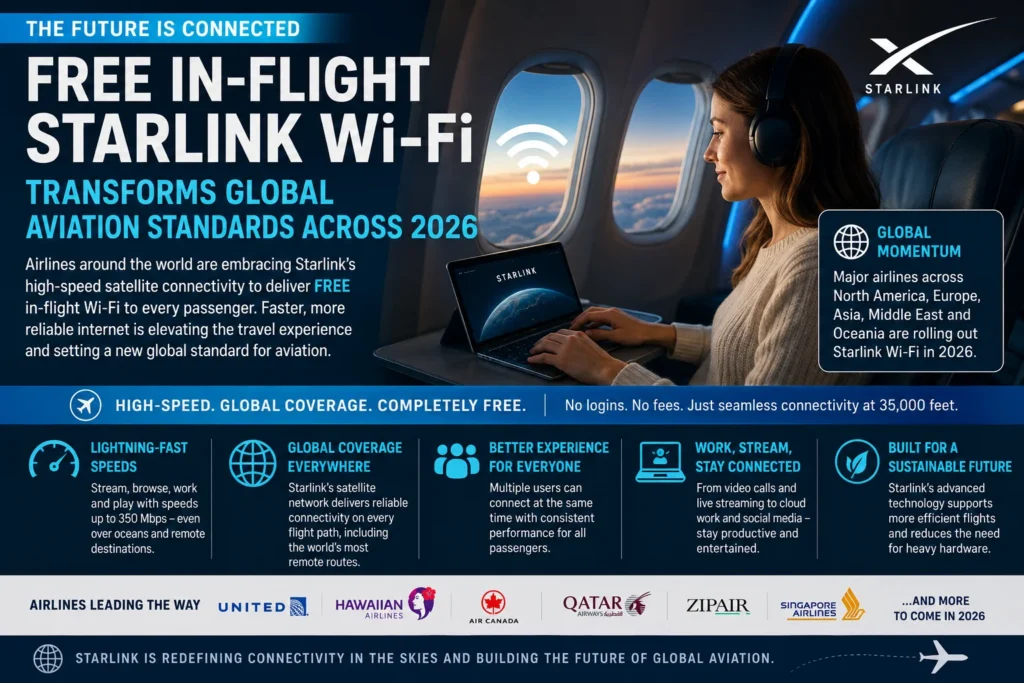
High-speed satellite connectivity at 35,000 feet is rapidly transitioning from a premium airline add-on to a standard passenger expectation. As major global airline groups accelerate fleet-wide installations of SpaceX’s low-Earth orbit satellite system, the commercial aviation sector is experiencing a fundamental shift in how onboard internet is delivered and monetized.
More than 40 commercial carriers have committed to deploying low-Earth orbit satellite internet, with over 1,400 aircraft actively equipped or undergoing installation. Driven by high-bandwidth performance and low latency, airlines are systematically dismantling legacy paid-connectivity models in favor of complimentary, loyalty-integrated access.
European Aviation Giants Accelerate Fleet-Wide Broadband Integration
The European commercial aviation landscape entered a new era following major commitments from the continent’s premier airline groups. Lufthansa Group initiated the rollout of next-generation satellite connectivity across its fleet, beginning with short-haul regional aircraft.
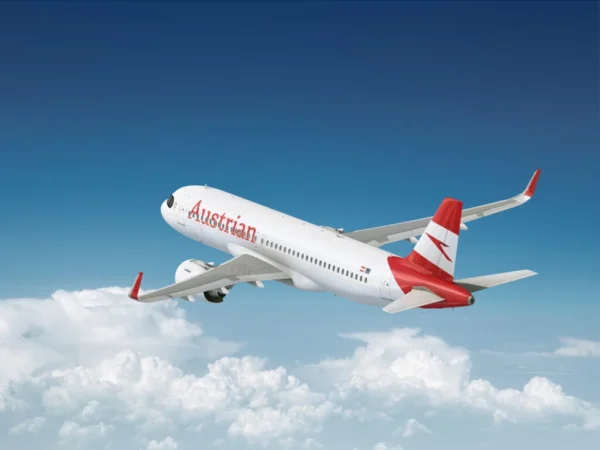
Lufthansa Group plans to equip approximately 850 aircraft by 2029, spanning its full carrier portfolio, including SWISS, Austrian Airlines, Brussels Airlines, Eurowings, Discover Airlines, Edelweiss Air, Air Dolomiti, and ITA Airways. The service is available without additional charges to status passengers and registered digital ID profile holders across all cabin classes.
Concurrently, International Airlines Group (IAG) finalized agreements to outfit more than 500 aircraft across its operating companies, including British Airways, Iberia, Aer Lingus, Vueling, and LEVEL. With Air France also rolling out complimentary satellite broadband to registered loyalty members, all three major European aviation consortia have adopted free, high-speed onboard Wi-Fi as a core brand differentiator.
Free Satellite Wi-Fi Adoption Across Global Airlines
A comprehensive review of commercial airlines operating or deploying satellite broadband reveals an unprecedented trend: no major international carrier currently operating the low-Earth orbit service charges a traditional pay-per-flight connection fee. Instead, airlines leverage complimentary internet to drive enrollment in digital customer profiles and frequent-flyer programs.
| Airline Operator | Market Region | Passenger Pricing Structure | Access Requirement |
| Qatar Airways | Middle East | Complimentary | Free Privilege Club enrollment |
| Emirates | Middle East | Complimentary | Open access on equipped aircraft |
| Air France | Europe | Complimentary | Free Flying Blue account |
| airBaltic | Europe | Complimentary | Open gate-to-gate access |
| SAS Scandinavian Airlines | Europe | Complimentary | Free EuroBonus membership |
| United Airlines | North America | Complimentary | Free MileagePlus account |
| Alaska Airlines / Hawaiian | North America | Complimentary | Free Atmos Rewards membership |
| WestJet | North America | Complimentary | Free WestJet Rewards membership |
| Virgin Atlantic | Europe | Complimentary | Free Flying Club membership |
| ZIPAIR | Asia-Pacific | Complimentary | Open access for all passengers |
Long-Haul Carriers Pioneer Gate-to-Gate Connectivity
Middle Eastern long-haul airlines have served as primary showcases for high-capacity satellite connectivity. Qatar Airways accelerated widebody installations across its Boeing 777, Airbus A350, and Boeing 787-8 fleets, delivering connection speeds reaching up to 500 Mbps with gate-to-gate functionality where local regulations permit.
Similarly, Emirates provides complimentary satellite internet across its upgraded long-haul fleet, enabling passengers to stream media, conduct cloud-based work, and maintain messaging access throughout intercontinental flights. On aircraft still utilizing legacy satellite networks, airlines maintain secondary tiered pricing structures for basic text packages, illustrating a clear operational divide between traditional and next-generation connectivity standards.
In North America, United Airlines represents one of the largest single fleet commitments, equipping hundreds of mainline narrowbody, widebody, and regional aircraft. By offering complimentary broadband to MileagePlus members, the carrier uses high-speed connectivity as a primary engine for customer data collection and brand engagement.
Cabin Etiquette and Operational Infrastructure Challenges
As onboard internet speeds match terrestrial fiber networks, civil aviation authorities and airline passenger experience managers are establishing clear guidelines governing cabin etiquette. The technical ability to stream live media and initiate video calls has prompted airlines to enforce strict operational policies:
Headphone Mandates: Passengers must utilize personal headphones for all audio and video playback inside the cabin.
Voice and Video Call Restrictions: To maintain a quiet cabin environment, multiple international carriers explicitly prohibit voice calls, video conferencing, and live video broadcasting during flight.
Fleet Substitution Disclaimers: Because satellite installations occur in phases across multi-year schedules, airlines remind passengers that aircraft substitutions can occasionally result in a flight operating with legacy connectivity systems.
Future Competitive Landscape in Connected Skies
The rapid adoption of low-Earth orbit satellite networks has disrupted established inflight connectivity providers. Competitors in the satellite communications sector, including Amazon Kuiper and Viasat, are developing high-capacity satellite constellations to compete for airline contracts.
As civil aviation departments finalize regulatory approvals and international air carriers complete fleet retrofits, high-speed, complimentary Wi-Fi is rapidly evolving from a competitive luxury into a baseline requirement for modern global air travel.
For more travel news like this, keep reading Global Travel Wire