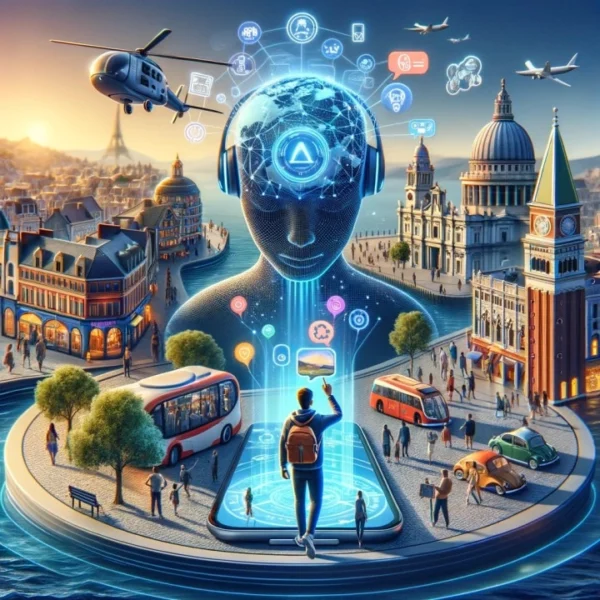
Artificial intelligence is rapidly changing international tourism as the UK, Singapore, Italy and other major destinations strengthen digital travel systems designed around smarter and increasingly personalised visitor experiences.
The transformation is moving beyond automated booking tools. Governments, tourism authorities and businesses are exploring AI for visitor services, destination management, tourism data, workforce productivity and personalised recommendations.
The G7 and OECD have identified AI as an important tool for tourism innovation and sustainable development. Potential applications range from personalised visitor recommendations and virtual assistance to tourism-flow management, market intelligence and operational automation.
For travellers, the shift could make planning faster and destination discovery more relevant. For tourism businesses, however, it creates a parallel requirement to develop digital skills while protecting consumer information and maintaining the human hospitality that remains central to travel.
Hyper-personalised travel becomes tourism priority
Hyper-personalised travel represents one of the most significant changes emerging from AI tourism.
Instead of presenting every traveller with similar recommendations, intelligent systems can analyse preferences and behavioural information to deliver more relevant options.
A family could receive child-friendly attraction suggestions, while a business traveller may see efficient transport options. Solo visitors could receive recommendations based on cultural interests, preferred activities and travel style.
AI can potentially support this personalisation throughout the journey, from destination inspiration and booking to on-trip assistance and future travel offers.
The G7-OECD policy work also highlights the ability of AI to improve accessibility, customer engagement, visitor-flow management and resource efficiency. However, it stresses that personalised tourism requires strong consumer safeguards and data protection.
UK prepares tourism industry for AI adoption
The United Kingdom is positioning digital capability as part of its wider visitor-economy development.
VisitEngland’s 2025-26 strategy specifically includes enabling AI use across England’s Local Visitor Economy Partnerships. It also identifies an AI pilot, stronger tourism data capabilities and staff training among its priorities.
This direction could help destinations improve marketing, understand visitor behaviour and create more responsive tourism services.
The opportunity is particularly important because tourism has a substantial economic footprint across Britain. VisitBritain reported in January 2026 that tourism generated a £147 billion GDP impact in 2024 and supported about 2.4 million jobs.
Digital transformation could therefore influence not only travellers but hotels, attractions, tourism organisations and regional economies.
Singapore pushes advanced AI tourism
Singapore is developing one of the clearest examples of technology-led tourism transformation.
The Singapore Tourism Board is supporting tourism businesses through digitalisation programmes, technology adoption resources and workforce development. Its initiatives include guidance covering digital solutions, customer engagement and generative AI applications.
Singapore has also moved into practical visitor-facing experimentation. In April 2026, STB launched a pilot involving AI-powered multilingual robotic guides at Sentosa and Mandai Wildlife Reserve, demonstrating how artificial intelligence could support storytelling and real-time visitor assistance.
Such developments show how AI tourism can move from back-office productivity into the actual destination experience.
Italy and Spain build smarter tourism ecosystems
Italy is also strengthening digital transformation across its tourism ecosystem.
Official OECD work undertaken with European and Italian authorities has highlighted digitalisation as an opportunity for Italian tourism businesses to reach new markets, develop services, adopt new business models and participate more effectively in digital ecosystems.
Meanwhile, Spain has developed its Smart Destinations Platform through the Secretary of State for Tourism and SEGITTUR.
The programme is designed to combine tourism data and digital services to improve destination intelligence while serving travellers, destinations and businesses. Artificial intelligence, digitalisation and data form important components of that strategy.
These approaches could help destinations manage visitor concentration while directing travellers towards less crowded locations and experiences.
Airlines, hotels and airports face major shift
The impact of AI tourism will extend throughout the travel ecosystem.
Airlines can use intelligent systems for customer assistance, demand analysis and personalised services. Airports can improve passenger information, movement and automated processes.
Hotels can increasingly personalise communication, recommendations and operational services, while tourism organisations can use data to understand demand and improve destination planning.
However, technology will also reshape tourism jobs.
Workers will increasingly need AI literacy, data awareness, digital marketing expertise and experience-design skills. The G7-OECD framework identifies workforce preparation and support for smaller tourism businesses as essential parts of responsible AI adoption.
Human hospitality remains essential
The future of global tourism is therefore unlikely to become entirely automated.
AI can make journeys more efficient, personalised and connected. Yet cultural authenticity, personal service, local knowledge and human interaction remain fundamental parts of memorable travel.
The emerging tourism model will combine both worlds: intelligent technology behind the journey and human hospitality at its heart.
As the UK, Singapore, Italy, Spain and other destinations expand digital tourism capabilities, hyper-personalisation could become a defining feature of international travel. The challenge will be ensuring that smarter tourism also remains secure, inclusive, sustainable and genuinely valuable to travellers.
For more travel news like this, keep reading Global Travel Wire