Switzerland is reinforcing its position among the world’s leading premium travel destinations in 2026 as record hotel demand, internationally recognised hospitality and the enduring appeal of Alpine destinations strengthen the country’s tourism economy.
St. Moritz is playing an important role in that momentum. The celebrated resort combines luxury hotels, winter sports, outdoor experiences, shopping, gastronomy and the dramatic landscapes of the Engadin Valley, creating a destination capable of attracting affluent international travellers throughout the year.
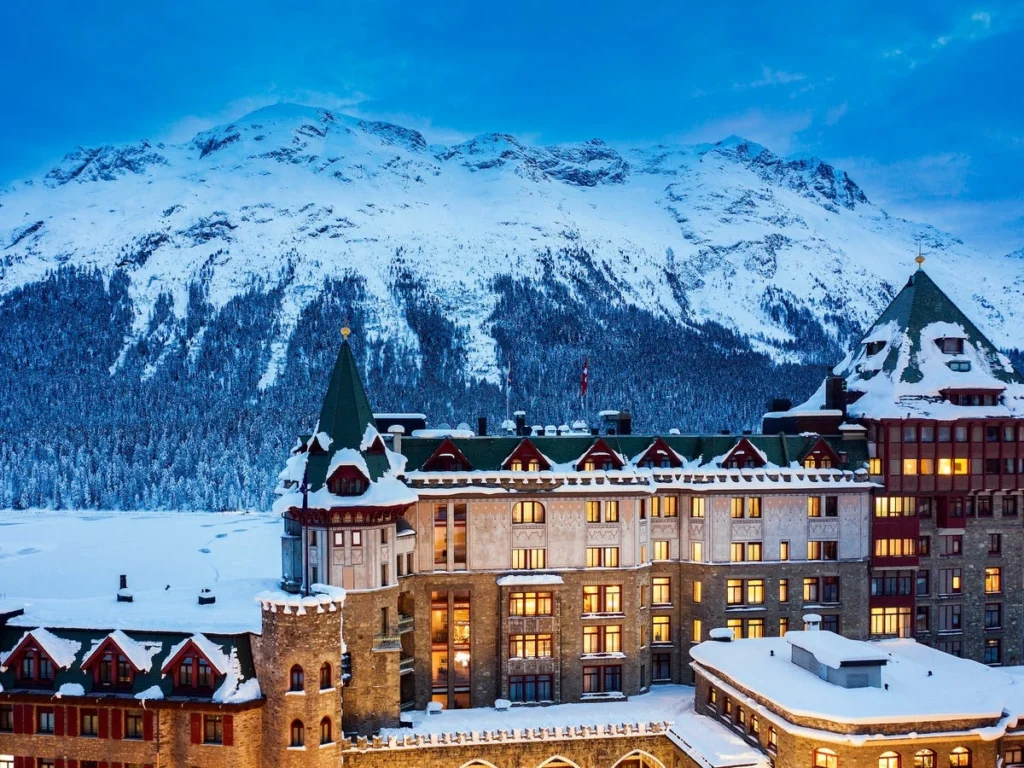
Badrutt’s Palace St. Moritz has added further visibility to Switzerland’s luxury hospitality sector after receiving the SeiBellissimi Art of Hospitality Award 2026 at The World’s 50 Best Hotels.
The recognition comes during a particularly strong period for Swiss accommodation. Switzerland’s Federal Statistical Office recorded 43.9 million hotel overnight stays in 2025, establishing another national record and representing growth of 2.6% over 2024. International visitors generated a record 22.8 million overnight stays.
St. Moritz combines luxury with Alpine heritage
St. Moritz remains one of Switzerland’s most recognisable mountain destinations.
Located in the Engadin region of Graubünden, the resort combines its Alpine setting with luxury accommodation, cultural attractions, sport and lifestyle experiences.
Switzerland Tourism describes St. Moritz as a destination where luxury, lifestyle and sport meet Engadin nature and tradition. Its tourism offer includes skiing, hiking, mountain excursions, gourmet events, shopping, galleries and iconic railway experiences.
This combination gives the destination substantial appeal beyond the traditional winter season.
Visitors can experience the mountain areas surrounding Corviglia, Corvatsch and Diavolezza during colder months, while hiking, biking, golf and lake activities support summer tourism.
That year-round diversity is increasingly important as luxury travellers seek complete destination experiences rather than accommodation alone.
Badrutt’s Palace boosts Swiss hospitality image
Badrutt’s Palace has been closely associated with St. Moritz since opening in 1896.
Positioned above Lake St. Moritz, the historic property represents the combination of heritage, personalised service and destination experience that has helped establish Switzerland’s global luxury hospitality reputation.
The 2026 hospitality recognition places particular attention on the overall guest journey.
Modern luxury travellers increasingly evaluate hotels through service, atmosphere, dining, cultural connections, concierge support and access to experiences rather than room quality alone.
For St. Moritz, internationally recognised properties also function as destination ambassadors.
An iconic hotel can attract travellers who subsequently spend across restaurants, boutiques, mountain transport, wellness services and local attractions, extending the economic impact of premium accommodation into the surrounding tourism economy.
Record hotel demand supports 2026 outlook
Switzerland entered 2026 following another exceptional year for its hotel sector.
The 43.9 million overnight stays registered during 2025 exceeded the previous record. Foreign demand increased 3.7% to 22.8 million nights, while domestic travellers generated 21.1 million overnight stays.
Both major tourism seasons also reached new highs, with the Federal Statistical Office reporting record demand during the 2024-2025 winter period and the 2025 summer season.
Official data available through May 2026 shows that accommodation demand remains substantial, although individual months can fluctuate. Swiss hotels recorded 3.4 million overnight stays in May alone.
For luxury destinations, these numbers provide a strong foundation for continued international demand.
Alpine experiences attract premium travellers
Switzerland’s advantage in luxury tourism extends beyond prestigious hotels.
The country combines Alpine scenery with efficient transport, established mountain resorts, outdoor activities, heritage and highly developed hospitality infrastructure.
St. Moritz demonstrates that model particularly clearly.
Visitors can combine luxury accommodation with skiing, cross-country routes, mountain railways, cultural attractions and excursions through the Engadin landscape.
The destination also benefits from the Rhaetian Railway and access to renowned Alpine routes, adding rail tourism to the wider premium travel experience.
Such combinations can encourage travellers to stay longer and distribute spending across multiple tourism businesses.
Experiential luxury changes hotel demand
Luxury travel is increasingly moving toward experiences that feel distinctive to a destination.
For Switzerland, this trend favours historic hotels and mountain resorts that can connect accommodation with local culture, gastronomy, wellness and outdoor activities.
Personalised hospitality is particularly important because premium visitors frequently expect hotels to help shape the entire journey.
Concierge services, destination recommendations and individually tailored experiences can therefore influence how travellers perceive both a property and the wider destination.
This gives hospitality excellence a broader tourism function.
Switzerland strengthens global luxury position
Switzerland’s record accommodation performance and the continuing international profile of St. Moritz show how premium hospitality can support destination growth.
Luxury hotels bring visibility, but the wider tourism benefit comes from connecting those properties with Alpine landscapes, transport, restaurants, retail, wellness and distinctive local experiences.
For international travellers in 2026, Switzerland continues offering a combination that few mountain destinations can replicate: heritage hospitality, modern service and direct access to some of Europe’s most celebrated Alpine environments.
As global travellers increasingly prioritise memorable, personalised experiences, St. Moritz and Switzerland’s wider luxury hospitality sector are well positioned to convert that demand into stronger visitor spending, destination recognition and sustainable Alpine tourism growth.
For more travel news like this, keep reading Global Travel Wire https://www.globaltravelwire.com/