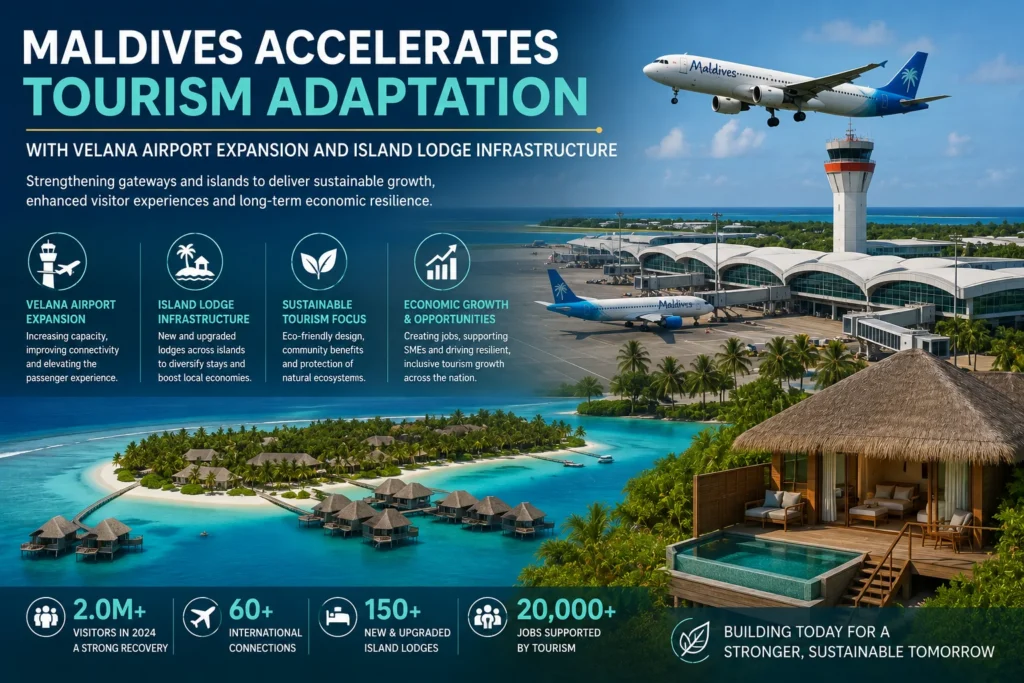
The Ministry of Tourism and Environment has outlined strategic infrastructure developments and market diversification initiatives designed to position the Maldives for long-term growth. Welcoming 1.23 million international tourists during the first seven months of 2026, the Indian Ocean archipelagic nation is actively adjusting to shifting global transit patterns, evolving traveler preferences, and regional aviation realignments. Central to this strategic transition is the multi-million-dollar expansion of Velana International Airport alongside the rapid development of community-centered island guesthouses across inhabited atolls.
Official statistics released by national tourism authorities indicate that while total visitor arrivals recorded a slight 5.2 percent year-on-year adjustment during the initial seven-month period, seasonal performance remained resilient, capped by 184,735 international tourist arrivals in July alone. By modernizing aviation gateways and broadening accommodation options beyond traditional luxury resorts, government officials are ensuring the country remains a premier, highly adaptable destination for international travelers.
Velana Airport Expansion Elevates National Passenger Capacity
A cornerstone of the national tourism strategy is the major capacity upgrade at Velana International Airport, the primary international transit hub located on Hulhulé Island near the capital city of Malé. Managed under public infrastructure programs in collaboration with the Maldives Airports Company Limited, the airport project introduces a state-of-the-art international passenger terminal designed to process up to 7.5 million passengers annually.
The expanded 78,000-square-meter terminal feature integrates advanced baggage handling systems, expanded immigration halls, streamlined security check-ins, and modernized boarding gates engineered to accommodate wide-body long-haul aircraft. This infrastructure enhancement significantly increases peak-hour passenger throughput, reducing runway congestion and improving arrival processing times for international carriers operating direct flights from Europe, Asia, and the Middle East.
Civil aviation officials emphasize that expanding terminal capacity provides the operational foundation required to support future route expansion. As international airlines increase flight frequencies into the Maldives, the modernized airport infrastructure ensures seamless transit for holidaymakers connecting to onward seaplane and speedboat transfers across surrounding atolls.
Expanding Community-Based Local Island Guesthouses
Alongside aviation investments, the Ministry of Tourism is actively fostering growth in community-based tourism. Once known primarily for exclusive 5-star private island resorts, the Maldives has successfully expanded its hospitality footprint into inhabited local islands, where locally owned guesthouses now account for approximately 27 percent of all inbound visitor stays.
This diversification strategy serves two strategic purposes:
Demographic Expansion: Inhabited island lodges provide cost-effective cultural travel options, attracting budget-conscious, younger, and independent travelers who prioritize authentic local interactions alongside pristine beach experiences.
Community Economic Empowerment: Directing visitor spend into local island communities creates direct employment, supports local boat operators and artisans, and generates revenue that funds island infrastructure and marine conservation initiatives.
Private island resorts continue to lead the market, hosting the majority of high-yield luxury visitors, honeymooners, and premium leisure travelers. However, the dual-track model combining luxury resorts with local island guesthouses creates a balanced hospitality sector capable of weathering global economic fluctuations.
Source Market Dynamics and Direct Aviation Links
Official tourism statistics highlight strong demand from primary feeder markets, with China and Russia maintaining their positions as the top source countries for inbound visitors. Direct flight corridors connecting major Chinese and Russian cities to Velana International Airport have provided consistent passenger inflows, helping offset temporary reductions in connecting traffic from other regions.
Concurrently, European origin markets—including Italy, the United Kingdom, and Germany—continue to generate steady seasonal arrivals, particularly during peak summer and winter holiday windows. To maintain strong international connectivity, government transport agencies are actively engaging with international airlines to establish new direct flight routes and expand existing charter agreements.
Traveler Guidelines for Seamless Atoll Transit
National transport authorities and tourism boards recommend practical transit planning guidelines to ensure smooth arrivals and island transfers:
Coordinate Island Transfers in Advance: Speedboat and seaplane transfers operate on strict schedules aligned with international flight arrivals. Visitors are advised to confirm transfer bookings directly through their resort or local guesthouse host prior to landing at Velana International Airport.
Plan Adequate Connection Buffers: When booking connecting flights through major international transit hubs, travelers should allow connection layovers of at least three hours to accommodate potential flight adjustments or airspace reroutings.
Respect Local Cultural Customs: Guests staying at local island guesthouses are reminded to adhere to local regulations and community guidelines regarding dress codes and alcohol consumption outside designated resort zones.
Verify Terminal Information: With ongoing transitions to the new international terminal at Velana Airport, passengers should confirm departure terminal details with their respective air carriers before heading to the airport.
Strengthening Long-Term Economic and Environmental Sustainability
The ongoing evolution of the Maldivian tourism ecosystem underscores a clear commitment to sustainable economic development and environmental stewardship. By combining world-class aviation facilities with decentralized local tourism, the government is building a resilient economic model that protects fragile marine habitats, preserves coral reef ecosystems, and enhances visitor satisfaction.
As global travel demands continue to evolve, the Maldives’ proactive investments in airport infrastructure, market diversification, and community empowerment ensure “The Sunny Side of Life” remains a top-tier destination for international travelers worldwide.
For more travel news like this, keep reading Global Travel Wire