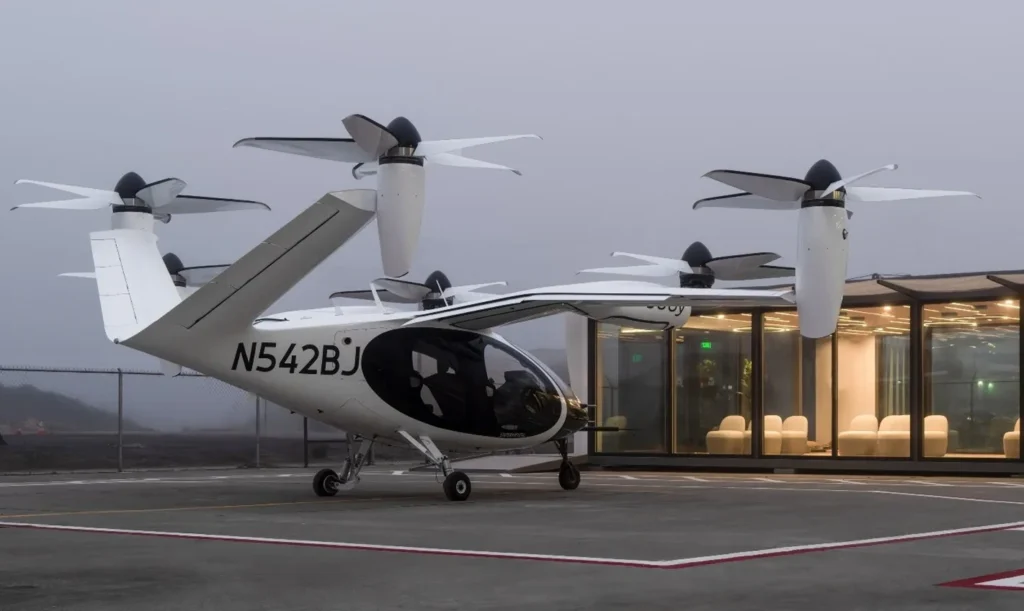
Europe’s luxury tourism industry is looking toward the skies as regulators establish the foundations for a new generation of electric vertical take-off and landing aircraft.
The European eVTOL market is still developing, and widespread commercial tourism operations have not yet arrived. However, regulatory progress is bringing electric air mobility closer to practical passenger services.
The European Commission adopted a major regulatory package in 2024 covering manned vertical take-off and landing aircraft. It introduced requirements involving operations, pilot licensing, airspace integration and aviation safety. The measures were designed to create an EU-wide framework for emerging air mobility services.
For luxury tourism, the development could eventually create a new mobility category combining short journey times, exclusivity and access to destinations beyond traditional airports.
Premium travel could move into the air
Luxury travellers already pay for convenience through private aviation, helicopter transfers, chauffeured vehicles and yacht connections.
eVTOL aircraft could eventually extend that concept to shorter regional journeys.
Future applications could include transfers between airports and resorts, flights between nearby tourism destinations, panoramic sightseeing experiences and connections to isolated hospitality properties.
Mountain resorts and remote retreats could become especially interesting markets because difficult road journeys often add significant travel time.
However, eVTOL tourism remains a future opportunity rather than an established European travel product. Passenger-carrying aircraft will need the appropriate certification, operators must satisfy regulatory requirements and supporting infrastructure must be available before services can expand.
EASA’s work on innovative air mobility is intended to establish conditions for manned VTOL-capable aircraft to operate safely within the European aviation system.
Luxury resorts could become early adopters
High-end hospitality businesses continually search for ways to make arrival experiences faster and more distinctive.
Helicopter transfers already play this role at selected mountain, island and remote luxury properties. Electric VTOL aircraft could eventually offer another option if operational economics and certification support commercial deployment.
A premium resort could potentially connect guests with nearby airports, railway hubs or neighbouring tourism regions.
Electric aircraft might also support private sightseeing or destination excursions, expanding the experience beyond transportation itself.
Yet resorts cannot simply purchase aircraft and begin flying passengers.
Commercial aviation requires qualified operators, certified aircraft, trained crews, approved operating procedures and safe integration with other airspace users.
Therefore, luxury hospitality is more likely to participate through partnerships with certified aviation operators than operate independently during the sector’s early development.
Europe establishes a regulatory pathway
Regulation represents one of the most important foundations for the emerging market.
The European Commission’s 2024 package was designed to address the distinctive safety requirements surrounding manned VTOL aircraft and other innovative aviation operations.
The framework covers areas including flight operations, pilot requirements, airworthiness and integration into European airspace.
This matters for tourism because commercial passenger confidence depends heavily on established aviation oversight.
Europe is therefore building eVTOL mobility through an aviation-safety framework rather than treating electric aircraft simply as another technology platform.
EASA has also developed supporting compliance and guidance material intended to help authorities, manufacturers and operators implement requirements for manned VTOL-capable aircraft.
Vertiports emerge as critical infrastructure
Aircraft certification alone will not create an eVTOL tourism industry.
Destinations will require places where aircraft can safely land, depart and potentially recharge.
EASA has already published prototype technical specifications addressing vertiport design for manned VTOL-capable aircraft. Its work considers operational characteristics that differ from conventional helicopter infrastructure, including vertical flight profiles and obstacle-free areas around facilities.
For tourism destinations, vertiports could eventually become another element of transport infrastructure alongside airports, marinas and railway stations.
Luxury resorts with suitable access could potentially gain a competitive advantage by making short-distance aerial transfers easier.
Charging facilities, maintenance capability, passenger areas and digital booking systems would also form part of the wider ecosystem.
Remote destinations could gain accessibility
One of the most attractive tourism applications involves difficult-to-reach destinations.
Some European islands, mountain regions and countryside resorts depend on lengthy road, ferry or helicopter connections.
If certified eVTOL operations become commercially viable, shorter aerial connections could complement those existing networks.
That could potentially expand premium visitor demand while creating opportunities for hotels, tour operators and aviation-service providers.
However, operating costs will determine whether eVTOL mobility remains concentrated in luxury travel or eventually reaches broader passenger markets.
Quieter electric flight could reshape experiences
Electric propulsion also creates interest around future noise and environmental performance.
For premium tourism, quieter operations could prove important near resorts and scenic destinations where conventional aviation noise can create community concerns.
Nevertheless, environmental benefits will depend on electricity sources, battery production, aircraft efficiency and complete lifecycle performance.
Consequently, electric propulsion should not automatically be interpreted as eliminating aviation’s environmental impact.
Luxury tourism watches Europe’s next aviation chapter
Europe has now moved beyond discussing eVTOL aircraft purely as experimental concepts.
Regulators are constructing the operational, infrastructure and safety systems needed to support innovative air mobility.
For luxury tourism, this creates a significant long-term opportunity.
eVTOLs are unlikely to replace helicopters, cars or conventional aircraft immediately. Instead, they could establish a new premium mobility layer for short journeys where travellers value speed, privacy and destination access.
If certification, vertiport development and commercial viability progress successfully, the European eVTOL market could connect aviation innovation with luxury hospitality in ways that redefine how premium travellers reach Europe’s most exclusive destinations.
For more travel news like this, keep reading Global Travel Wire