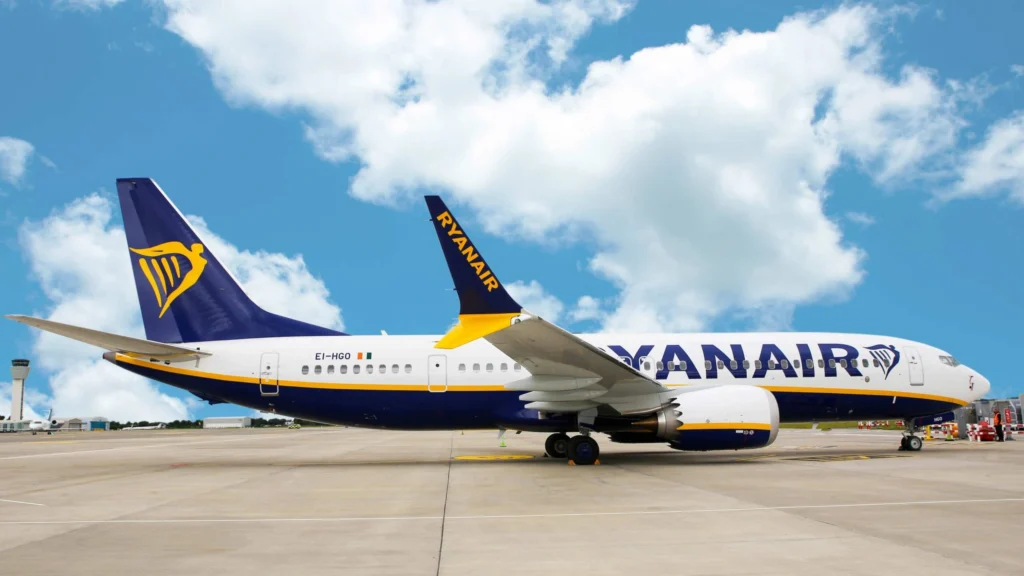
Ryanair has entered a five-year data and artificial intelligence partnership with Google Cloud, marking a significant expansion of technology across the airline’s operations as it prepares for major passenger growth.
Under the agreement announced on August 12, 2026, Ryanair will deploy Google Cloud services and Google Workspace across 35,000 employees throughout its network. The rollout will also include Gemini Enterprise, Google Cloud’s agentic AI platform.
The technology will help automate decision-making, optimise flight crew logistics, improve corporate productivity and strengthen infrastructure resilience through Ryanair’s dual-cloud strategy.
Although passengers may not immediately encounter these systems directly, their influence could eventually be felt through smoother operations, quicker internal decision-making and stronger management of a rapidly expanding airline network.
AI moves deeper into airline operations
Modern airlines operate complex networks involving aircraft, crews, airports, maintenance teams and millions of passenger journeys.
A disruption affecting one part of that system can quickly create consequences elsewhere. Crew availability, aircraft positioning and operational decisions can all influence whether flights depart on schedule.
Ryanair is therefore deploying AI primarily behind the scenes.
Gemini Enterprise is designed to connect organisational data, automate workflows and support customised AI agents. Google Cloud says its enterprise platform provides tools for developing and managing agents that can perform complex business processes while incorporating governance and security capabilities.
For Ryanair, this could allow employees to access information more efficiently and automate repetitive operational processes.
Crew logistics becomes a major focus
One of the most important confirmed applications involves flight crew logistics.
Managing crews across a large European network requires airlines to coordinate working hours, locations, aircraft schedules and operational requirements.
Ryanair says Gemini Enterprise will help optimise these logistics while also supporting automated decision-making.
Improved crew coordination could become particularly valuable during operational disruption. Weather, airport restrictions or aircraft changes can force airlines to reorganise schedules rapidly.
AI-supported systems can potentially help employees process large amounts of operational information faster, although final passenger outcomes will continue to depend on multiple factors outside any individual technology platform.
Passengers may feel indirect benefits
The partnership does not represent the launch of a new booking product or an immediate change to Ryanair fares and routes.
Instead, the most important passenger implications are expected to emerge through operational performance.
More efficient internal workflows could help airline teams respond faster when schedules change. Better information sharing between employees could also support decision-making across a large network.
Google Cloud said the deployment of generative AI at scale, alongside collaboration tools for frontline employees, can support secure expansion, operational efficiency and changes to the travel experience.
For travellers, this illustrates how artificial intelligence is moving beyond chatbots and digital customer service into the operational systems responsible for keeping airlines running.
Technology supports Ryanair growth ambitions
The partnership is closely connected with Ryanair’s long-term expansion strategy.
The airline is targeting 300 million passengers annually by 2034. Ryanair says infrastructure resilience will be particularly important as its network grows, making technology partnerships an essential part of that expansion.
Ryanair currently operates approximately 3,800 daily flights from 95 bases, connects more than 220 airports across 35 countries and has almost 650 aircraft in its fleet, according to its corporate information. It also has 300 Boeing 737 aircraft on order to support future growth.
Managing that scale creates enormous technology demands.
Flight planning, employee collaboration, operational monitoring and disruption management all become more complicated as passenger volumes and aircraft numbers increase.
Dual-cloud strategy strengthens resilience
Ryanair is also positioning the agreement as part of a dual-cloud strategy.
Rather than relying entirely on one technology environment, the airline plans to use Google Cloud alongside its existing cloud infrastructure.
The objective is greater resilience as operations expand.
For airlines, dependable digital infrastructure has become increasingly important because booking systems, operational communications and internal management processes depend heavily on continuously available technology.
Infrastructure disruption can therefore become an aviation disruption.
AI becomes a new competitive battleground
Ryanair’s agreement highlights a broader transformation underway across aviation.
Airlines have traditionally competed through fares, routes, schedules, loyalty programmes and onboard products. Increasingly, digital capability is becoming another important competitive factor.
AI can help carriers process operational information, automate workflows and support employees managing complex networks.
However, technology alone cannot eliminate delays or disruption. Weather, air traffic control restrictions, airport capacity and other external factors will continue to affect travellers.
The larger significance of the Ryanair Google Cloud AI partnership lies in scale. Placing Gemini Enterprise and Google Workspace across tens of thousands of employees signals that AI is moving from experimental aviation projects toward core airline operations.
As Ryanair targets 300 million annual passengers by 2034, the five-year partnership demonstrates how artificial intelligence, cloud resilience and workforce technology are becoming increasingly connected to the future passenger experience.
For more travel news like this, keep reading Global Travel Wire