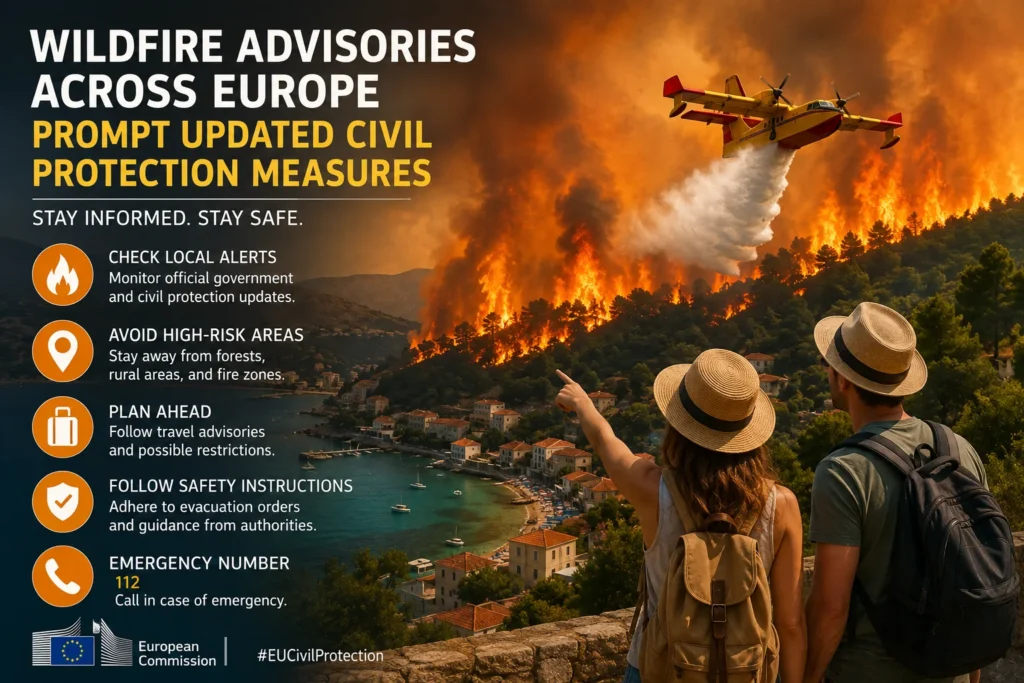
Extreme heatwaves and prolonged dry spells across the continent have prompted civil protection agencies and national ministries to issue updated safety guidelines for international visitors. Official monitoring data indicates that elevated fire risk conditions are currently impacting approximately one-fifth of prime European travel corridors and natural recreation areas. In response, national governments and disaster management authorities have activated emergency response protocols to ensure the safety of residents and holidaymakers during the peak summer holiday season.
Public safety agencies emphasize that while major transit hubs and coastal urban centers remain fully operational, localized disruptions to rural travel, outdoor activities, and holiday accommodations are requiring visitors to maintain dynamic and flexible travel itineraries.
European Emergency Authorities Mobilize Unprecedented Civil Protection Resources
To address the seasonal environmental challenges, the European Commission’s Emergency Response Coordination Centre has deployed its largest-ever coordinated civil protection initiative. Under the European Union Civil Protection Mechanism, hundreds of specialized firefighters along with a fleet of amphibious firefighting aircraft and helicopters have been pre-positioned across high-risk EU member states.
Official statements from the European Directorate-General for European Civil Protection and Humanitarian Aid Operations confirm that continuous satellite tracking from the European Forest Fire Information System is providing real-time risk mapping and early warning analytics to national emergency services.
By combining continuous satellite surveillance with ground-based response units, emergency management agencies aim to detect emerging hot spots rapidly, protect vital infrastructure, and minimize disruptions to local communities and tourist regions.
Southern Mediterranean Destinations Implement Strict Travel Protocols and Safety Evacuations
The Mediterranean region, a core engine for European summer tourism, faces the highest concentration of high-risk advisories due to a combination of high temperatures, dense forest vegetation, and strong coastal winds.
Spain: The Ministry for the Ecological Transition and the Demographic Challenge, alongside regional civil protection authorities, has elevated fire danger ratings across several autonomous communities along the Mediterranean coast and southern interior regions. Official advisories urge tourists exploring natural parks and rural hiking trails to monitor daily regional risk bulletins. In several inland zones, authorities have temporarily restricted access to forested recreational areas and secondary mountain roads to reduce fire ignition risks.
Greece: The Ministry of Climate Crisis and Civil Protection continuously issues daily fire risk maps detailing high-hazard zones across popular island and coastal regions. Emergency services have executed targeted precautionary evacuations in affected coastal districts to ensure public safety. Local authorities have established emergency reception facilities for displaced holidaymakers while advising travelers to adhere strictly to automated emergency text alerts issued by national civil protection authorities.
Croatia: Civil protection directors along the Dalmatian Coast have implemented localized traffic management plans where forest fires approach primary transport corridors. Because key coastal highways border forested mountain ranges, temporary road diversions have been established to maintain safe access for emergency vehicles and commercial transport.
Expanding Fire Risks Prompt Enhanced Environmental Monitoring in Central and Northern Regions
Environmental tracking highlights a broader geographic spread of elevated fire danger ratings extending beyond traditional southern zones into Central and Western Europe.
In France, the Ministry of the Interior and Overseas Territories, working with the national weather service, maintains a public color-coded weather advisory system that alerts travelers to localized forest fire hazards. Southwestern regions featuring heavy pine forests and popular campsite destinations have seen enhanced patrol measures, temporary trail closures, and strict bans on outdoor open flames to safeguard nature-based tourism sectors.
Similarly, civil protection authorities in Central Europe and the United Kingdom have issued public awareness advisories regarding grassland and heathland fires following extended periods of dry weather. National park authorities urge visitors engaged in rural walking, camping, and outdoor recreation to observe all local usage bans, dispose of materials responsibly, and report smoke sightings immediately to national emergency helplines.
Official Guidelines for Travelers Navigating European Summer Tourism Safety
National tourism boards and foreign affairs ministries recommend that international travelers take proactive steps to prepare for dynamic environmental conditions while holidaying in Europe. Verified official guidance includes:
Monitor Official Emergency Communications: Travelers should register with national emergency notification platforms, download local civil protection applications, and ensure mobile roaming settings permit automated government emergency broadcast alerts.
Review Comprehensive Travel Cover: Official tourism advisories emphasize securing flexible travel insurance policies that explicitly include coverage for emergency evacuations, unexpected trip interruptions, and travel alterations due to natural occurrences.
Confirm Local Accommodation Protocols: Visitors staying in rural, forested, or coastal holiday accommodations are encouraged to verify site evacuation routes and maintain contact details for local municipal emergency services.
Maintain Operational Flexibility: Travelers planning visits to national parks, rural hiking routes, or historical countryside sites should check daily park service statements and be prepared to alter daily itineraries if safety restrictions are enacted.
Through continuous international cooperation, advanced satellite mapping, and dedicated civil protection deployments, European authorities remain fully committed to protecting visitors and preserving the long-term safety and resilience of European tourist destinations.
For more travel news like this, keep reading Global Travel Wire