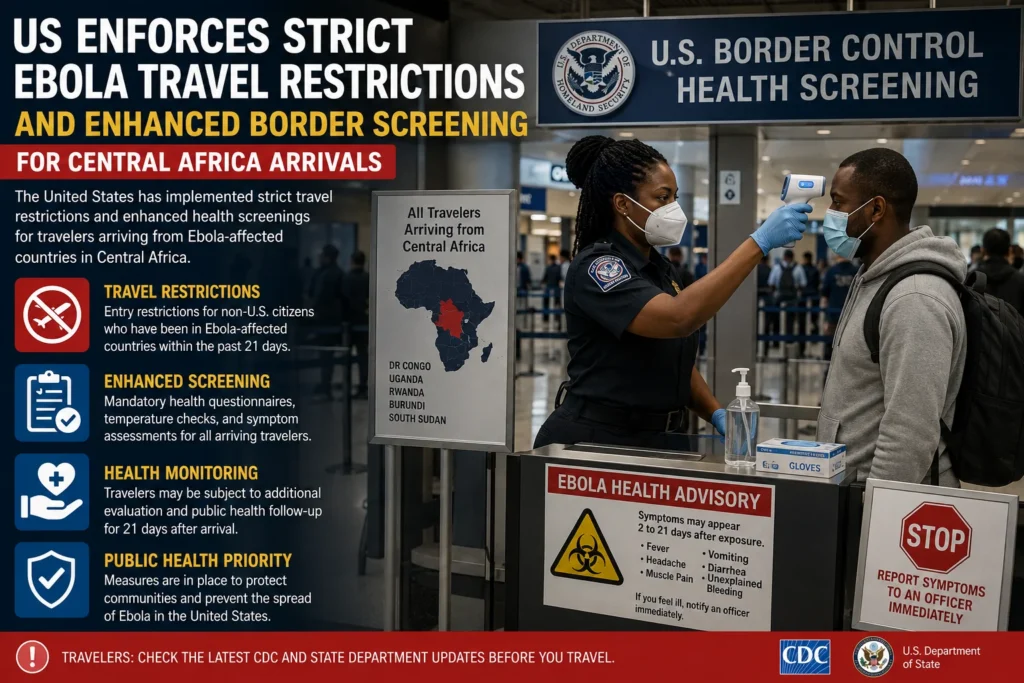
The United States government, through the Department of Homeland Security and the Centers for Disease Control and Prevention, has instituted strict entry mandates and travel restrictions for passengers arriving from or having visited the Democratic Republic of the Congo. Enacted as part of a proactive public health strategy to prevent the importation of infectious diseases, these federal directives introduce mandatory screening protocols and boarding restrictions for international air travelers.
Under the updated public health directives, individuals who have been present in affected central African regions within the previous 21 days must observe specific entry requirements and observation periods prior to entering the United States. Federal public health officials emphasize that while the immediate risk of domestic transmission within the United States remains low, early containment at international transit hubs is essential for protecting global travel corridors and maintaining national health security.
Enhanced Airport Screenings and Mandatory 21-Day Isolation Guidelines
The core of the federal health order focuses on a mandatory 21-day observation window, matching the maximum incubation period of the Ebola virus. Commercial airlines operating flights bound for United States destinations are instructed to verify traveler histories at check-in counters and boarding gates. Passengers who have visited the Democratic Republic of the Congo within three weeks of departure are not permitted to board direct flights to American ports of entry until the full observation period has elapsed outside the country.
For United States citizens, permanent residents, and foreign travelers connecting through designated international airports, federal health agencies have established specialized screening procedures. Passengers arriving from neighboring transit corridors in Central Africa, including Uganda and South Sudan, are routed through select gateway airports equipped with specialized public health entry screening stations.
At these designated ports of entry, trained federal health officers perform non-invasive health assessments, temperature checks, and detailed itinerary reviews. Travelers are provided with comprehensive public health guidance on monitoring symptoms and instructions on contacting local health departments if fever or other symptoms develop after arrival.
Coordinated Public Health Logistics and Regional Travel Safeguards
The implementation of targeted travel restrictions forms part of a broader international response coordinated with global health organizations and regional ministries of health. In central African outbreak zones, medical response teams are prioritizing early case detection, contact tracing, and the deployment of protective medical supplies to contain transmission at its source.
Health authorities emphasize that maintaining structured travel protocols helps protect international aviation networks from broader, uncontrolled service suspensions. By implementing controlled airport screening and targeted travel requirements, government agencies aim to ensure that essential humanitarian aid, medical personnel, and diagnostic equipment can continue to move efficiently into affected regions.
Airlines and international airport operators are maintaining close coordination with federal public health stations to update passenger reservation systems, conduct pre-boarding questionnaires, and provide clear information regarding itinerary adjustments. Travelers are strongly advised to verify entry requirements with their air carriers and review official government travel advisories before planning international journeys through Central Africa.
Essential Health Protocols for International Travelers and Tourists
Government tourism boards, foreign affairs departments, and public health agencies recommend that all international travelers visiting or returning from Central Africa observe strict health precautions. Key guidelines published by federal health authorities include:
Adhere to the 21-Day Observation Period: Monitor your personal health daily for 21 days following departure from any central African travel hub, keeping detailed records of temperature readings and daily activities.
Review Airline Boarding Eligibility: Contact commercial air carriers well in advance of departure to confirm flight itineraries, intermediate layovers, and health documentation requirements.
Practice Stringent Personal Hygiene: Maintain frequent hand hygiene using soap and clean water or alcohol-based hand sanitizers, particularly when moving through crowded transit terminals and public facilities.
Report Symptoms Immediately: If fever, severe headache, muscle pain, or fatigue develops within 21 days of international travel, isolate immediately and contact local public health authorities by phone prior to seeking in-person medical care.
Follow Local Civil Guidance: Respect localized movement restrictions, avoid entering designated health containment zones, and utilize verified regional medical facilities for health assessments.
Impact on Global Travel Planning and Long-Term Tourism Security
The activation of targeted public health travel restrictions highlights the growing integration of real-time epidemiological monitoring within global transport security. For international tourists, business travelers, and humanitarian workers, navigating these measures requires maintaining high itinerary flexibility and staying informed through verified government advisories.
By establishing clear screening benchmarks, mandatory incubation buffers, and coordinated airport entry points, international health authorities aim to halt viral transmission while preserving the long-term stability of global aviation and regional tourism infrastructure. Federal agencies continue to evaluate regional health data continuously, adjusting travel advisories and border screening protocols as epidemiological conditions evolve.
For more travel news like this, keep reading Global Travel Wire