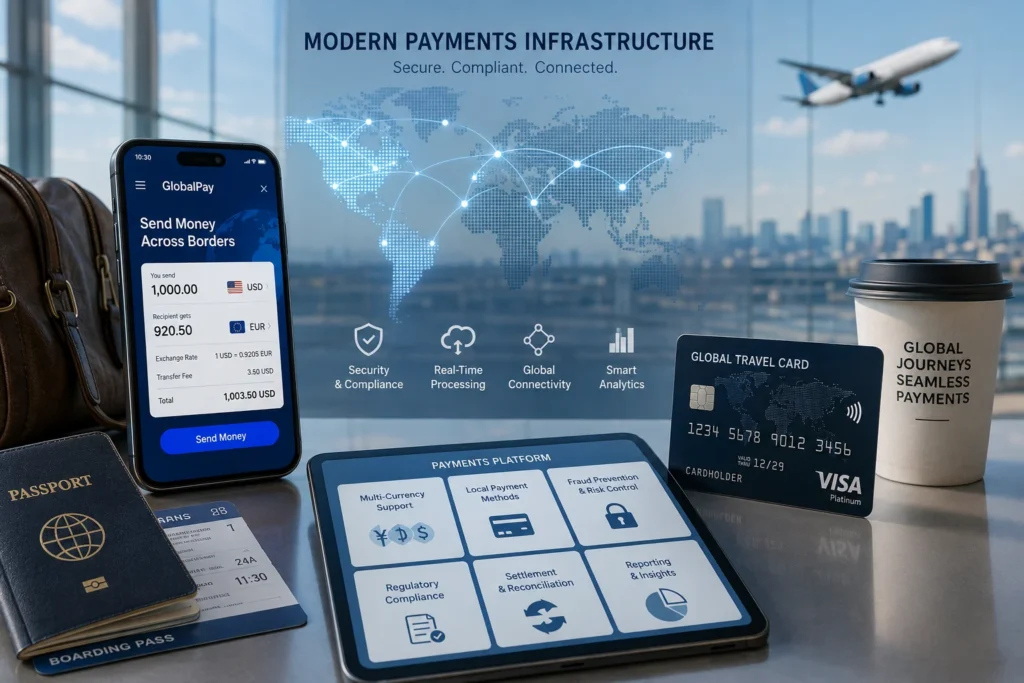
The global tourism ecosystem is undergoing a significant transformation in how financial flows are managed across international borders. As digital travel platforms, online travel agencies (OTAs), and destination management companies expand into new regional markets, managing fragmented payment systems has become a central operational challenge.
To address these friction points, specialized cross-border payment platforms are introducing unified financial infrastructure designed specifically for multi-market travel businesses. By consolidating vendor payouts, corporate payroll, local collections, and international transfers into a single software integration, modern financial technology solutions are eliminating the need for travel companies to maintain complex networks of local banking entities.
This operational shift allows global travel enterprises to process transactions faster, optimize foreign exchange management, and scale their commercial footprint across emerging and established destinations with greater agility.
Streamlining Complex Multi-Market Treasury and Payout Workflows
Managing payments across international destinations presents unique operational hurdles for travel platforms. A single booking often involves multiple downstream transactions—ranging from paying overseas hotel suppliers and local tour guides to settling cross-border platform fees and processing customer refunds.
Traditional banking channels frequently subject these transfers to delayed settlement windows, hidden intermediary fees, and high foreign exchange markups. Modern payment infrastructure resolves these bottlenecks by offering multi-currency holding accounts and localized payout rails across more than 100 countries.
Through pre-funded payout structures and automated currency conversions, travel operators can execute same-day settlements to local suppliers in their preferred domestic currencies. This level of financial predictability strengthens working capital management, reduces foreign exchange exposure, and improves commercial relationships between global travel distributors and local hospitality providers.
Bridging Traditional Fiat Currencies and Emerging Digital Assets
A major structural shift in cross-border financial technology is the integration of digital settlement assets alongside traditional fiat currency rails. Innovative payment platforms are enabling travel businesses to move seamlessly between fiat currencies and regulated stablecoins within a single treasury management interface.
In emerging markets where local banking systems face liquidity constraints or volatile currency fluctuations, stablecoin rails offer a fast, cost-effective alternative for funding international transactions. Travel platforms can accept payments or fund accounts using stablecoins, which are then converted instantly into local fiat currencies for final settlement to regional suppliers.
By combining traditional card networks, local bank transfer methods, and digital asset interoperability, payment providers offer global travel businesses an adaptable treasury toolkit. This dual-rail approach lowers transaction friction, eliminates chargeback risks associated with legacy card systems, and provides an always-on infrastructure for 24/7 global liquidity.
Enhancing Operational Resilience and Global Compliance Standards
Operating a multi-market travel enterprise requires strict adherence to evolving global financial regulations, anti-money laundering standards, and data protection mandates. Establishing local merchant accounts and obtaining licenses in every operating destination represents a major cost barrier for expanding travel platforms.
Integrated cross-border payment providers remove this barrier by operating as licensed payment institutions across key international jurisdictions. By utilizing pre-compliant infrastructure, travel platforms can launch local payment collection and distribution capabilities in new markets within weeks rather than years.
Additionally, embedded security features—such as automated beneficiary verification, selective multi-factor authentication, and dynamic fraud prevention engines—protect travel companies against transaction failures and unauthorized transfers. As global travel volumes continue to grow, secure and scalable payment infrastructure will serve as a foundational engine for operational efficiency and international business expansion.
For more travel news like this, keep reading Global Travel Wire