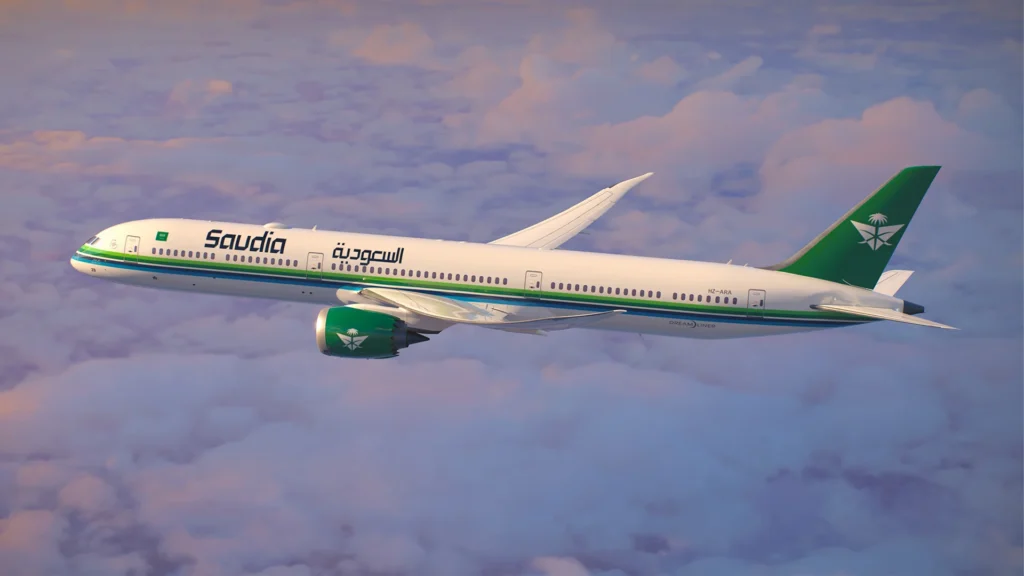
Saudia is preparing to launch three weekly nonstop flights between Muscat and Riyadh from October 27, 2026, strengthening tourism, business and family connections between Oman and Saudi Arabia.
The planned route will connect Muscat International Airport with King Khalid International Airport in the Saudi capital. Operations remain subject to approval from Oman’s Civil Aviation Authority.
Once authorised, the service will give passengers another direct option between two important Gulf cities. It will also provide access to Saudia’s wider network of more than 140 destinations.
The three-times-weekly schedule could serve tourists, corporate travellers, families and passengers making onward international journeys. Direct flights reduce journey complexity and remove the need for an intermediate connection.
The route reflects wider growth in Gulf aviation as regional carriers add services between neighbouring markets. Stronger short-haul links can support tourism diversification, investment and more frequent business movement.
Muscat gains another regional air connection
Muscat International Airport serves as Oman’s principal international gateway. It connects the country with destinations across the Middle East, Asia, Europe and Africa.
The addition of Saudia’s Riyadh service would strengthen the airport’s regional offering while supporting Oman’s tourism ambitions. Convenient air access is essential for attracting visitors and distributing them to destinations beyond the capital.
Muscat combines cultural attractions, traditional architecture, coastal scenery and modern hospitality. Visitors can use the city as a starting point for journeys to Oman’s mountains, desert landscapes, historic forts and seaside communities.
Direct flights from Riyadh could help Omani hotels, tour operators, restaurants and transport providers attract additional Saudi visitors. Shorter journeys may also encourage weekend trips and repeat travel.
The service could benefit Omani residents travelling to Saudi Arabia for leisure, business, family visits or religious journeys. Riyadh also provides onward options through Saudia’s domestic and international network.
Riyadh’s tourism transformation supports demand
Riyadh has developed rapidly as a destination for entertainment, exhibitions, conferences and major international events. Investment in accommodation, attractions and transport has expanded the city’s appeal beyond traditional government and corporate travel.
A direct link with Muscat could support this growth by making Riyadh more accessible to visitors from Oman. Three weekly services provide a regular schedule while allowing Saudia to match capacity with developing demand.
King Khalid International Airport plays a central role in Saudi Arabia’s expanding aviation system. It serves domestic and international passengers while supporting the capital’s growing importance as a commercial and visitor destination.
Passengers arriving from Muscat could travel into central Riyadh or connect onward to other parts of Saudi Arabia. However, connection times and baggage arrangements should be confirmed when booking.
Tourism businesses could gain new opportunities
Improved air connectivity creates opportunities at both ends of the route. Saudi visitors can access Oman’s nature, culture and coastal tourism, while Omani travellers gain easier entry to Riyadh’s expanding events and leisure market.
Hotels may benefit from short-stay demand linked to weekly flight patterns. Tour operators can also develop packages combining airfare, accommodation, transfers and destination experiences.
Business events represent another important opportunity. Riyadh and Muscat host corporate meetings, exhibitions and government activity, creating year-round demand alongside seasonal leisure travel.
A nonstop route can make short business trips more practical because travellers avoid connection time. This may support investment discussions, professional services and commercial partnerships between the two countries.
Family travel could also form an important passenger segment. Oman and Saudi Arabia maintain close regional links, and additional scheduled capacity gives residents more choice when planning personal journeys.
Saudia strengthens its regional network
The proposed service forms part of Saudia’s wider network development. The national carrier connects Saudi Arabia with destinations across the Middle East, Asia, Africa, Europe and North America.
Riyadh is becoming increasingly important within the airline’s operations as the Saudi capital attracts more international visitors and investment.
Regional routes can also feed Saudia’s broader network. A passenger beginning in Muscat may continue through Riyadh to another Saudi or international destination, subject to the published schedule.
This connecting potential expands the significance of the service beyond point-to-point travel. It can give Oman-based passengers more itinerary options while bringing international travellers into Muscat through a single airline booking.
Travellers should monitor regulatory approval
Passengers planning to use the new service should confirm that final regulatory approval has been granted before making non-refundable arrangements.
They should also verify flight numbers, operating days, departure times and baggage conditions. A three-times-weekly route provides fewer alternatives than a daily service if plans change or a passenger misses a flight.
Travellers entering either country must check current passport, visa and health requirements. Those connecting through Riyadh should confirm whether their itinerary requires them to pass through immigration.
Schedules can change because of regulatory, operational or commercial considerations. Passengers should therefore monitor their booking as the proposed October launch approaches.
Direct Gulf travel supports regional growth
Oman and Saudi Arabia are both investing in tourism development, airport infrastructure and visitor experiences. Reliable regional aviation can help those investments reach a wider market.
The Saudia Muscat Riyadh flights could support two-way tourism rather than directing demand toward only one destination. Omani travellers gain easier access to Saudi Arabia, while Saudi visitors receive another convenient route into Oman.
If approved as planned, the October 27 launch will establish a new direct bridge between the Gulf capitals. The service will strengthen regional mobility and give travellers a faster route for holidays, commerce and family connections.
For more travel news like this, keep reading Global Travel Wire