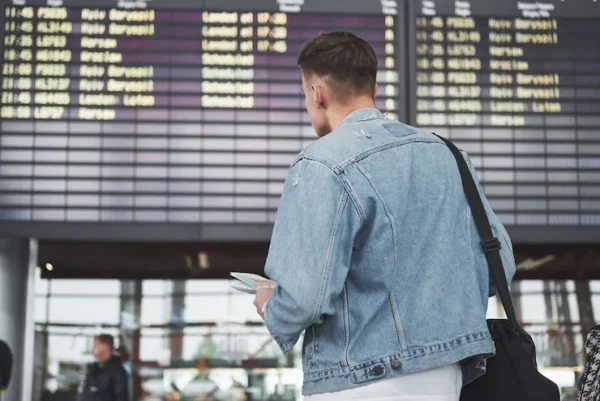
Business travellers could gain more time to avoid costly disruption through AI Predict, an Altour service that sends predictive flight alerts before an airline confirms a delay or cancellation.
The opt-in service uses artificial intelligence to assess possible disruption after a traveller checks in. Predictions generally cover the final 24 hours before departure and arrive directly through text messages.
In one real-world case, AI Predict indicated a 95% probability that a flight from New York’s LaGuardia Airport would be delayed. The traveller acted on that warning, explored a similar departure from Newark and secured the final aisle seat.
That alternative allowed the traveller to arrive home at approximately the originally planned time. The example illustrates the value of early information when seats on replacement flights remain available.
Importantly, a 95% prediction is not a guarantee. AI Predict cannot eliminate disruption, but it can give corporate travellers an additional decision-making window before their original plans unravel.
Predictive alerts move ahead of airline announcements
Traditional flight disruption management is usually reactive. Travellers receive an official delay or cancellation notification and then begin searching for another route.
By that stage, hundreds of other passengers may be doing the same. Seats on later flights can disappear quickly, customer-service queues can lengthen and alternative airports may become harder to reach.
AI Predict attempts to move part of that response earlier. Once the traveller checks in, the service begins evaluating the flight and sends predictions during the period leading up to departure.
The text-message format is significant because travellers do not need to monitor a separate dashboard continually. An alert can reach them while they are working, travelling to the airport or preparing for departure.
That warning gives the passenger a chance to compare options. Depending on the circumstances, the response might involve changing flights, departing from another airport or adjusting an onward connection.
New York example shows practical value
Laura Shores, Altour’s Senior AI Business Transformation Manager, experienced the system while travelling in New York.
AI Predict warned her that the LaGuardia flight had a 95% probability of delay. Because the notification arrived early, she considered a Newark departure scheduled for approximately the same time.
The alternative was still available, enabling her to reach home without the predicted disruption changing her arrival time substantially.
The case does not establish that every traveller will find a convenient replacement. Changing airports can involve additional costs, longer ground transfers and travel-policy considerations.
However, it demonstrates the advantage of receiving a signal while alternatives still exist. In busy aviation markets, even a short head start can determine whether a traveller secures another seat or remains caught in disruption.
Delays can become serious business risks
Flight problems create consequences extending far beyond an airport terminal. A delayed leisure journey may affect hotel check-ins, tours or connections. For corporate passengers, the disruption can threaten meetings, negotiations, presentations and sales opportunities.
Missing a time-sensitive engagement may also generate extra accommodation, transport and rebooking costs. Furthermore, an employee stranded during disruption can lose productive working time.
Predictive flight information therefore has a direct connection to business continuity. It allows travellers and travel managers to evaluate potential problems before they become confirmed operational failures.
A warning may be particularly valuable for an executive heading to a major negotiation or an employee travelling to deliver a client presentation. If arrival time is critical, waiting for official confirmation could leave too few alternatives.
AI joins a wider corporate travel platform
Altour operates as a travel management company serving corporate programmes. Its Altour Intelligence offering combines artificial intelligence products with human-led travel services.
The wider technology portfolio includes programme consolidation, duty-of-care support, trip-disruption assistance and AI-powered reporting. Reporting tools can help organisations examine travel spending and return on investment.
Together, these capabilities show how corporate travel technology is expanding beyond reservations. Platforms are increasingly expected to support employees throughout the journey while helping companies manage costs, safety and productivity.
Customisation is also important because corporate travel requirements vary. A multinational business managing complex international itineraries may need different tools from a smaller company focused on domestic trips.
Human expertise remains essential
Artificial intelligence can identify risk and deliver an early warning, but resolving disruption may still require human judgement.
A traveller might need help selecting a replacement flight, changing accommodation, arranging transfers or ensuring that a new itinerary complies with company policy. Complex international journeys can also involve visas and tightly timed connections.
Altour’s model therefore combines AI-powered capabilities with human travel services. Technology supplies speed and predictive information, while experienced professionals can assist with decisions that require context.
This balance could define the next phase of corporate travel management. AI can process information rapidly, but people remain essential when a disrupted journey becomes complicated.
For business travellers, AI Predict’s central benefit is straightforward: more warning can mean more choices. It cannot promise that a delay will occur or guarantee a successful alternative. Yet when an important trip is at risk, an earlier signal may provide enough time to protect the journey before available options disappear.
For more travel news like this, keep reading Global Travel Wire