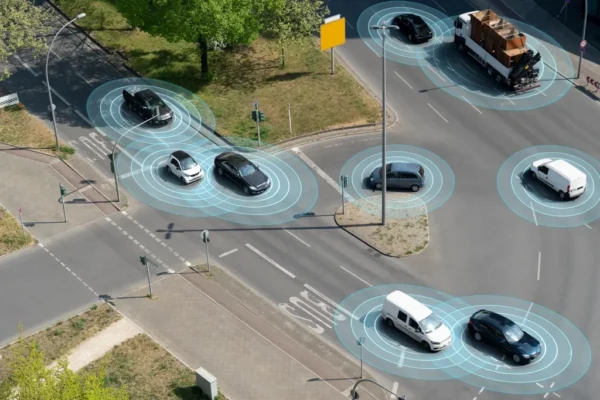
Austria is strengthening real-time road travel information through Cooperative Intelligent Transport Systems, aligning its network with Germany, Spain and other European countries.
Commonly known as C-ITS, the technology allows vehicles, roadside infrastructure and transport operators to exchange standardised digital messages. These communications can provide earlier information about hazards, congestion, roadworks and changing journey times.
For holidaymakers, business travellers and cross-border motorists, the benefit is straightforward. Better information can make road journeys more predictable while helping drivers respond earlier to incidents.
Austria has participated in the European C-Roads programme since its first deployment phase in 2016. The country’s motorway operator, ASFINAG, continues developing connected infrastructure alongside route-planning, traffic and real-time travel-time services.
This work forms part of a broader European transition from isolated smart-road trials toward interoperable deployment. Shared standards are especially important for international journeys crossing several national transport networks.
Vehicles receive earlier warnings
Traditional road information depends heavily on signs, radio bulletins or drivers checking navigation applications. C-ITS creates an additional channel by sending messages between compatible vehicles and roadside equipment.
A connected vehicle approaching roadworks, congestion or an incident can receive a warning before the problem becomes directly visible. The extra notice may give the driver more time to reduce speed or prepare for changing conditions.
Earlier information can also help travellers understand how an unexpected event may affect their itinerary. A motorway delay might influence hotel check-in, restaurant bookings, attraction tickets or an onward railway connection.
However, the technology does not replace responsible driving. Motorists must continue observing road signs, traffic rules, weather conditions and instructions from the authorities.
C-ITS warnings complement established safety measures. Their usefulness depends on compatible equipment, accurate information and the speed with which changing road conditions enter the system.
Real-time journey planning gains importance
Tourists increasingly want to know how long a journey will take under current conditions, rather than relying only on distance and fixed estimates.
This distinction matters in Austria, where road trips may cross busy cities, Alpine routes and international borders. Construction, severe weather or seasonal traffic can quickly change travel times.
ASFINAG provides current traffic information, journey-planning services and real-time travel estimates through its digital platforms and mobile application. These tools can support decisions before departure and while travelling.
A family driving toward a resort can adjust its arrival expectations. Campervan travellers can reconsider routes, while business visitors can protect time-sensitive appointments.
Motorists heading toward ski areas may also benefit from earlier warnings about congestion and dangerous conditions. Nevertheless, travellers should still check forecasts, road restrictions and local safety requirements separately.
Austria connects with European projects
Austria is not developing its connected road network independently. It participates in multiple C-Roads initiatives designed to improve technical compatibility across Europe.
These include C-Roads Austria, C-Roads Austria 2 and C-Roads Austria 3. The country also joins multinational programmes involving Germany, Spain, Belgium, France, Italy, Hungary and several Nordic states.
Austria and Germany participate in the VERKKO project alongside Belgium, Cyprus, Denmark, Estonia, Finland, Ireland, Italy, Latvia, the Netherlands and Sweden.
Austria and Spain are both involved in SCALE with Belgium, France, Hungary and Italy. Another project links Austria with Croatia, Czechia, Hungary, Romania and Slovenia.
This cooperative structure matters because European tourism frequently involves border crossings. A traveller may pass through several countries while driving toward the Alps, Mediterranean or Central European cities.
Harmonised specifications help connected vehicles interpret road messages consistently across participating networks. Without common standards, national systems could provide fragmented or incompatible information.
European system continues expanding
The C-Roads platform has grown to include 21 European states and road operators. By 2026, its wider deployment network reported more than 6,000 roadside communication units and around 2.5 million C-ITS-equipped vehicles.
The scale shows that connected mobility has moved beyond small experimental projects. However, coverage is not universal, and travellers should not assume every road or vehicle can provide direct C-ITS warnings.
Technical work also continues. In July 2026, C-Roads released version 3.2.1 of its harmonised C-ITS specifications, supporting a more consistent European approach.
The system enables secure exchanges between infrastructure and vehicles that may not have previously communicated. Standardised messages can improve safety while supporting smoother traffic movement.
As deployment expands, information could become more deeply integrated into vehicle displays, navigation systems and travel-planning services.
Tourism could gain greater reliability
More accurate journey information can benefit tourism destinations as well as individual motorists. Visitors may coordinate accommodation, attractions and dining with greater confidence when they understand current road conditions.
Earlier hazard and congestion warnings could also reduce uncertainty on unfamiliar routes. This is particularly valuable for international tourists driving rental cars through mountainous or cross-border areas.
Destinations may benefit when travellers feel more comfortable reaching regional attractions by road. Improved information could support visitor distribution beyond major cities and established transport hubs.
However, Austria’s C-ITS progress does not introduce new road rules, toll exemptions or border procedures. Motorists must still purchase required toll products and follow national driving regulations.
Connected roads reshape travel planning
Austria’s smart transport programme represents a shift from static journey estimates toward information that continuously reflects changing conditions.
Its success will depend on infrastructure coverage, compatible vehicles and trusted data. Cross-border cooperation will remain equally important as more countries develop their connected road networks.
For travellers, the most visible outcome may be simple: useful information arriving at the right moment. Whether crossing the Alps or approaching unexpected roadworks, real-time warnings can make journeys safer and easier to manage.
By working with Germany, Spain and other C-Roads members, Austria is helping build a more connected European road travel environment. The result could be greater reliability for tourists navigating increasingly complex international itineraries.
For more travel news like this, keep reading Global Travel Wire