France is emerging at the forefront of Europe’s luxury countryside hotel boom as vineyards, historic estates and rural communities become premium tourism destinations.
Burgundy is gaining particular momentum through new château hotels and wine-focused retreats. However, similar expansion is unfolding across Tuscany, Portugal’s Alentejo and Douro regions, inland Mallorca, Andalusia and the Greek islands.
The trend reflects growing demand for privacy, regional gastronomy, heritage, wellness and open landscapes. Instead of selecting hotels only for their proximity to urban attractions, travellers increasingly want accommodation to become the central experience.
Strong tourism volumes support this evolution. European Union tourist accommodation recorded approximately 3.09 billion overnight stays in 2025, representing annual growth of 2.2 percent. International stays increased faster than domestic demand.
Spain, Italy, France and Germany together generated 61.7 percent of EU accommodation nights. Consequently, hotel developers are exploring how countryside regions within major tourism markets can attract premium visitors and distribute spending beyond crowded centres.
Burgundy builds a stronger luxury identity
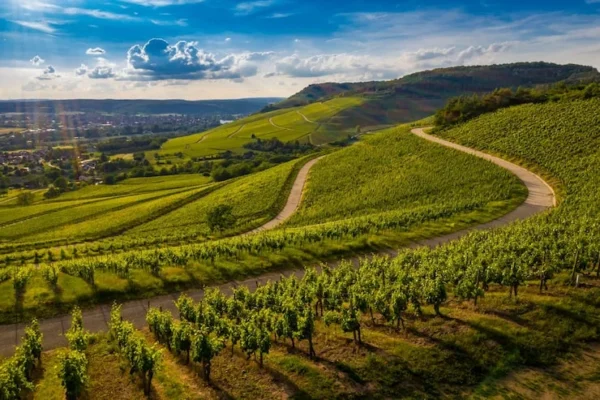
Burgundy has world-renowned vineyards, gastronomy and historic communities. Yet its high-end accommodation supply has traditionally remained smaller than the region’s international wine reputation might suggest.
That gap is starting to close. The wider Bourgogne-Franche-Comté region recorded 11.5 million accommodation nights in 2025, rising 1.5 percent from the previous year.
Between April and September, the region generated 8.43 million nights, an increase of 2.9 percent. International travellers accounted for 3.16 million seasonal nights, up 6.9 percent.
Hotels recorded 4.2 million nights during the summer season. International hotel demand increased 12.5 percent, while the supply of four-star and higher accommodation expanded by 4.7 percent.
Demand grew particularly strongly from the United States, China, Switzerland and the United Kingdom during the second quarter.
Château la Commaraine in Pommard illustrates Burgundy’s changing hospitality model. The 37-room property occupies a historic wine estate beside the Clos de la Commaraine Premier Cru vineyard.
Accommodation, winemaking, dining and wellness combine within one destination. Other properties around Meursault and the Côte d’Or are also using restored heritage buildings to serve travellers seeking immersive wine journeys.
Tuscany turns its landscape into an itinerary
Tuscany represents a more established version of countryside luxury. The Italian region recorded more than 15 million arrivals and almost 46 million tourist nights in 2025.
Regional figures show that tourism remained broadly stable, although overnight stays had not completely recovered to pre-pandemic levels. Foreign visitors continued to support demand, while four-star hotels and non-hotel accommodation maintained important roles.
New projects are increasingly looking beyond major art cities. Restored villages, historic estates, olive groves and wine landscapes are becoming complete destinations rather than secondary excursions.
Chapter Chianti uses a medieval setting to create a heritage-led stay, while the planned Corinthia Borgo di Perolla will transform historic Tuscan buildings into a nature-focused luxury retreat.
This approach allows visitors to make regional food, wine and village life part of their daily itinerary.
Portugal reveals rural tourism potential
Portugal offers some of the clearest evidence of rising countryside demand. Its rural tourism and tourism-housing sector included 2,054 establishments in 2025, up 3.4 percent.
The segment provided 16,200 rooms and 35,700 beds. Guest numbers increased by 6.7 percent, while overnight stays reached 3.3 million, rising 6.9 percent.
International demand advanced even faster, with non-resident nights increasing by 10.3 percent. The Alentejo generated 23.1 percent of Portugal’s rural tourism stays, placing it behind only the northern region.
The Alentejo’s estates, agricultural landscapes and historic towns offer a strong foundation for private retreats. Meanwhile, the Douro combines dramatic vineyards, river scenery, cuisine and architecture.
However, seasonality remains a challenge. July, August and September generated 42.9 percent of rural accommodation nights. This creates an opportunity to market spring and autumn trips around harvests, gastronomy and quieter landscapes.
Islands take luxury beyond the beach
Mallorca shows how an established island destination can move premium tourism inland. The island recorded 49.5 million hotel nights in 2025, making it Spain’s busiest tourism area by that measure.
Properties such as Finca Banyols near Alaró place guests among vineyards and olive trees in the Serra de Tramuntana. This model maintains access to Mallorca’s coastline while offering privacy away from busy resort corridors.
Crete and Paros are following a related strategy. Crete receives an exceptionally high share of foreign accommodation demand, while Paros is adding smaller design-led properties focused on scenery, private pools and wellness.
Hotels can therefore compete through architecture, gastronomy and controlled access to landscapes rather than beach proximity alone.
Rural stays create Europe’s next premium map
Across Europe, the countryside proposition is remarkably consistent. Smaller properties replace large room inventories, regional cuisine replaces standardised dining, and curated local access becomes as important as traditional concierge service.
Adaptive reuse gives historic châteaux, wineries, monasteries and farm estates identities that new developments often struggle to recreate.
The model can also support destinations by directing visitor spending toward rural restaurants, producers, guides and communities. However, responsible development must protect water, agricultural land, housing and local infrastructure.
For travellers, value now extends beyond the room rate. Season, accessibility, privacy, landscape and available regional experiences all influence the quality of a stay.
Burgundy’s accelerating hotel development demonstrates why France could become a major winner in this changing market. Across Europe, the next luxury tourism race will increasingly be decided not in city centres, but among vineyards, villages and historic rural estates.
For more travel news like this, keep reading Global Travel Wire