The United States has opened a federal investigation into Tesla’s certification of its Cybercab following the driverless vehicle’s commercial deployment in Austin, Texas.
The National Highway Traffic Safety Administration opened Audit Query AQ26002 on September 3, 2026. It announced the enforcement action publicly on September 4.
The Tesla Cybercab safety review will examine the processes and technical information used by the manufacturer to certify compliance with applicable Federal Motor Vehicle Safety Standards.
Tesla began commercial deployment with a small number of Cybercab vehicles in Austin on September 3. The company has informed the agency that it plans to expand gradually into additional vehicles and locations.
NHTSA estimates that the potentially relevant vehicle population could reach 1,000 units. However, the opening of an Audit Query does not establish that the Cybercab has a defect or failed a safety standard.
Instead, the review allows federal regulators to examine the technical basis supporting Tesla’s certification.
Missing manual controls become central issue
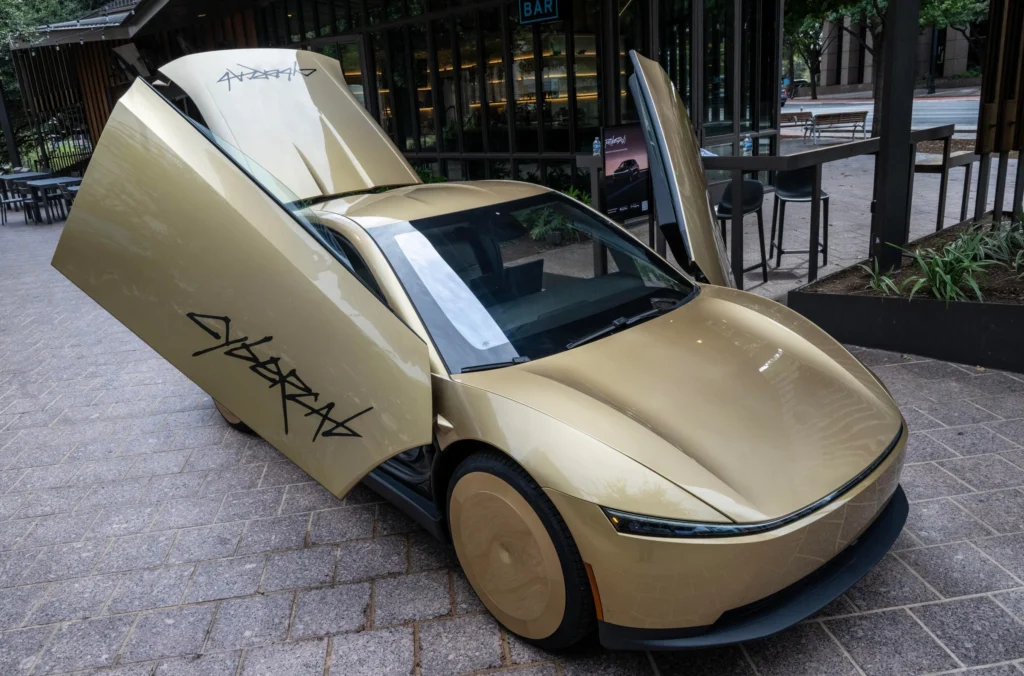
The Cybercab differs significantly from a conventional passenger vehicle because it lacks permanently attached traditional driving controls.
According to federal records, the vehicle does not have a steering wheel, brake pedal, accelerator pedal or conventional mirrors.
These design choices are central to the investigation. Many existing safety standards were written around vehicles operated by human drivers using familiar manual equipment.
NHTSA will assess how Tesla applied those requirements to an automated vehicle designed without such controls. The inquiry will also examine whether the company determined that some standards were not applicable to the Cybercab.
That distinction could prove important for the broader autonomous mobility industry. Manufacturers must demonstrate compliance under today’s legal framework even when their vehicle designs anticipate a different transportation model.
Self-certification remains under federal oversight
Vehicle manufacturers operating in the United States certify that their products meet all applicable federal safety standards. NHTSA does not preapprove every vehicle before it enters the market.
However, the agency retains authority to examine certifications and enforce compliance. An Audit Query allows regulators to request and review the information supporting a manufacturer’s declarations.
For the Cybercab, that could include testing methods, engineering assessments, compliance procedures and interpretations of individual safety standards.
The investigation will focus on certification rather than evaluating the commercial success of Tesla’s Austin service. It also remains separate from any final determination about the safety or legality of individual vehicles.
NHTSA said it supports the safe development and deployment of automated vehicles. Nevertheless, it emphasised that manufacturers must follow federal law while new regulations remain under development.
Federal safety rules are being modernised
The Cybercab review arrives as the US government works to update vehicle standards for emerging automotive technologies.
NHTSA has started eight rulemaking initiatives during the past year. These include standards relating to brake pedals, windscreen wipers, lighting systems and rear-view mirrors.
The process is intended to remove unnecessary barriers that may prevent safe automated vehicles from entering the market. It could also provide clearer requirements for designs that no longer assume a human driver will control every journey.
Yet the agency has confirmed that existing standards remain enforceable until the rulemaking process is completed.
This creates a transitional challenge. Autonomous vehicle developers are designing technology for a future mobility system while regulators must assess those vehicles under requirements currently in force.
Austin becomes a mobility testing ground
Tesla’s commercial deployment places Austin at the centre of a consequential phase in automated transport.
Driverless vehicles could eventually change how residents and visitors move between airports, hotels, convention districts, attractions and entertainment areas. They may also create new options for travellers unable or unwilling to drive.
However, widespread adoption will depend on more than technical capability. Travellers will need confidence in vehicle safety, booking reliability, accessibility, emergency procedures and customer support.
Cities will also need to consider how autonomous fleets interact with pedestrians, public transport, taxis and conventional vehicles.
The NHTSA review could therefore influence public perceptions of driverless travel far beyond Tesla’s initial Austin operations.
Review may shape future passenger mobility
The Audit Query will determine whether Tesla’s certification approach properly addressed all relevant federal requirements. NHTSA has not announced a timetable for completing the examination.
Possible next steps will depend on the information gathered. The agency could close the inquiry if the evidence supports compliance or take further action if it identifies unresolved issues.
For travellers, the immediate development does not amount to a nationwide approval or rejection of autonomous taxis. It is a federal compliance review focused on the Cybercab’s self-certification.
Nevertheless, its significance extends across the travel technology sector. Autonomous vehicles could transform first-mile and last-mile transport, especially in large cities and around airports.
Their growth will require rules that recognise unconventional vehicle designs without weakening passenger protection.
The Cybercab investigation captures that tension clearly. The United States wants to support mobility innovation, but new technology must still demonstrate compliance with safety laws.
As Austin’s driverless deployment progresses, the federal review will become an important test of how autonomous travel moves from experimental programmes into everyday commercial transportation.
For more travel news like this, keep reading Global Travel Wire