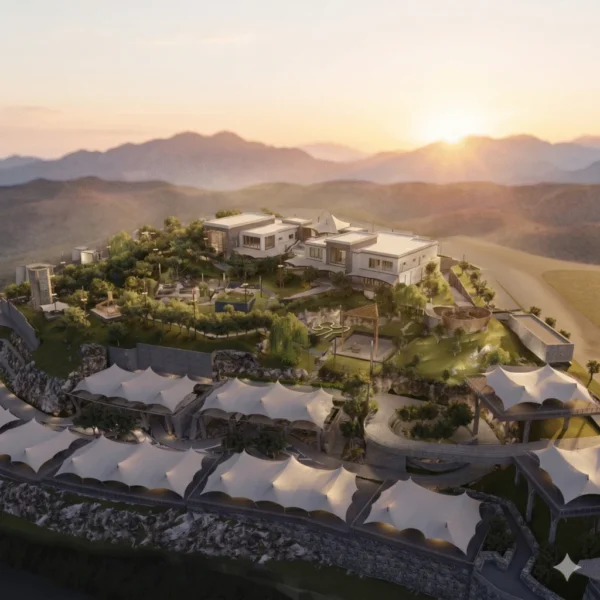
Gamra Mountain Resort is positioning Saudi Arabia’s Al Baha province as a compelling sustainable luxury destination for travellers in 2026. Located on Khairah Mountain, the high-altitude retreat combines environmentally responsible hospitality with cultural immersion, outdoor adventure and dramatic mountain scenery.
The resort stands approximately 2,260 metres above sea level in Saudi Arabia’s southwestern highlands. Its location offers an alternative to conventional city breaks, coastal resorts and heavily visited tourism centres. Guests can instead experience forests, agricultural terraces, valleys and historic mountain communities.
Saudi Tourism Investment Company, known as ASFAR, developed the project. ASFAR is wholly owned by Saudi Arabia’s Public Investment Fund. Accor’s conservation-focused Mantis Collection operates the resort, bringing its destination-led hospitality approach to Al Baha.
The opening supports Saudi Arabia’s wider tourism diversification under Vision 2030. It also brings international attention to a region historically called the Garden of the Hijaz.
A secluded mountain destination with convenient access
Gamra Mountain Resort occupies approximately 22,000 square metres of rugged mountain terrain. Despite its secluded atmosphere, the retreat remains accessible through King Saud Bin Abdulaziz Airport in Al Baha.
Guests arriving by air can reach the property through an estimated 55-minute road transfer. The journey introduces visitors to Al Baha’s mountainous landscapes before they arrive at the resort.
This accessibility could help the destination attract domestic weekend visitors alongside international travellers seeking lesser-known Saudi experiences. Improved awareness may also encourage longer stays and wider exploration across the province.
Al Baha is particularly suited to visitors interested in cooler highland environments, natural landscapes and culturally grounded travel. Its distinctive setting broadens Saudi Arabia’s tourism offering beyond its major urban, heritage and Red Sea destinations.
Tented suites place nature at the centre
The resort features 30 tented Mountain Suites designed to maintain a close connection with the surrounding landscape. Floor-to-ceiling glass panels frame views of juniper-covered slopes, terraced farmland and deep valleys.
Private outdoor decks allow guests to appreciate the mountain setting in greater seclusion. Meanwhile, climate-control systems support comfortable stays at the resort’s elevated location.
Interior spaces use organic textures, earthy colours and locally influenced design elements. Sustainable materials reinforce the property’s environmental positioning while reflecting the visual character of Al Baha.
The limited accommodation inventory may also support a quieter guest experience. This model places greater emphasis on privacy, natural immersion and quality rather than high-volume tourism.
Water and energy conservation programmes form part of the resort’s operating approach. Waste recycling systems and community-supported preservation initiatives further connect hospitality operations with the protection of local resources.
Adventure and wellbeing shape the guest experience
Gamra Mountain Resort is designed as more than a place for passive relaxation. Its Adventure Park includes 14 indoor and outdoor attractions for families, couples and active travellers.
Guided mountain treks take guests along traditional pathways and through landscapes shaped by generations of highland communities. Excursions can introduce visitors to historic stone settlements and longstanding water-management systems.
Birdwatching and botanical activities highlight the biodiversity of Al Baha. The province contains more than 100 forests, alongside acacia groves and terraced orchards producing pomegranates and apricots.
These experiences could strengthen nature-based tourism while encouraging responsible engagement with sensitive environments. They also create opportunities for local guides, artisans, farmers and experience providers to participate in the visitor economy.
Cultural programming extends to regional storytelling, traditional food preparation and craftsmanship workshops. These activities allow guests to understand local identity beyond the resort’s architecture and scenery.
Highland flavours support cultural discovery
Food plays a central role in the resort’s connection with Al Baha. Dining concepts include Jamra, centred on live-fire cooking beneath the night sky, and Hala, offering Mediterranean and Arabic flavours.
Menus give priority to ingredients associated with the region. These include Al Baha mountain honey, Shadawi coffee and produce gathered from local orchards.
Open-air terraces and warm stone details create dining spaces that echo the surrounding highlands. The approach transforms meals into opportunities for cultural exchange while supporting regional producers and culinary traditions.
For Saudi tourism, Gamra Mountain Resort represents a move toward smaller, experience-rich developments rooted in place. Its combination of conservation, adventure and local participation may appeal strongly to travellers seeking meaningful luxury.
As demand grows for uncrowded destinations and nature-led journeys, the retreat could place Al Baha firmly on the international tourism map. Gamra’s lasting value, however, will depend on balancing increased visitation with the protection of the mountain environment and the communities that define it.
For more travel news like this, keep reading Global Travel Wire