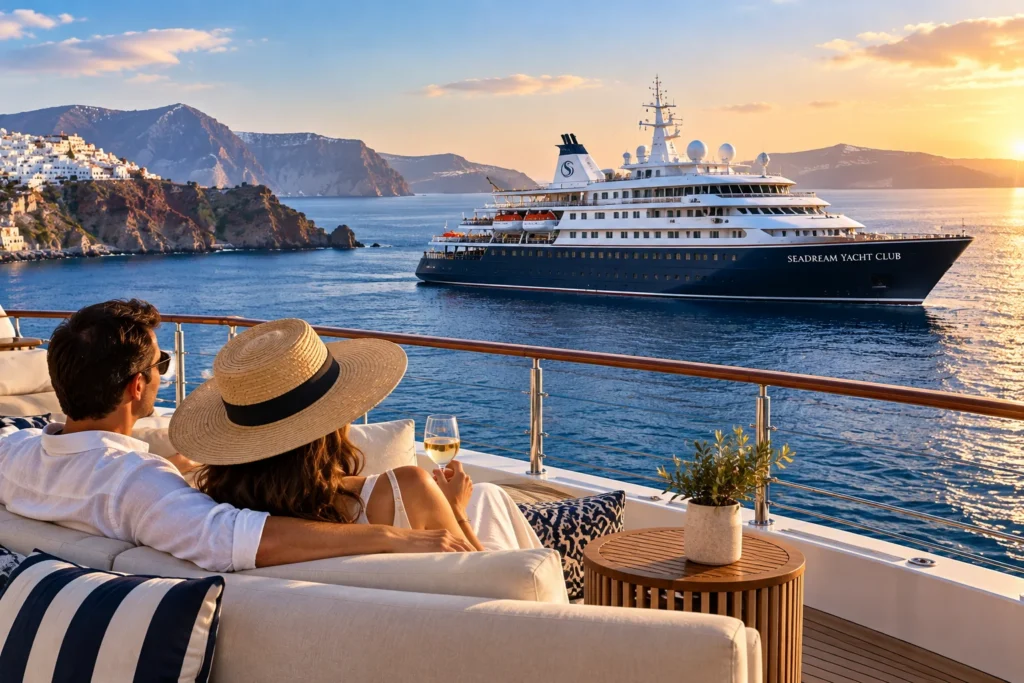
Small-ship maritime operations are reaching a major milestone as boutique ocean operators scale their fleets to meet growing international demand. Since entering the maritime leisure market in 2001, boutique operator SeaDream Yacht Club built its reputation by offering intimate, casual yachting experiences across coastal Europe and the Caribbean. Operating two twin vessels each accommodating just over one hundred guests, the company established a dedicated base of repeat travelers seeking unhurried, highly personalized voyages.
The operator has now officially confirmed an expansion of its ocean fleet, marking the introduction of its first brand-new vessel in a quarter-century of operation. The upcoming vessel, designated SeaDream III, is scheduled to enter service in July 2029, embarking on an inaugural maiden voyage departing from Hong Kong. This strategic fleet expansion reflects broader changes across the small-ship luxury cruise sector, where travelers increasingly prioritize unique global itineraries, extended port stays, and access to shallow-water harbors unreachable by traditional mega-ships.
Expanding Capacity for Global Explorations
The addition of the new vessel represents a strategic milestone for the company’s global footprint and capacity. Built to accommodate up to 230 passengers served by an nearly equal number of crew members, the ship effectively doubles the guest capacity offered by the existing fleet. This increased scale allows the operator to introduce far-reaching global itineraries while preserving the signature high ratio of crew to guests that defines boutique yachting.
The expanded vessel footprint directly addresses evolving preferences among long-term, loyal guests. Industry data shows that boutique lines frequently experience extremely high rates of repeat passenger bookings. Repeat ocean travelers regularly express a desire to explore new geographical regions—such as Asia, the South Pacific, the Arctic, and the Great Lakes—without forfeiting the familiar, relaxed onboard environment of small-ship travel.
By adding a third vessel specifically engineered for long-distance global transit, the operator can deploy the new ship across multi-continent routes while keeping its original twin vessels dedicated to their popular seasonal rotations in the Mediterranean and Caribbean seas.
Global Scope and Itinerary Horizons
The introduction of the new vessel allows the company to establish a permanent global sailing profile. Throughout its history, the line’s operations focused predominantly on traditional transatlantic, Caribbean, and European routes, with only brief historical ventures into Asian waters. The new ship’s initial multi-year sailing schedule covers extensive global territory, spanning hundreds of ports across six continents.
The maiden 2029 deployment features extended island-hopping itineraries throughout East Asia, navigating through Japan and South Korea before expanding into Southeast Asia, Indonesia, Australia, and New Zealand. Subsequent seasons include ambitious trans-oceanic routes passing through the Arabian Peninsula, the Mediterranean, coastal Northern Europe, and the High Arctic. The vessel will also navigate the St. Lawrence Seaway into the North American Great Lakes before embarking on an extensive six-month world circumnavigation voyage.
Key features of the global deployment strategy include:
Access to shallow-draft coastal harbors, pristine islands, and river locks inaccessible to large passenger liners.
Dedicated seasonal repositioning voyages connecting regional hubs across Asia, Europe, and the Americas.
Extended multi-day port calls that provide guests with deeper cultural immersion onshore.
Inclusion of signature open-water facilities, including multi-level watersports marinas providing direct ocean access.
Strategic Dynamics of the Small-Ship Luxury Cruise Sector
The expansion comes during a period of rapid growth and heightened investment across the boutique cruise and private yachting segment. Over recent years, major global hospitality brands and luxury hotel operators have entered the maritime space, introducing high-end ocean yachts designed to bridge the gap between private charters and traditional cruise ships.
Far from creating operational challenges for pioneering boutique lines, the arrival of new corporate entrants has heightened global market awareness for non-traditional, yacht-style ocean cruising. The growing availability of boutique vessels introduces a broader demographic of travelers to the benefits of small-ship travel, driving increased demand across the entire category.
Furthermore, constraints across global shipbuilding yards have created unique operational dynamics. With traditional European cruise shipyards operating near maximum capacity, small-ship luxury cruise sector operators are increasingly forming international construction partnerships to deliver specialized vessels on viable timelines.
Ultimately, the deployment of new, state-of-the-art boutique tonnage ensures the long-term vitality of yacht-style cruising. By combining modern maritime technology and expanded suite accommodations with an unpretentious onboard lifestyle, small-ship operators are positioning themselves to serve the next generation of global explorers.
For more travel news like this, keep reading Global Travel Wire