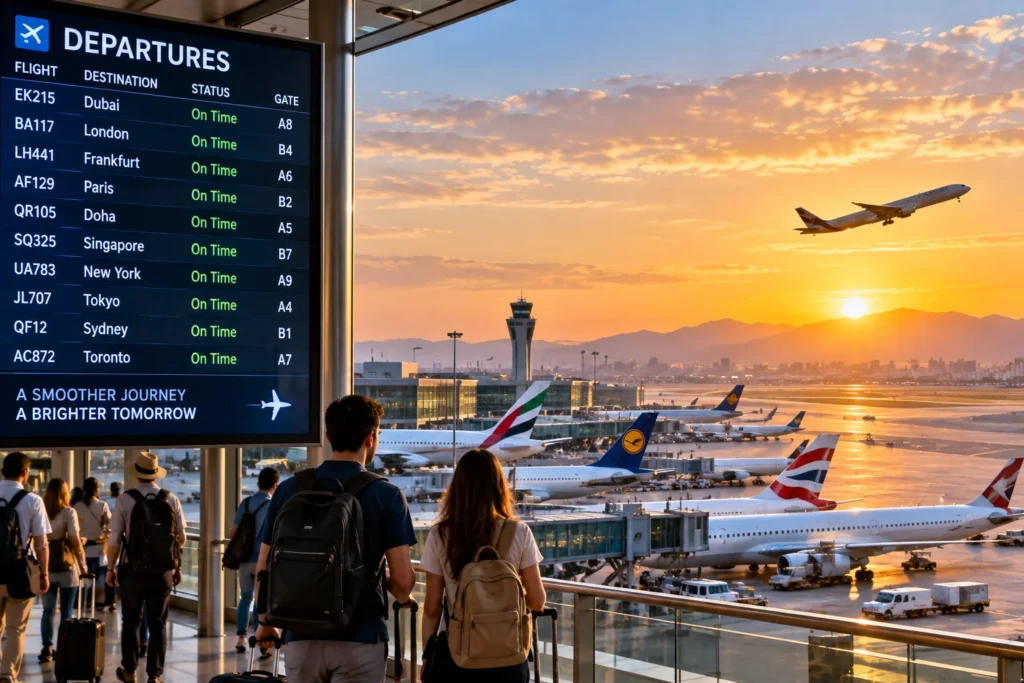
The international air transport sector continues to demonstrate resilience as major network carriers optimize fleet operations amid shifting geopolitical and regulatory conditions. Operating out of its primary global hub in Abu Dhabi, Etihad Airways reported a 15 to 17 percent year-on-year increase in passenger capacity, measured in available seat kilometers.
The operational expansion reflects sustained passenger demand across international corridors. High seat occupancy across long-haul networks highlights strong market absorption, even as global air carriers manage complex flight routing, changing visa frameworks, and evolving passenger booking habits across major international origin markets.
Robust Passenger Demand Drives High Seat Utilization Metrics
Sustained passenger demand across long-haul routes powered strong operational performance during peak travel months. The carrier recorded a high passenger load factor of 92 percent in August, demonstrating efficient capacity management and high passenger volumes across its global network.
Despite robust seat occupancy, broader financial performance remains grounded in conservative operational planning. Operational revenues are projected to remain stable for the full fiscal year as the carrier absorbs earlier financial impacts caused by regional airspace closures and flight path rerouting. Consequently, the airline is targeting a breakeven financial performance for the year, balancing strong top-line passenger volume against elevated fuel consumption and operational workarounds required for longer flight detours.
The operational results underscore broader civil aviation trends where global network carriers maintain high seat density while managing regional volatility, fuel price shifts, and complex airspace corridors across the Middle East, Europe, and Asia.
Shifting International Visa Policies Impact Travel Patterns
Beyond airspace restrictions, changing regulatory environments across key international transit hubs continue to reshape global passenger movement. Tighter entry requirements and updated visa processing frameworks in major long-haul destinations, including North America, are creating new operational dynamics for international air carriers.
These policy adjustments have notably influenced outbound travel patterns from high-volume feeder markets such as India, which serves as a major passenger source for global transit networks. In response to evolving visa procedures and changing processing timelines, traveler behavior is shifting toward shorter booking windows. Travelers increasingly confirm flight reservations closer to their intended departure dates, introducing additional complexity to revenue optimization models and capacity forecasting.
To maintain passenger volumes amid changing regulatory landscapes, international airlines are actively adjusting destination schedules, optimizing connecting banks at hub airports, and diversifying route networks to capture alternate leisure and business traffic streams.
Long-Term Fleet Investments Modernize Premium Passenger Experience
To ensure long-term competitiveness and support future route expansion, the carrier is advancing multi-year capital investments dedicated to modernizing its passenger aircraft fleet. The airline confirmed strategic initiatives to roll out newly designed cabin configurations across its Airbus single-aisle and widebody aircraft platforms, with initial fleet deployments targeted for mid-2027.
The fleet enhancement initiative includes complete cabin retrofits featuring next-generation seating, updated inflight entertainment systems, and upgraded amenities across both premium business class and economy cabins. Management confirmed that operational cash flow generation remains fully sufficient to fund these long-term cabin upgrades while maintaining healthy liquidity reserves.
Key strategic priorities supporting fleet modernization include:
Retrofitting single-aisle long-range aircraft to offer full-flat premium seating on medium-haul routes.
Standardizing long-haul widebody cabin interiors to enhance operational flexibility across intercontinental destinations.
Integrating advanced lightweight seating and fuel-efficient cabin materials to reduce overall aircraft operating weight.
Expanding high-speed onboard satellite connectivity to meet digital expectations across all cabin classes.
These hardware investments allow the carrier to protect yield margins, attract high-value business travelers, and strengthen its brand positioning across competitive intercontinental markets.
Sector Outlook and Strategic Priorities for Global Aviation Carriers
As global aviation capacity growth continues to stabilize, industry analysts point to operational flexibility and network adaptability as key factors governing airline profitability. Navigating regional airspace closures requires real-time flight planning, close coordination with civil aviation authorities, and optimized fleet scheduling to minimize operational delays.
Moving forward, the stability of key international air corridors will remain vital for maintaining efficient global connectivity. At the same time, air carriers that successfully balance high seat occupancy with disciplined cost management and fleet modernization will be best positioned to navigate shifting travel policies, maintaining strong market share across competitive international aviation networks.
For more travel news like this, keep reading Global Travel Wire