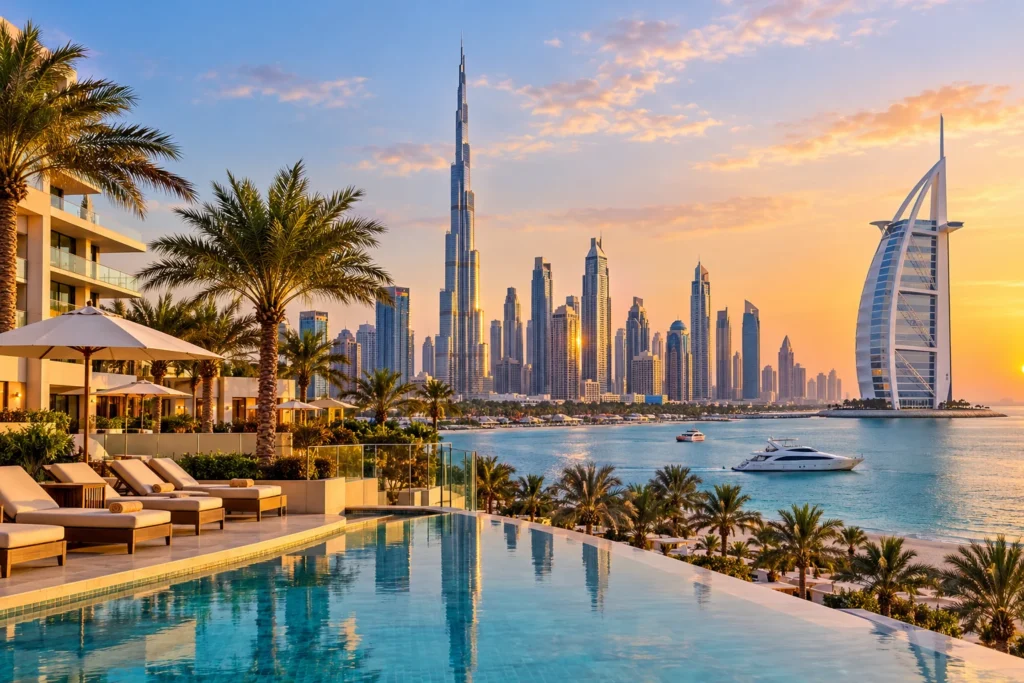
The United Arab Emirates continues to strengthen its leadership across Middle East financial and commercial sectors, with surging institutional confidence accelerating private market expansion. A significant share of this expanding pool of private capital is actively flowing into tourism, hospitality infrastructure, and destination development. Driven by nationwide economic transformation agendas, major infrastructure developments, and increasingly sophisticated investment frameworks, the nation is consolidating its position as a primary destination for regional capital deployment.
The strategic shift across the Middle East reflects a transition from exporting capital to international destinations toward funding domestic asset creation. Sovereign wealth institutions across the region now dedicate 43 per cent of their portfolios to private capital assets, well above the global average of 35 per cent. In parallel, overall investor sentiment has recorded a sharp increase. The proportion of regional institutional investors maintaining a positive outlook toward private market allocations reached 83 per cent in 2026, up from 70 per cent in earlier assessment periods. This elevated market confidence provides strong financial backing for long-term real estate, leisure, and hospitality projects across the Seven Emirates.
Family offices represent a cornerstone of this investment landscape, accounting for approximately half of all active private capital investors in the region. Their forward-looking portfolio allocations indicate strong support for tangible, growth-oriented sectors. Private equity accounts for 27 per cent of future investment intentions among family offices, followed closely by real estate at 19 per cent, private credit at 16 per cent, and infrastructure development at 14 per cent. Additional capital allocations are directed toward hedge funds, natural resources, and specialized ventures. These funding priority areas align directly with the capital requirements of large-scale resort developments, urban hospitality projects, and tourism transport infrastructure.
Sovereign Allocations Drive Strategic Hospitality and Leisure Assets
The influx of institutional capital supports federal and local initiatives designed to diversify the national economy and expand world-class destination offerings. Government framework projections estimate that Gulf Cooperation Council member states could deploy approximately $2.1 trillion by 2030, with a substantial portion focused on building resilient domestic industries. Within the UAE, economic diversification policy centers heavily on expanding leisure, cultural, and business tourism capacity.
Under the UAE National Tourism Strategy 2031, the nation has set ambitious targets to elevate the sector’s overall economic footprint. Official policy targets aim to raise the tourism sector’s total gross domestic product contribution to AED 450 billion by 2031. Achieving this economic milestone requires attracting AED 100 billion in cumulative new UAE tourism investment while welcoming 40 million hotel guests annually to accommodation establishments across the country.
Private capital plays an instrumental role in bridging development requirements for new hotel properties, eco-tourism retreats, entertainment hubs, and aviation services. As family offices and institutional managers increase their domestic exposure, partnership models between public entities, sovereign wealth funds, and private asset managers are accelerating project timelines.
Venture capital activity in the broader region has similarly demonstrated sustained stability. Average total deal values held steady at $2.4 billion annually between 2021 and 2025, even during periods of tighter global liquidity across Western financial markets. This stable funding climate has enabled travel-technology startups, digital booking platforms, and hospitality tech providers based in the UAE to scale operations and modernize guest experiences.
Diversification Strategy Accelerates Nationwide Tourism Growth
According to official performance metrics released by the Ministry of Economy, the travel and tourism sector contributes significantly to national GDP, supported by high hotel occupancy rates and sustained visitor inflows. Official Ministry data indicates that total hotel room inventory across the country has expanded to over 203,000 rooms across more than 1,180 establishment properties. Annual international visitor spending metrics regularly cross AED 117 billion, highlighting the commercial viability of hospitality asset investments.
Regional urban centers continue to record strong operational figures. Official tourism board statistics show Dubai hosting millions of international overnight visitors annually, maintaining high single-digit growth trajectories. Similarly, official announcements from the Department of Culture and Tourism – Abu Dhabi highlight notable increases in hotel guest volumes and lodging revenue, driven by cultural events, MICE exhibitions, and luxury leisure attractions.
The nationwide development model focuses on four key strategic pillars: unifying the national tourism identity, expanding specialized leisure products, developing local industry talent, and attracting targeted capital into hospitality infrastructure. Advanced digital technology adoption, streamlined regulatory frameworks, and modern transport networks continue to enhance overall market competitiveness.
As capital markets in the Middle East mature, the deployment of institutional private capital into local real estate, infrastructure, and technology will remain a major growth driver. Backed by solid government strategies, rising investor confidence, and robust visitor demand, the UAE’s tourism ecosystem is positioned for sustained long-term expansion.
For more travel news like this, keep reading Global Travel Wire