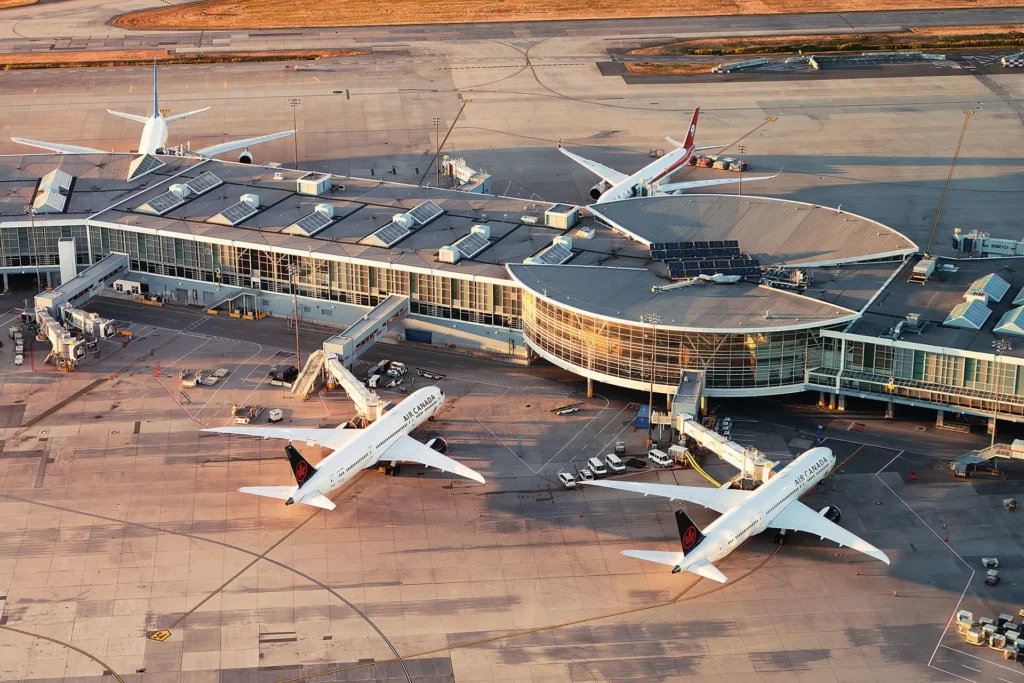
Vancouver International Airport expects 32 weekly non-stop flights to mainland China in November 2026, up from 23 a year earlier. The nine additional services represent an increase of about 39% and will give travellers more choices across nine routes.
Eight airlines are expected to operate the expanded network. The growth could support leisure trips, business travel and visits to friends and relatives. It also gives British Columbia’s tourism businesses more direct access to travellers from Chinese cities.
The planned increase follows an April 2026 agreement allowing Canadian and Chinese airlines to add direct passenger services incrementally. China’s temporary visa-free entry policy for eligible Canadian passport holders may also encourage travel in the opposite direction.
Beijing and Guangzhou Lead Flight Growth
Air Canada plans daily Vancouver–Beijing flights in November, up from four weekly services the previous year. Its daily Shanghai service is expected to continue, giving the airline 14 weekly flights across the two cities.
Air China plans to increase Beijing service from three to five weekly flights from September 29. China Southern expects to double its Guangzhou schedule to four weekly flights from October 25.
Xiamen Airlines plans a third weekly Vancouver–Xiamen flight from October 29. Meanwhile, Sichuan Airlines and China Eastern are expected to retain two weekly flights each to Chengdu and Shanghai. Hainan Airlines plans to maintain its weekly Shenzhen service.
Qingdao will return to the network when Beijing Capital Airlines resumes its weekly Vancouver service on October 2. The route adds another regional destination for travellers heading beyond China’s largest international gateways.
Together, these changes account for the increase from 23 to 32 weekly flights. Operating days and schedules may still change before November, so travellers should confirm details with their airline before booking.
More Routes Could Support British Columbia Tourism
The wider network gives travellers more options when choosing departure dates and destinations. Frequent services to Beijing and Shanghai may make it easier to plan longer itineraries, while regional routes offer alternatives for those visiting other parts of China.
For British Columbia, additional flights could bring more visitors through Vancouver. Hotels, restaurants, attractions and tour operators may benefit if the new capacity translates into sustained bookings.
Group travel could play a role. China’s reinstatement of Canada as an approved destination for organised tours allows travel companies to develop Canada itineraries for Chinese groups. Vancouver can serve as an arrival point for trips that continue into other parts of British Columbia and Western Canada.
More flights do not guarantee a matching increase in visitor numbers. Airlines will need steady demand to maintain the expanded schedules, while tourism businesses will need to turn improved access into trips and spending.
Visa Rules Shape Travel in Both Directions
Eligible Canadians holding ordinary passports can enter China without a visa for stays of up to 30 days. Permitted purposes include tourism, business, visits to family and friends, exchanges and transit. The current policy runs through December 31, 2026.
That arrangement could simplify November travel for Canadians planning qualifying trips. Travellers should still check the rules for their passport, travel purpose and length of stay before departure.
Chinese citizens travelling to Canada must separately meet Canadian entry requirements, including visitor visa rules where applicable. The increase in flights does not change those requirements.
This difference matters when assessing the route expansion. Easier entry for eligible Canadians may help outbound demand, while growth in inbound tourism will also depend on Canadian entry conditions and travellers’ plans.
Recovery Continues Below Earlier Flight Levels
YVR welcomed 26.9 million passengers in 2025, while its Asia-Pacific passenger traffic rose 15.6% from the previous year. The airport’s expanding China schedule builds on that broader recovery in travel across the Pacific.
Even with November’s planned increase, mainland China connectivity will remain below its pre-pandemic level. Before 2020, eight airlines operated a combined 55 weekly non-stop flights between YVR and mainland China.
The comparison shows both the progress and the remaining gap. A rise to 32 weekly flights marks a substantial step from last November, but it does not amount to a full restoration of earlier capacity.
For travellers, the immediate change is greater choice across major and regional Chinese destinations. For British Columbia’s visitor economy, the lasting impact will depend on whether airlines can sustain those services beyond the autumn expansion.
For more travel news like this, keep reading Global Travel Wire