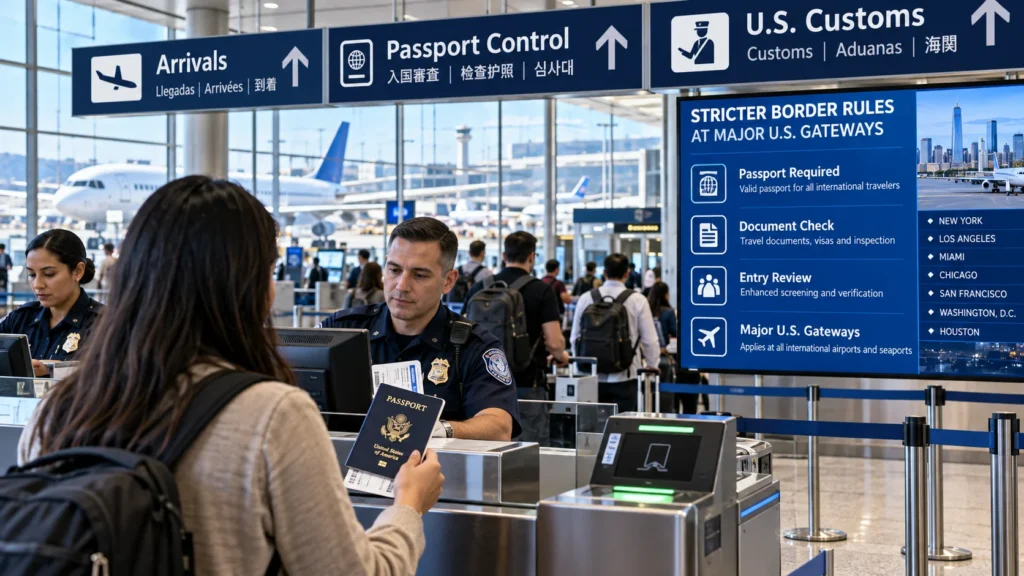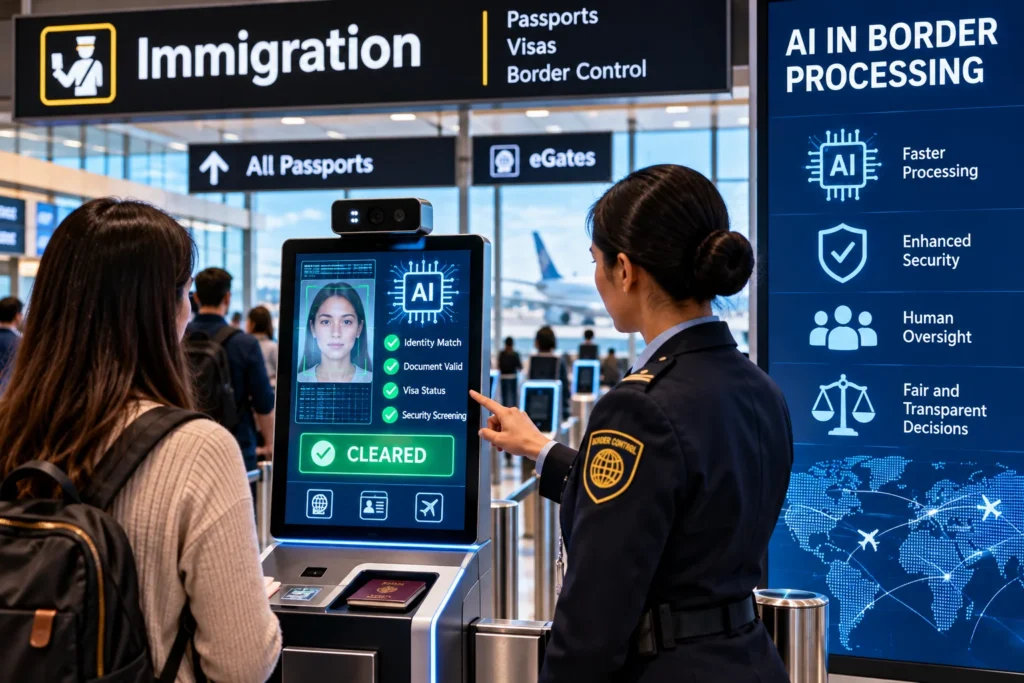
Governments worldwide are accelerating the integration of automated and artificial intelligence-enabled technologies into consular workflows, passport issuance, and border security checkpoints. Millions of international travelers, students, workers, and tourists submit digital visa applications annually, often unaware that algorithmic screening systems analyze their documentation and assign risk indicators prior to human review.
As these automated tools expand across diplomatic missions and ports of entry, international policy experts and former consular leadership are raising fundamental questions regarding transparency, human oversight, and accountability in administrative border adjudications.
The Function of Automated Triage and Fraud Detection
The rapid adoption of artificial intelligence in consular affairs is driven by the need to manage high application volumes and streamline processing timelines. Joint policy framework declarations issued by border security partners—including Australia, Canada, New Zealand, the United Kingdom, and the United States—emphasize leveraging technology advancements to combat document fraud, irregular migration, and visa abuse.
Within current diplomatic operations, automated systems perform critical pre-screening functions:
Case Triage and Categorization: Automated algorithms evaluate application profiles to identify low-risk, routine cases for expedited processing while flagging complex files for detailed secondary inspection.
Document Fraud Identification: Machine learning tools compare submitted credentials against official pattern databases to detect altered passports, counterfeit supporting records, or inconsistent biometrics.
Pattern Recognition and Risk Scoring: Algorithmic systems analyze vast data sets across historical visa applications to flag potential anomalies or overstay risks before a file reaches an adjudicating officer.
While these tools improve administrative efficiency, travelers often have limited insight into how algorithmic risk-scoring shapes the evaluation of their travel applications.
Regulatory Safeguards and the High-Risk Classification
The integration of artificial intelligence into migration management has prompted formal regulatory responses to protect individual rights and ensure institutional accountability. European Union regulatory frameworks explicitly categorize AI systems deployed in visa processing, asylum evaluation, and border control as high-risk, mandating strict compliance standards and mandatory human-in-the-loop oversight.
Diplomatic experts stress that while automated software can organize complex data, accelerate screening, and highlight anomalies, final legal decisions regarding visa issuance or entry refusal must remain strictly within human authority. Over-reliance on algorithmic outputs presents the risk of “automation bias,” wherein decision-makers might passively accept system recommendations rather than exercising independent human discretion.
Preserving Human Judgment in Global Mobility
The primary benefit of deploying automated tools in public administration is reducing repetitive clerical tasks, allowing consular personnel to dedicate greater time and scrutiny to complex cases requiring human empathy, cultural context, and nuanced judgment.
As state immigration departments expand digital border filters, policy guidelines from international governance bodies reinforce that technology must serve as an operational tool rather than a final decision-maker. Establishing clear legal boundaries ensures that efficiency gains in global travel processing do not compromise due process or human accountability at international borders.
For more travel news like this, keep reading Global Travel Wire